
The Fed's Policy Confidence and Its Implications for 2025 Market Sentiment
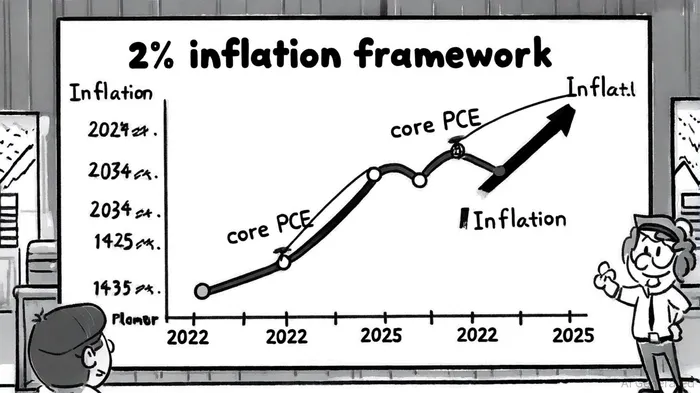
The 's 2025 policy review has sent shockwaves through global markets, reshaping investor behavior and asset allocation strategies. By abandoning the controversial (FAIT) framework and reaffirming a 2% inflation goal with greater flexibility, the Fed has recalibrated its approach to balancing price stability and maximum employment[1]. This shift, announced at the in August 2025, reflects lessons from the post-pandemic inflation surge and aims to restore clarity to its dual mandate[2]. But how has this recalibration influenced market sentiment—and what does it mean for risk assets in 2025?
The Fed's Credibility: A Double-Edged Sword
Central bank credibility remains a linchpin of investor confidence. In 2025, the Fed's decision to drop the “shortfalls” language—previously interpreted as prioritizing employment over inflation—has introduced a more symmetric policy stance[3]. This recalibration has bolstered the Fed's perceived independence, a critical factor in maintaining global investor trust[4]. However, the same move has also heightened sensitivity to inflation risks. For instance, , , signaling markets' skepticism about the Fed's ability to tame persistent inflationary pressures[5].
The Fed's communication strategy has also evolved. By hosting the Second and engaging with diverse stakeholders through the “Fed Listens” initiative, the central bank has sought to demystify its policy intentions[6]. Yet, as the notes, public understanding of monetary policy remains uneven, . This disconnect underscores the fragility of the Fed's credibility and its potential to amplify market volatility.
Market Reactions: Bonds, Equities, and the New Normal
The Fed's revised framework has directly influenced risk asset allocation. Bond markets, in particular, have priced in a , with U.S. . This reflects heightened inflation expectations and reduced demand for long-term fixed-income assets. Meanwhile, equity markets have oscillated between optimism and caution. The S&P 500 and NASDAQ 100 experienced sharp intraday declines in Q2 2025, driven by a reevaluation of the equity risk premium and concerns over tariff-driven inflation[9].
Investors are also hedging against uncertainty. The , a fear gauge, , while active equity managers increased hedging strategies and scaled back positions in growth sectors[10]. Defensive assets like gold and short-dated bonds have gained traction, with BlackRock and Fidelity advising portfolios to prioritize low-volatility equities and inflation-linked securities[11].
The Road Ahead: Policy Uncertainty and Investor Strategy
. While lower rates may boost risk-on sentiment, . This tension is compounded by geopolitical risks and structural challenges like high global debt levels, which could force the Fed into a more politicized policy stance[14].
For investors, the key takeaway is adaptability. The Fed's credibility, while intact, is no longer a given. Diversification into inflation-protected assets, shorter-duration bonds, and sectors insulated from trade policy shifts (e.g., healthcare, utilities) is prudent. Conversely, overexposure to growth equities and long-duration assets remains a risk, .
Conclusion
The Fed's 2025 policy review has redefined the landscape for risk assets. While its renewed focus on clarity and flexibility has bolstered short-term confidence, the lingering challenges of inflation persistence and political pressures demand a cautious approach. Investors must navigate this duality by balancing growth opportunities with defensive positioning—a strategy that mirrors the Fed's own recalibration of its dual mandate.






Comentarios
Aún no hay comentarios