
Fed Policy Adjustments and Market Implications: Navigating Rate Cuts and Forward Guidance in 2025
The Federal Reserve's September 17, 2025, decision to cut the federal funds rate by 0.25 percentage points marked a pivotal shift in monetary policy, signaling a transition from tightening to easing. This move, described by Fed Chair Jerome Powell as a “risk management cut,” aimed to address a cooling labor market and global economic uncertainties[1]. The central bank's forward guidance—indicating two more rate cuts in 2025 and one in 2026—has triggered significant shifts in investor positioning across fixed-income and equity markets. This analysis explores how these policy adjustments are reshaping portfolio strategies and market dynamics.
Fixed-Income Rebalancing: Yields Rise, Duration Strategies Evolve
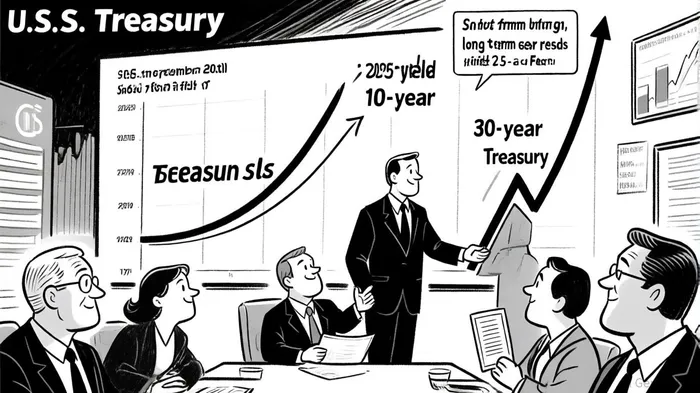
Contrary to expectations of a post-rate-cut yield decline, the 10-year Treasury yield rose to 4.074% on September 17, 2025, while the 30-year yield climbed to 4.672%[2]. This paradoxical rise reflected a combination of factors: persistent inflation concerns, a hawkish-leaning Fed, and market recalibration of rate-cut expectations. Investors initially priced in a larger 50-basis-point cut, and the Fed's emphasis on not being in a “sprint” to loosen policy dampened enthusiasm[3].
The yield curve steepened as shorter-term yields fell further, with the belly of the curve (3–7 years) emerging as a focal point for investors seeking a balance between income and duration risk[4]. Intermediate-duration bonds are now favored over long-dated Treasuries, which face upward pressure from inflation and fiscal concerns. Corporate credit and securitized products are also gaining traction as growth remains resilient[5].
Equity Sector Rotations: Tech and Discretionary Lead, Financials Face Challenges
Equity markets responded with mixed signals. The S&P 500 closed down 0.1%, while the Nasdaq Composite fell 0.3%, reflecting caution amid uncertainty about the Fed's path[2]. However, sector rotations revealed clear trends. Growth stocks, particularly in technology, benefited from lower discount rates, with the Communication Services sector posting a 7.3% return over six months[6]. Consumer discretionary and real estate also gained traction as lower borrowing costs spurred demand for non-essential goods and housing[1].
Financials, however, faced headwinds. Banks' net interest margins are under pressure as rate cuts compress spreads, while credit risk looms in a potential slowdown. Defensive sectors like utilities and healthcare saw reduced appeal as investors shifted toward growth-oriented assets[7]. Small-cap stocks, historically sensitive to rate cuts, showed mixed performance, with the Russell 2000 declining 0.7% in the immediate aftermath[8].
Forward Guidance and Market Expectations: A Delicate Balancing Act
The Fed's forward guidance has been critical in shaping market expectations. While the central bank signaled two additional 2025 rate cuts, it emphasized a measured approach, avoiding aggressive easing. This cautious stance has led to a recalibration of investor strategies. For instance, bond investors are extending durations selectively but remain wary of overexposure to long-term bonds, given inflation risks[9].
In equities, the focus has shifted to sectors poised to benefit from lower rates and a potential soft landing. Technology and consumer discretionary are seen as key beneficiaries, while energy and industrials remain vulnerable to macroeconomic volatility[10]. The market's reaction underscores the importance of aligning portfolios with both near-term policy signals and long-term economic fundamentals.
Conclusion: Navigating a Complex Policy Landscape
The Fed's September 2025 rate cut and forward guidance highlight the central bank's delicate balancing act: supporting growth while managing inflation and financial stability risks. Investors must navigate a landscape where bond yields defy traditional expectations and equity sectors diverge sharply. Tactical shifts toward intermediate-duration bonds and growth equities appear warranted, but vigilance is required as global uncertainties persist. As the Fed continues its easing cycle, market participants will need to remain agile, leveraging forward guidance while hedging against potential policy missteps.







Comentarios
Aún no hay comentarios