
The Fed's Pivotal Strategy Shift: Implications for Equity and Fixed Income Markets
The Federal Reserve's September 2025 rate cut-its first easing since December 2024-marks a pivotal shift in monetary policy, driven by a deteriorating labor market, persistent inflation, and structural challenges like tariff-driven goods inflation. This strategic pivot has profound implications for equity and fixed income markets, demanding a reevaluation of portfolio positioning and asset allocation.
A New Policy Framework: Flexibility Over Rigidity
The Fed's updated monetary policy framework, finalized in August 2025, abandoned average inflation targeting in favor of a more flexible approach that balances price stability and maximum employment[3]. This shift reflects a recognition that employment can exceed its "maximum level" without necessarily triggering runaway inflation, provided inflation expectations remain anchored. For investors, this means the Fed is now more willing to tolerate short-term inflation overshoots to avoid over-tightening-a departure from its earlier hawkish stance.
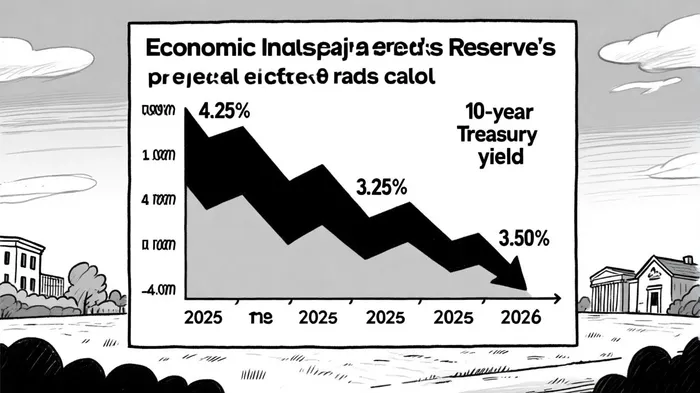
The September 2025 rate cut (25 basis points to 4.00%-4.25%) was accompanied by a median FOMC projection of a 3.50%-3.75% target range by year-end 2025[5]. This signals a data-dependent, cautious easing path, with officials divided on the number of cuts (two vs. three) needed to stabilize the economy[4]. The uncertainty underscores the Fed's balancing act: supporting a slowing labor market while avoiding a resurgence of inflation.
Equity Markets: Sector Rotation and Valuation Reassessment
Lower interest rates typically boost equity valuations by reducing discount rates for future cash flows. However, the Fed's pivot creates a nuanced landscape.
Growth vs. Value Stocks: Historically, rate cuts favor growth stocks (e.g., tech) due to their long-duration cash flows. With the Fed signaling further easing, sectors like semiconductors, cloud computing, and AI infrastructure-driven by long-term demand-are likely to outperform[2]. Conversely, value sectors (e.g., industrials, energy) may face headwinds if inflation remains sticky, as higher input costs could erode margins.
Financials Under Pressure: Banks and insurers, which rely on net interest margins, face a double whammy. Lower rates reduce lending spreads, while the Fed's dovish stance may delay a recovery in credit demand[5]. Investors should scrutinize balance sheets and fee-based income streams for resilience.
Real Estate and Consumer Discretionary: Mortgage rates tied to the federal funds rate will decline, boosting housing demand and real estate valuations. Similarly, consumer discretionary sectors (e.g., travel, luxury goods) could benefit from increased disposable income as unemployment rises[2].
Fixed Income: A Tale of Two Yields
The Fed's rate cuts will directly impact bond markets, but the interplay between inflation expectations and central bank guidance introduces complexity.
Treasury Yields and Duration Risk: With the Fed projecting 50-75 basis points of easing by year-end, the 10-year Treasury yield is likely to trend lower, potentially dipping below 3.5%[5]. However, inflation risks-particularly from tariffs-could cap bond gains. Investors may need to extend duration cautiously, favoring inflation-linked TIPS over nominal Treasuries[1].
Credit Spreads and High-Yield Bonds: A weaker labor market increases default risks for high-yield borrowers. While lower rates should support corporate borrowing costs, spreads may widen if economic growth disappoints. Selectivity will be key, with a focus on sectors insulated from tariff-driven inflation (e.g., services, healthcare)[4].
Municipal Bonds and Alternatives: Municipal bonds could outperform as tax-exempt yields become more attractive in a low-rate environment. Additionally, alternative fixed income (e.g., private credit, infrastructure debt) may offer higher returns with lower correlation to traditional bonds[2].
Global Implications: A Synchronized Easing Cycle?
The Fed's pivot is likely to influence global central banks, particularly in emerging markets facing capital outflows and currency pressures. A coordinated easing cycle could boost risk assets worldwide but may also lead to divergent outcomes. For example, countries with inflation above 5% (e.g., Brazil, India) may delay rate cuts, creating cross-border yield differentials[5]. Investors should monitor the U.S. dollar's trajectory: a weaker dollar could benefit emerging market equities and commodities, while a stronger dollar may pressure non-U.S. bonds[1].
Strategic Positioning for Investors
Given the Fed's dual mandate focus and uncertain inflation path, investors should adopt a dynamic, hedged approach:
- Equities: Overweight growth sectors (tech, AI) and underweight rate-sensitive financials.
- Fixed Income: Extend duration selectively (TIPS, municipal bonds) while maintaining a short-term cash buffer for volatility.
- Global Allocation: Diversify across regions to capitalize on divergent monetary policies, favoring economies with stronger fiscal positions.
The Fed's 2025 strategy shift is not just a technical adjustment-it's a recalibration of how markets price risk in a post-pandemic, tariff-driven world. As Chair Powell emphasized, the Fed's independence and data-dependent approach will remain critical, but investors must stay agile in the face of evolving macroeconomic signals[4].







Comentarios
Aún no hay comentarios