
Fed's Pivotal Shift and the Case for Aggressive Rate Cut Bets
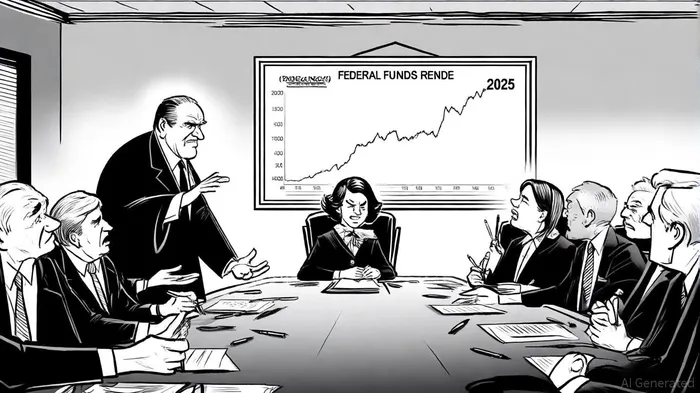
The Federal Reserve's September 2025 rate cut marked a pivotal shift in monetary policy, signaling a strategic pivot from inflation containment to labor market stabilization. By reducing the federal funds rate by 25 basis points to a range of 4.00%-4.25%, the Fed acknowledged "downside risks to employment" amid slowing job growth and potential unemployment pressures, according to a CEO Column analysis. This move, described by Chair Jerome Powell as a "risk management" approach, was reported by Reuters. It sets the stage for further cuts, with projections of two additional reductions by year-end, targeting a 3.50%-3.75% range per a Northern Trust note. Such a trajectory creates a compelling case for aggressive asset reallocation, as investors position portfolios to capitalize on the implications of an easing cycle.
Strategic Reallocation: Asset Classes in the Crosshairs
Historical data underscores the transformative impact of Fed rate cuts on asset class performance. U.S. equities, particularly large-cap growth stocks, have historically outperformed during such cycles. The S&P 500 has averaged 14.1% returns in the 12 months following the first rate cut since 1980, as noted in the CEO Column analysis, with technology sectors benefiting disproportionately from lower discount rates on long-duration earnings. For 2025, this dynamic suggests a tilt toward high-growth equities, especially in AI and cloud infrastructure, where cash flow visibility aligns with accommodative monetary conditions.
Fixed-income markets present a nuanced opportunity. While declining yields compress returns, investors are advised to extend duration into the "belly" of the Treasury curve (three to seven years), where risk-adjusted returns balance interest rate sensitivity and yield, according to BlackRock's analysis. Alternative strategies, including private credit and real estate, also gain traction as traditional fixed income struggles to meet yield targets, per the CEO Column analysis. Real assets, such as commercial property and infrastructure, emerge as dual-purpose allocations-hedging against inflation while benefiting from lower borrowing costs, according to the Northern TrustNTRS-- note.
High-Risk, High-Reward Plays
The Fed's rate-cut cycle amplifies the appeal of non-traditional assets. Gold, historically a beneficiary of falling real rates, has shown robust performance during past easing periods, as highlighted by Northern Trust, with its price sensitivity to aggressive cuts (e.g., the 2020 pandemic response) suggesting further upside. BitcoinBTC--, though volatile, mirrors this pattern, with its inverse correlation to the U.S. dollar making it a speculative but strategic addition to diversified portfolios, a point emphasized in BlackRock's analysis.
International equities also gain a tailwind as rate cuts weaken the dollar, enhancing the competitiveness of foreign earnings. Emerging markets, in particular, could see capital inflows if the Fed's pivot outpaces tightening cycles in other central banks, according to BlackRock's research. However, investors must balance these opportunities with geopolitical risks, particularly in regions with fragile fiscal positions.
Navigating the "Higher for Longer" Scenario
While the Fed's projections favor further cuts, the risk of a "higher for longer" scenario-where inflation resists control-remains. In such a case, short-duration bonds, value equities, and financial sector stocks (which benefit from higher net interest margins) could outperform, as outlined in a Sidepocket primer. Diversification across asset classes, including a modest allocation to commodities, remains critical to buffer against policy uncertainty, a recommendation also emphasized in that Sidepocket primer.
Conclusion
The Fed's 2025 rate-cut cycle represents a structural shift in monetary policy, demanding a recalibration of investment strategies. By extending duration in fixed income, overweighting growth equities, and selectively allocating to alternatives, investors can position portfolios to thrive in an environment of declining rates. However, vigilance is required-monitoring inflation data and global economic signals will be essential to pivot strategies if the Fed's trajectory diverges from expectations. As history demonstrates, those who act decisively in response to central bank signals often reap the most significant rewards, a conclusion echoed in the CEO Column analysis.





Comentarios
Aún no hay comentarios