
The Fed's Latest Rate Decision: Implications for Equity and Fixed Income Markets
The Federal Reserve's November 2025 rate decision, which cut the federal funds rate by 25 basis points to a range of 3.5% to 3.75%, has sent ripples through global markets. This move, the fourth in a series of easing actions, reflects a delicate balancing act between cooling inflation and supporting a labor market showing early signs of strain. The decision, however, was not unanimous: officials like Stephen I. Miran advocated for a larger 50-basis-point cut, while others, including Jeffrey R. Schmid, preferred no change at all
according to official statements. The Fed's forward guidance emphasized a "higher bar" for future easing, with Chair Jerome Powell signaling that additional cuts in 2026 would depend on incoming data and the evolving economic outlook
as reported by financial analysts.
Equity Markets: Growth Stocks and International Exposure in Focus
The Fed's rate cuts have historically bolstered equity markets, particularly in benign economic environments. In 2025, investors are increasingly favoring U.S. growth equities, driven by robust earnings and capital expenditures in AI-related sectors
according to investment research. However, the narrative is nuanced: while growth stocks benefit from lower discount rates, a potential slowdown in macroeconomic data could prompt a rotation toward value equities or defensive sectors.
International equities have also gained traction, partly due to a weakening U.S. dollar, which enhances returns for dollar-denominated portfolios
according to market analysis. This shift suggests a structural rethinking of portfolio construction, with investors diversifying geographically to capitalize on divergent growth trajectories. For instance, emerging markets, which often thrive in low-rate environments, are attracting attention as central banks in Asia and Latin America maintain accommodative policies
as historical data shows.
Fixed Income: The Belly of the Curve Emerges as a Strategic Sweet Spot
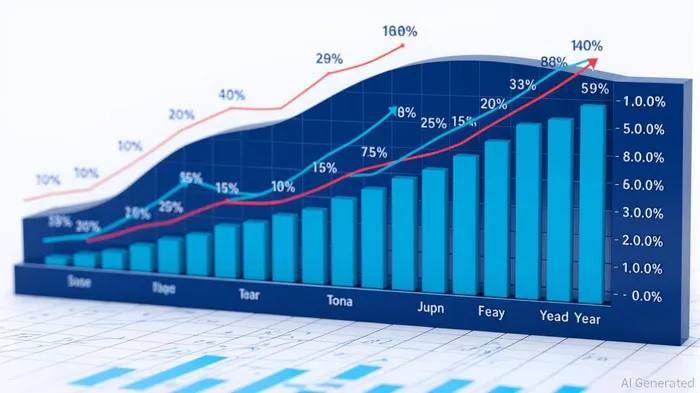 In fixed income, the Fed's rate cuts have prompted a strategic reallocation toward intermediate-duration bonds. Investors are favoring the "belly" of the yield curve-maturities of 3 to 7 years-over long-dated Treasuries, which carry higher inflation risk
according to bond market analysis. This shift reflects a recognition that the Fed's neutral rate may now hover near 3%, limiting the upside for long-duration bonds while elevating term premiums
as noted by institutional investors.
The rationale is clear: intermediate bonds offer a balance between yield and duration risk. For example, five-year U.S. Treasuries currently provide attractive all-in yields without exposing portfolios to the volatility of 30-year bonds, which could underperform if inflation persists above 2%
as financial experts observe. Additionally, alternatives like investment-grade collateralized loan obligations (CLOs) and emerging market (EM) bonds are gaining traction as income-focused options, offering higher yields than traditional Treasuries while mitigating duration risk
according to private equity research.
Alternative Investments: Diversification in a Shifting Policy Landscape
The Fed's cautious approach to easing has also spurred interest in alternative assets. Liquid alternatives, such as real estate investment trusts (REITs) and commodities, are being deployed to hedge against inflation and diversify risk-return profiles
as financial experts state. Notably, power generation and data center infrastructure have emerged as key opportunities, driven by AI-driven energy bottlenecks and surging demand for digital infrastructure
as market reports indicate.
Private equity and real estate are also seeing renewed interest, supported by deregulation and the normalization of interest rates. These assets, which typically offer uncorrelated returns, are increasingly viewed as complements to traditional portfolios in an era of policy uncertainty
according to industry analysis.
The Fed's November decision underscores the importance of agility in asset allocation. For equities, a selective and nimble approach-rotating between growth and value sectors based on macroeconomic signals-is prudent. In fixed income, a focus on intermediate-duration bonds and credit-sensitive strategies can balance yield and risk. Meanwhile, alternatives provide a critical diversification layer, particularly as central banks navigate the delicate task of balancing growth and inflation.
As the Fed signals a cautious path for 2026, investors must remain attuned to evolving policy signals and economic data. The next phase of monetary easing may hinge on incoming inflation readings and labor market trends, making flexibility a key asset in 2026's investment landscape.







Comentarios
Aún no hay comentarios