
The Fed's Inflation Narrative and the Case for Rate-Easing-Driven Growth Sectors
The Federal Reserve's evolving inflation narrative and its anticipated rate-easing trajectory in 2025 and 2026 are reshaping the investment landscape. With core PCE inflation projected to remain elevated at 3.0% in 2025 before moderating to 2.6% by 2026, the central bank has signaled a deliberate shift toward accommodative policy, cutting the federal funds rate by 25 basis points in December 2025 to a range of 3.50–3.75%. This trend is expected to continue, with the Fed's median projections pointing to further reductions to 3.25–3.50% in 2026 and 3.00–3.25% in 2027. These adjustments, driven by persistent cost-push shocks such as tariffs and a gradual return to price stability, are creating fertile ground for specific growth sectors poised to capitalize on lower borrowing costs and improved economic conditions.
Real Estate and Infrastructure: A Tailwind from Lower Rates
Real estate remains a prime beneficiary of rate easing, with reduced mortgage rates and commercial borrowing costs fueling demand for housing and industrial properties. Real estate investment trusts (REITs) and homebuilders are particularly well-positioned, as lower rates incentivize both residential and commercial development. For instance, the National Association of Home Builders has noted a surge in construction activity in Q4 2025, driven by the Fed's rate cuts and improved affordability metrics. Similarly, industrial REITs are gaining traction as e-commerce and AI-driven logistics expand, creating sustained demand for warehouse and distribution facilities.
Utilities and Industrials: Stability and Stimulus
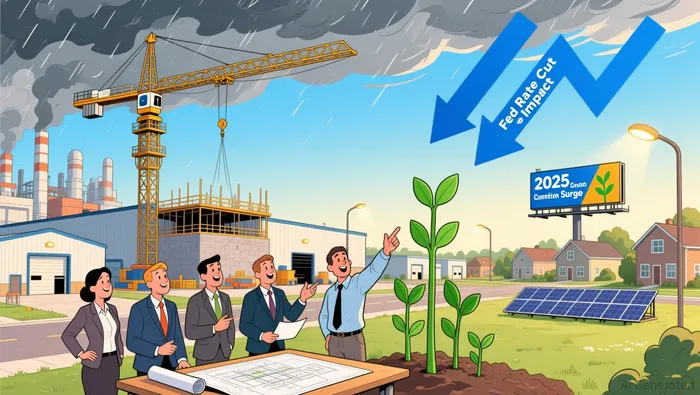 Utilities and industrials are also set to thrive in a low-rate environment. Lower interest rates reduce debt servicing costs for capital-intensive industries, improving profit margins and enabling reinvestment in modernization. According to a report by Bloomberg, utility companies with strong balance sheets are attracting income-focused investors seeking stable returns amid a shifting rate cycle. Meanwhile, the industrial sector is benefiting from renewed infrastructure spending and AI-driven automation, which are boosting productivity and demand for machinery and equipment.
Technology and AI: The Long-Term Catalyst
The technology sector, particularly artificial intelligence (AI), stands out as a cornerstone of growth in this narrative. With core PCE inflation stabilizing at 2.6% by 2026, the Fed's rate cuts are expected to free up corporate budgets for innovation. Morgan Stanley highlights that AI adoption is already driving business expenditures, with cloud computing, semiconductors, and data center infrastructure emerging as key subsectors. Additionally, the One Big Beautiful Bill Act's fiscal tailwinds are projected to accelerate AI development, further solidifying the sector's growth trajectory.
Financials and Consumer Discretionary: Mixed but Positive Outcomes
Financials, including banks and insurers, face a mixed outlook. While lower rates may compress net interest margins, they also stimulate lending and credit activity, particularly in small business and consumer finance. Consumer discretionary sectors, such as retail and travel, are likely to see a boost as households regain purchasing power. Fidelity's 2026 sector outlook notes that big-ticket items like luxury goods and leisure services could see renewed demand, supported by the Fed's accommodative stance.
Materials: The Hidden Levers of Growth
Materials such as copper and silver are emerging as overlooked beneficiaries of the rate-easing cycle. These commodities are critical to renewable energy and AI infrastructure, with demand expected to surge as global decarbonization efforts and tech adoption accelerate. J.P. Morgan's 2026 market outlook underscores that materials firms with strong supply chains and low production costs will outperform, particularly in a scenario where inflation remains sticky.
Risks and Rebalancing
While the Fed's easing trajectory and stabilizing inflation present compelling opportunities, risks persist. J.P. Morgan Global Research cautions that a 35% probability of a U.S. or global recession in 2026 underscores the need for caution, particularly in sectors sensitive to economic cycles. Investors should also monitor the uneven impact of monetary policy, as prolonged inflation could delay the full realization of rate cuts' benefits.
Conclusion: Strategic Allocation in a Shifting Landscape
The Fed's inflation narrative and rate-easing path are creating a mosaic of opportunities across real estate, utilities, technology, and materials. By strategically allocating capital to sectors aligned with lower borrowing costs and AI-driven innovation, investors can position themselves to capitalize on the next phase of economic expansion. However, a balanced approach that accounts for macroeconomic risks will be essential in navigating this dynamic environment.







Comentarios
Aún no hay comentarios