
The Fed's Independence: A Pillar of Economic Stability in an Uncertain World
In an era of escalating trade tensions and political volatility, Federal Reserve Bank of Minneapolis President Neel Kashkari has emerged as a vocal advocate for the central bank’s independence, calling it “foundational” to achieving better economic outcomes. His recent remarks underscore a critical truth: in an increasingly uncertain global environment, the Fed’s ability to operate free from political interference is not just a theoretical ideal but a practical necessity.
The Case for Fed Independence
Kashkari’s emphasis on independence stems from the Fed’s dual mandate: maintaining price stability and maximizing employment. Yet, achieving this requires policymakers to resist short-term political pressures. For instance, President Trump’s past criticism of Fed Chair Jerome Powell for not lowering interest rates highlighted the fragility of this independence. Kashkari argues that such pressures, if heeded, would distort decision-making, eroding trust in the Fed’s ability to prioritize data over politics.
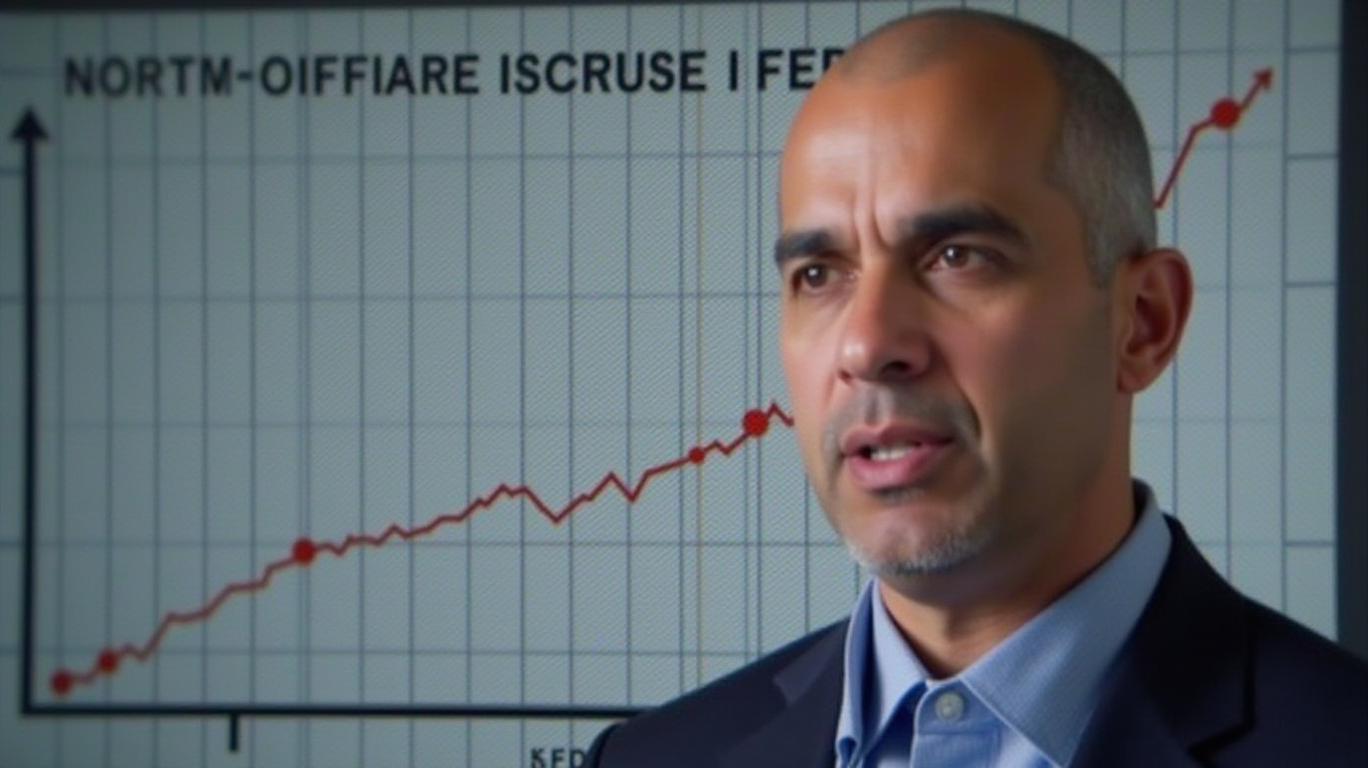
Trade Wars and the Fed’s Limits
Kashkari’s analysis reveals a stark reality: while the Fed can influence short-term inflation expectations, it cannot resolve the structural issues driving today’s economic challenges. Take tariffs, for example. U.S. trade policies, particularly those targeting China, have become a significant drag on growth. A 10% tariff on Chinese imports, as Kashkari noted, could wipe out Minnesota’s soybean exports to China—a stark example of how trade decisions harm specific sectors.
The Fed’s toolkit is blunt: it can raise rates to combat inflation or cut them to stimulate growth. But tariffs, which directly raise prices, force the Fed into a reactive role. Kashkari warns that persistent trade disputes risk “unanchoring” inflation expectations, a scenario where long-term price stability becomes elusive. This is why he prioritizes inflation control over premature rate cuts, even as trade wars threaten recession risks.
Market Signals: Anxiety and Anchoring
Investor sentiment has been a key focus of Kashkari’s analysis. Rising Treasury yields and a weakening dollar—contrary to historical patterns where tariffs boost demand for the dollar as a safe haven—signal shifting confidence. The 10-year Treasury yield surged after Trump’s tariff threats, while the U.S. dollar index fell to multi-year lows in April 2025. These trends reflect a market reassessment of the U.S. as an investment destination.
Kashkari interprets this as a warning: without resolution to trade disputes, capital flows could further erode. Yet, he stresses the Fed’s role in ensuring inflation expectations remain anchored. As he noted, “We can’t fix tariffs… but we can keep inflation from getting out of hand.”
Fiscal Policy and the Fed’s Constraints
Kashkari’s remarks highlight the Fed’s limited influence over fiscal decisions. While Congress and the White House debate spending and trade, the Fed’s job is to manage the fallout. For instance, fiscal stimulus or tax cuts might boost growth temporarily but risk overheating an already inflation-prone economy.
The Fed’s hands are tied here. As Kashkari bluntly states, “We have zero ability to affect long-term outcomes determined by trade or fiscal policies.” This underscores the need for policymakers in other branches to act responsibly, as monetary policy alone cannot stabilize the economy in the face of poor fiscal decisions.
Conclusion: Independence as a Non-Negotiable
Kashkari’s analysis paints a clear picture: the Fed’s independence is not just a procedural norm but a strategic imperative. With recession risks hovering at 45-50% (per JPMorganJPEM-- and Goldman Sachs estimates), inflation expectations at 2.5% (as of February 2025), and trade disputes destabilizing global capital flows, the Fed must remain a neutral arbiter.
The data is unequivocal. When political interference intrudes—whether through tariff wars or public criticism—the Fed’s ability to anchor inflation and stabilize markets diminishes. Investors, too, are sending signals: rising bond yields and a weaker dollar reflect skepticism about the U.S.’s fiscal and trade policies.
In this volatile landscape, the Fed’s independence is the last line of defense against economic chaos. As Kashkari’s arguments make clear, sacrificing this principle would come at a steep cost—one that markets, businesses, and households cannot afford to pay.
Data sources: Federal Reserve transcripts, FOMC minutes, JP Morgan/Goldman Sachs reports, Treasury yield data.







Comentarios
Aún no hay comentarios