
Fed's Hawkish Split Dashes Rate Cut Hopes, Markets in Limbo
Federal Reserve officials with a hawkish leaning are intensifying their push for caution as the central bank debates further interest rate cuts, with asset price declines and economic data delays creating new challenges for policymakers. Vice Chair Philip Jefferson emphasized the need to "proceed slowly" toward a neutral policy stance, while Cleveland Fed President Beth Hammack warned that easing rates could prolong inflation and destabilize financial markets. The divergence in views among Federal Open Market Committee (FOMC) members has left markets in limbo, with the probability of a December rate cut dropping to 42.9% from 93.7% in October, according to the CME FedWatch tool.
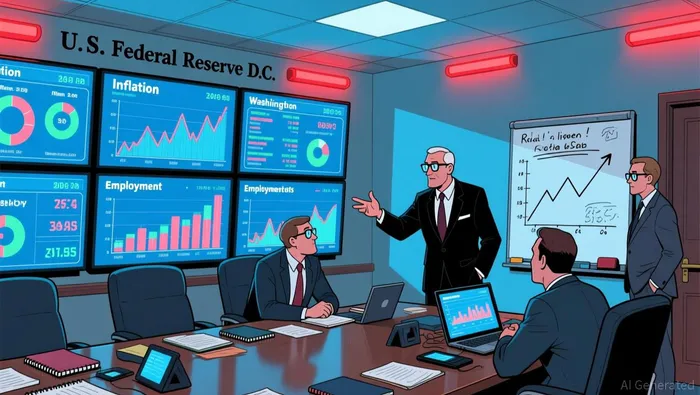 Jefferson, in remarks ahead of a Kansas City Fed event, acknowledged the appropriateness of the 25-basis-point cut in October but stressed that the current policy remains "somewhat restrictive" and requires careful navigation as the central bank approaches neutrality. Compounding the uncertainty, delayed government data - including the September jobs report - has limited officials' ability to assess economic conditions. The Bureau of Labor Statistics' release of 119,000 nonfarm payrolls for September, while exceeding forecasts, came with a revised downward adjustment of 911,000 jobs from March 2025, raising questions about labor market resilience.
The hawkish faction's influence has disrupted market expectations. Rosenberg Research noted that Fed hawks "swooped in and sent the odds of a December rate cut down to less than 50%," though analysts suggested the FOMC's December 10 meeting minutes could clarify divisions. Hammack, a prominent voice among the hawks, argued that further cuts risk encouraging speculative behavior and could delay the identification of weak lending practices, potentially exacerbating future downturns. Her comments align with a broader FOMC strategy prioritizing inflation control over labor market support, even as unemployment edged to 4.4% in September - the highest since October 2021.
The Fed's internal debate reflects broader economic tensions. While inflation has eased from multiyear highs, core measures remain above the 2% target, and services-sector price pressures persist. The September jobs report, while showing a rise in average hourly earnings (3.8% year-over-year), also revealed a "low-hiring, low-firing environment," with workers "holding on to their jobs for dear life", according to Hammack. These mixed signals have left policymakers wary of overreacting, particularly as the Federal Reserve Bank of St. Louis' latest Summary of Economic Projections (SEP) indicates a median forecast of 3.625% for the federal funds rate by year-end - down from 3.875% in June.
Market participants are bracing for a prolonged period of "higher for longer" rates. Diamond Hill Investment Group noted that while most FOMC members see room for 50 basis points of easing in 2025, the long-term neutral rate remains pegged at 3%, underscoring the central bank's reluctance to pivot aggressively. This cautious approach has already impacted asset prices, with the S&P 500 and Nasdaq experiencing sharp declines as traders recalibrate expectations. The uncertainty is further amplified by external factors, such as Trump's recent tax cuts, which, while boosting growth, face dampening effects from elevated interest rates.
As the December meeting approaches, the Fed's balancing act between inflation and employment risks will remain in focus. With officials divided and data constraints persisting, the path forward hinges on whether incoming metrics - particularly inflation readings and wage growth - signal sufficient progress to justify easing. For now, hawks appear to hold the upper hand, reinforcing a policy stance that prioritizes price stability over immediate economic stimulus.







Comentarios
Aún no hay comentarios