
The Fed's Hawkish Pivot: Implications for Fixed Income and Equity Sectors
The Federal Reserve's December 2025 monetary policy decision marked a pivotal shift in its approach to managing the U.S. economy. By reducing the federal funds rate by 25 basis points to a target range of 3.50%-3.75%, the Fed signaled a cautious easing path while maintaining a hawkish tone as analysts have termed it. This "hawkish cut," as analysts have termed it, reflects the central bank's balancing act between supporting a softening labor market and guarding against inflationary risks. For investors, this pivot necessitates a strategic reevaluation of asset allocations, particularly in fixed income and equity sectors, as the prolonged high-rate environment continues to shape market dynamics.
Fixed Income: Navigating Duration and Yield Trade-offs
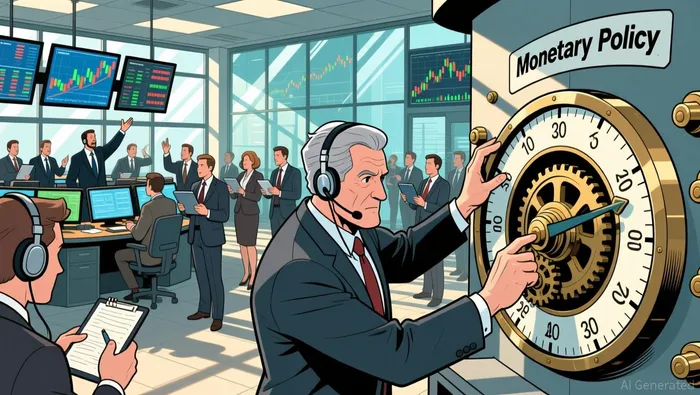
The Fed's emphasis on a measured easing cycle has significant implications for fixed income markets. While the central bank's policy statement acknowledged the need for future rate cuts, it explicitly raised the bar for such actions, requiring "stronger evidence of labor market deterioration or inflationary moderation" as the Fed has stated. This uncertainty has led investors to favor shorter-duration instruments to mitigate interest rate risk. According to a report by Nuveen, the 3- to 7-year segment of the yield curve has emerged as a strategic sweet spot, offering a balance between income generation and duration management.
Additionally, the Fed's technical quantitative easing-purchasing shorter-term Treasury securities to maintain ample reserves-has further tilted the playing field for fixed income investors. In this environment, preferred securities and senior loans are gaining traction as they provide higher yields relative to traditional bonds while maintaining a lower sensitivity to rate fluctuations as Nuveen reports. However, investors are advised to remain cautious about extending duration, as the Fed's hawkish stance suggests that short-term yields may remain elevated for longer than anticipated.
Equity Sectors: Cyclical Plays and Small-Cap Opportunities
The Fed's pivot has also reshaped equity market dynamics, particularly for small-cap and cyclical sectors. The December 2025 rate cut, coupled with the Fed's projection of only one additional cut in 2026, has created a backdrop where financial conditions are easing but remain restrictive. This environment historically favors small-cap stocks, which tend to outperform in early stages of rate-cutting cycles due to their sensitivity to improved liquidity. The Russell 2000's sharp rally following the Fed's decision underscores this trend as Kavout reports.
Sector rotation strategies are also gaining prominence. Tactical asset allocators are increasingly overweighting cyclical sectors such as financials, industrials, and materials, which benefit from tighter credit spreads and economic growth. Conversely, defensive sectors like healthcare and utilities are being underweighted, as their appeal diminishes in a hawkish rate environment. Real estate-linked assets, particularly in healthcare and neighborhood retail, are also seeing renewed interest due to their alignment with demographic-driven demand and limited supply constraints as Nuveen observes.
Strategic Reallocation in a High-Rate World
The Fed's hawkish pivot underscores the importance of agility in portfolio management. For fixed income, the focus remains on income generation without excessive duration risk, with a tilt toward shorter-term instruments and credit-sensitive assets. In equities, the emphasis is on sectors and companies that can thrive in a gradually easing rate environment. As the Fed navigates the delicate balance between inflation control and economic support, investors must remain attuned to evolving policy signals and adjust allocations accordingly.
In this context, a disciplined approach to asset reallocation-prioritizing liquidity, diversification, and sector-specific opportunities-will be critical for capturing returns while managing risk in 2026 and beyond.







Comentarios
Aún no hay comentarios