
The Fed's 'Hawkish Cut' and Its Implications for 2026 Equity Market Rallies
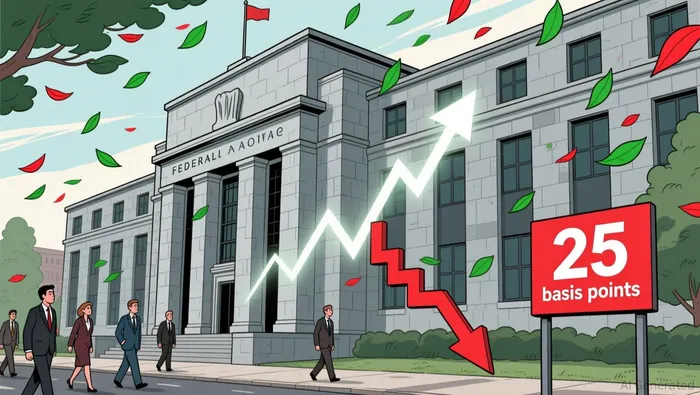
The Federal Reserve's December 2025 rate cut, though modest in magnitude, has sparked significant debate among investors and analysts. By reducing the target federal funds rate by 25 basis points to a range of 3.50%-3.75%, the Fed signaled a cautious approach to monetary policy, balancing the need to support a moderate economic expansion against persistent inflationary pressures. This decision, described as a "hawkish cut" due to its conditional nature and the narrow margin of approval, has raised critical questions about its implications for equity markets in 2026.
 ### The Fed's 2026 Projections: A Delicate Balancing Act
The Federal Open Market Committee (FOMC) updated its Summary of Economic Projections to reflect one rate cut in 2026, aligning with prior forecasts. This projection is underpinned by a revised GDP growth outlook of 2.3% for 2026, a sign of resilience in the face of elevated inflation, which is expected to remain above the 2% target until 2028 according to PIMCO analysis. The labor market, while stable, remains in a "low-hire, low-fire" climate, with unofficial data hinting at rising layoffs according to PIMCO analysis.
Chair Jerome Powell emphasized that the Fed's policy path would remain "data-dependent," with a willingness to adjust rates if risks to price stability or employment emerge according to Federal Reserve press release. This hawkish stance is further reinforced by the FOMC's decision to resume Treasury purchases, addressing liquidity concerns in overnight funding markets according to PIMCO analysis. However, the dissent of three members voting against the rate cut underscores internal divisions, suggesting uncertainty about the appropriate response to evolving economic conditions according to RBC analysis.
Market Pricing and Investor Sentiment: A Tale of Two Narratives
Equity markets have priced in a more aggressive rate-cut trajectory than the Fed's projections. In November 2025, two-thirds of the largest 1,000 stocks experienced over 10% drawdowns, with low-quality growth stocks disproportionately affected by tighter liquidity according to Morgan Stanley analysis. This volatility reflects investor anxiety over the Fed's cautious approach, which contrasts with historical patterns where rate cuts have historically driven market rallies.
Historical data reveals a nuanced relationship between hawkish rate cuts and equity performance. Since 1980, the S&P 500 has averaged a 14.1% return in the 12 months following the initiation of rate-cut cycles. However, these gains are contingent on the economic context: non-recessionary cycles yield an average 18% return, while cuts during recessions result in an average 2.7% loss according to Morningstar analysis. With the Fed projecting only one rate cut in 2026 and inflation remaining above target, the market faces a precarious balancing act.
### Implications for 2026: Volatility and Sectoral Shifts
The Fed's "hawkish cut" narrative suggests that equity markets may continue to experience volatility in 2026, particularly in sectors sensitive to interest rates. Consumer discretionary and small-cap stocks, which have underperformed in recent months, could face further pressure if rate cuts remain limited according to Morgan Stanley analysis. Conversely, sectors with strong cash flows, such as utilities and consumer staples, may benefit from a more stable rate environment.
Bond yields also provide a critical lens for understanding market expectations. The 10-year Treasury yield is projected to end 2026 at 4.55%, reflecting a cautious outlook for inflation and growth according to RBC analysis. This alignment with the Fed's dot plot-projecting a 3.50%-3.75% terminal rate by year-end-suggests that investors are pricing in a gradual, data-driven policy path rather than a rapid easing cycle according to Bond Savvy analysis.
Conclusion: Navigating Uncertainty
The Fed's December 2025 decision underscores a strategic pivot toward caution, prioritizing price stability over aggressive stimulus. While historical parallels suggest that rate cuts can catalyze equity rallies, the current environment-marked by elevated inflation, a resilient but uneven labor market, and internal FOMC divisions-demands a more nuanced approach. Investors must weigh the Fed's hawkish signals against market pricing dynamics, recognizing that 2026's equity performance will hinge on the interplay between policy flexibility and economic resilience.
As the year unfolds, sectors with defensive characteristics and companies with strong balance sheets may emerge as safe havens. Conversely, speculative growth stocks could remain vulnerable to liquidity shifts. In this climate, a disciplined, data-driven investment strategy-anchored in the Fed's evolving policy framework-will be essential for navigating the uncertainties ahead.







Comentarios
Aún no hay comentarios