
Fed's Hammack Eyes Steady Balance Sheet Cuts Amid US Government Financial Uncertainty
Generado por agente de IATheodore Quinn
viernes, 28 de febrero de 2025, 6:23 am ET1 min de lectura
As the US government grapples with financial uncertainty, Federal Reserve Bank of Cleveland President Loretta Mester has indicated her support for steady balance sheet cuts. In an interview with Bloomberg, Mester stated that the Fed should continue reducing its balance sheet at a consistent pace, despite the ongoing fiscal debates in Washington. This stance aligns with the Fed's monetary policy objectives of controlling inflation and maintaining financial stability.
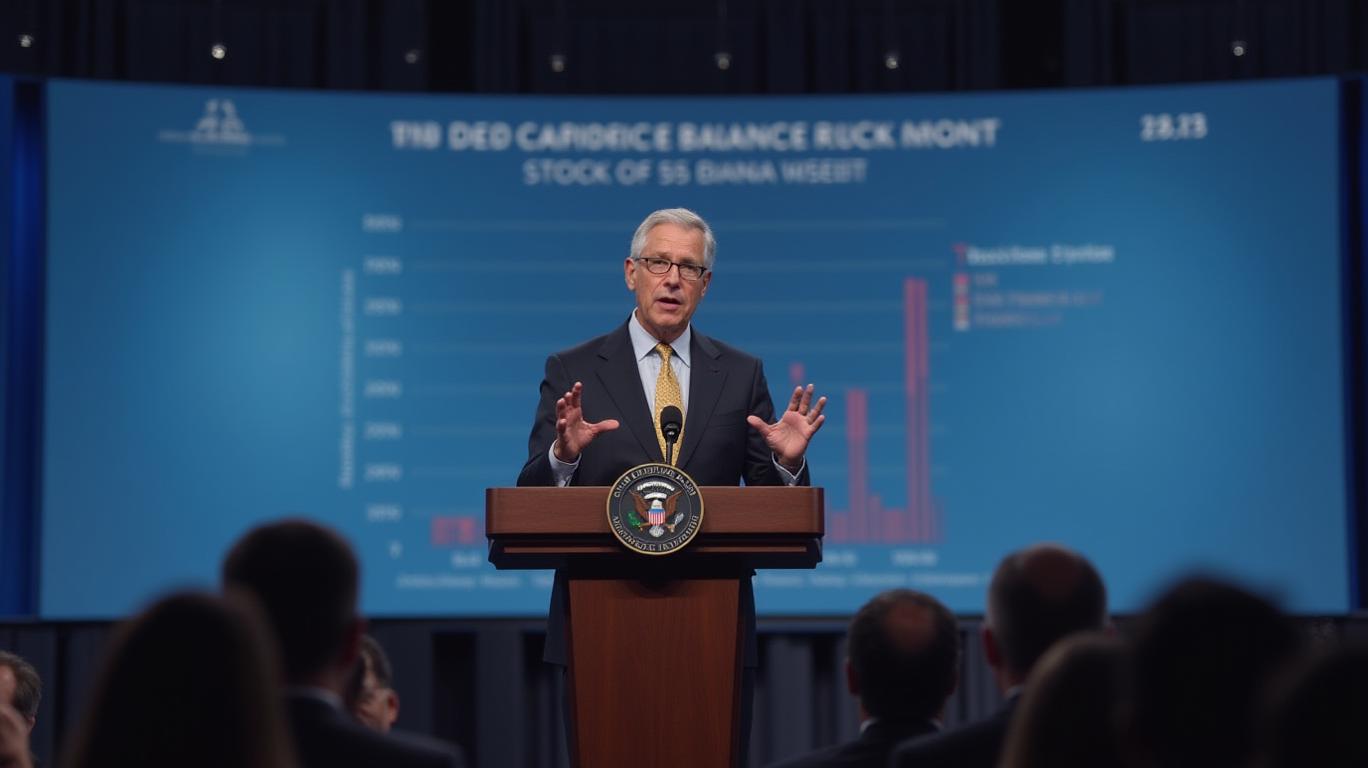
The Fed's balance sheet has grown significantly in recent years due to quantitative easing (QE) measures implemented during the COVID-19 pandemic. As the economy recovers, the Fed has been gradually reducing its holdings of long-term securities, a process known as quantitative tightening (QT). This reduction in the money supply can help to control inflation and normalize interest rates.
However, the current political climate, characterized by the new Trump administration and Republican lawmakers' pledges to slash government spending, has led to increased economic policy uncertainty. This uncertainty can negatively impact market sentiment and lead to volatility in stock prices and other asset classes. In this context, the Fed's balance sheet reduction strategy can help to promote fiscal discipline and encourage responsible fiscal policies.

The Fed's balance sheet cuts may also impact the yield curve and borrowing costs for businesses and consumers. As the Fed reduces its holdings of long-term bonds, it can cause the long end of the yield curve to rise, leading to higher borrowing costs for businesses and consumers with long-term loans. Additionally, the Fed's balance sheet reduction can impact short-term interest rates, as the Fed uses open market operations to manage short-term interest rates. This can lead to higher borrowing costs for businesses and consumers with short-term loans.
In conclusion, the Fed's balance sheet reduction strategy aligns with its monetary policy objectives in the face of US government financial uncertainty by helping to control inflation, maintain financial stability, and promote fiscal discipline. By reducing its holdings of long-term securities, the Fed can help to normalize interest rates, reduce the risk of market volatility, and encourage responsible fiscal policies. However, the impact on market sentiment, inflation expectations, interest rates, and financial stability will depend on various factors, including the pace and magnitude of the cuts, the overall economic climate, and market sentiment.



Divulgación editorial y transparencia de la IA: Ainvest News utiliza tecnología avanzada de Modelos de Lenguaje Largo (LLM) para sintetizar y analizar datos de mercado en tiempo real. Para garantizar los más altos estándares de integridad, cada artículo se somete a un riguroso proceso de verificación con participación humana.
Mientras la IA asiste en el procesamiento de datos y la redacción inicial, un miembro editorial profesional de Ainvest revisa, verifica y aprueba de forma independiente todo el contenido para garantizar su precisión y cumplimiento con los estándares editoriales de Ainvest Fintech Inc. Esta supervisión humana está diseñada para mitigar las alucinaciones de la IA y garantizar el contexto financiero.
Advertencia sobre inversiones: Este contenido se proporciona únicamente con fines informativos y no constituye asesoramiento profesional de inversión, legal o financiero. Los mercados conllevan riesgos inherentes. Se recomienda a los usuarios que realicen una investigación independiente o consulten a un asesor financiero certificado antes de tomar cualquier decisión. Ainvest Fintech Inc. se exime de toda responsabilidad por las acciones tomadas con base en esta información. ¿Encontró un error? Reportar un problema


SOBRE NOSOTROS
Nuestra historiaAutores de noticiasBase de conocimientosPolítica de privacidadTérmino de usoDescargo de responsabilidad de corretaje de tercerosTérminos de uso de AIMEDivulgaciones de riesgos de AInvest AICarrerasCONTÁCTENOS
Email: support@ainvest.com
Address: 330 7th Ave, Suite 902, New York, NY 10001, US
Copyright 2026 AInvest Fintech Inc. All rights reserved.


Comentarios
Aún no hay comentarios