
Fed Governance and the Shadow of Conflict: How Regulatory Integrity Shapes Market Stability and Investor Trust
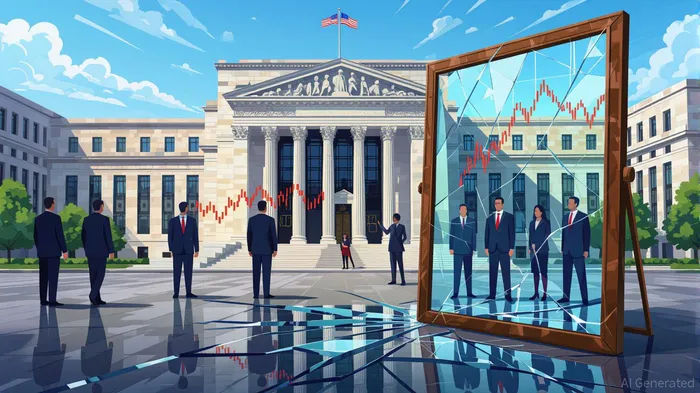
The Federal Reserve's governance structure, long celebrated for its independence, has increasingly come under scrutiny as investors and policymakers grapple with the implications of structural vulnerabilities. While the Fed's dual mandate of maximum employment and price stability remains its guiding star, recent academic analyses and policy debates reveal how governance dynamics—ranging from political appointments to communication strategies—can inadvertently erode market stability and investor trust.
Structural Vulnerabilities: Political Appointments and Institutional Biases
The Federal Reserve's independence is both its strength and its Achilles' heel. Board members serve staggered 14-year terms, insulating them from short-term political pressures but also limiting democratic accountability. This structure has drawn criticism, particularly during periods of heightened political polarization. For instance, during the Trump administration, concerns emerged about the influence of campaign donors and the potential for self-dealing in appointments[2]. Such controversies, even if unproven, risk undermining public confidence in the Fed's impartiality.
Academic research further highlights how FOMC member characteristics—such as tenure and professional background—can skew policy outcomes. Studies show that members with extended Federal Reserve experience tend to favor tighter monetary policy than the Taylor Rule would suggest[4], while those with government experience may align more closely with administration priorities. These biases, though subtle, contribute to policy variability that markets struggle to predict. For example, as a Fed Chair's tenure lengthens, the likelihood of rate cuts increases[4], creating a feedback loop where market expectations become decoupled from economic fundamentals.
Communication and Market Reactions: The Double-Edged Sword
The Fed's communication strategy, particularly the language in FOMC minutes and statements, has a measurable impact on financial markets. Analysis of sentiment in these documents reveals a strong correlation with fed funds futures rates and the U.S. dollar's valuation[2]. A single ambiguous phrase—such as “considerable time” or “measured approach”—can trigger volatility in equity and bond markets, as investors parse the Fed's intent.
This sensitivity underscores the importance of transparency. When the Fed's messaging appears inconsistent or opaque, it risks anchoring inflation expectations in ways that destabilize long-term confidence. For instance, the 2025 review of the Fed's monetary policy framework emphasized maintaining well-anchored inflation expectations[5], yet the challenge lies in balancing clarity with the need to adapt to evolving economic conditions.
Recent Reforms and Ongoing Challenges
The Fed's 2025 review of its monetary policy framework sought to address these challenges by reaffirming its commitment to price stability and employment goals[5]. However, the review also acknowledged a critical tension: employment and inflation objectives may not always align. This acknowledgment reflects a broader reality—global supply chains, technological shifts, and demographic trends complicate the Fed's ability to balance its dual mandate.
Structural critiques persist. The Fed's balance sheet expansion, political debates over fiscal policy, and the independence of regional banks have raised concerns about its insulation from political pressures[3]. Critics argue that these factors create a governance environment where accountability is diluted, increasing the risk of policy errors with macroeconomic consequences.
Implications for Investors: Trust as a Tradable Asset
For investors, the Fed's governance challenges translate into heightened uncertainty. When regulatory integrity is perceived as compromised—whether through political influence, opaque communication, or institutional inertia—market stability falters. This is not merely theoretical: historical episodes of Fed overreach or miscommunication have been linked to asset price corrections and loss of investor confidence[2].
The key for investors lies in monitoring both policy actions and the Fed's internal dynamics. For example, the proportion of FOMC members with government experience[4] or the tone of post-meeting statements[2] can serve as leading indicators of policy direction. Diversification across asset classes and hedging against inflationary shocks remain prudent strategies in an environment where Fed credibility is a moving target.
Conclusion: A Call for Governance Evolution
The Federal Reserve's governance model, while resilient, requires continuous adaptation to preserve its credibility. As the 2025 review demonstrates, the Fed is aware of these challenges. However, structural reforms—such as enhancing transparency in FOMC decision-making, clarifying the role of political appointments, and strengthening accountability mechanisms—will be critical to maintaining market stability and investor trust.
For now, investors must navigate a landscape where the Fed's actions are as much about managing perceptions as they are about economic fundamentals. In this context, regulatory integrity is not just a policy concern—it is a cornerstone of financial market health.







Comentarios
Aún no hay comentarios