
Fed's Future Policy Path 'Highly Uncertain' as Powell Downplays Forecasts Amid Trump Unknowns
Generado por agente de IAWesley Park
domingo, 23 de marzo de 2025, 9:38 am ET3 min de lectura
Ladies and gentlemen, buckle up! The Federal Reserve's future policy path is as uncertain as a roller coaster ride at Coney Island. Fed Chair Jerome Powell is playing it cool, downplaying forecasts, and keeping his cards close to his chest. But with President Trump's aggressive trade policies and other economic uncertainties looming large, the Fed is walking a tightrope. Let's dive in and see what's really going on!
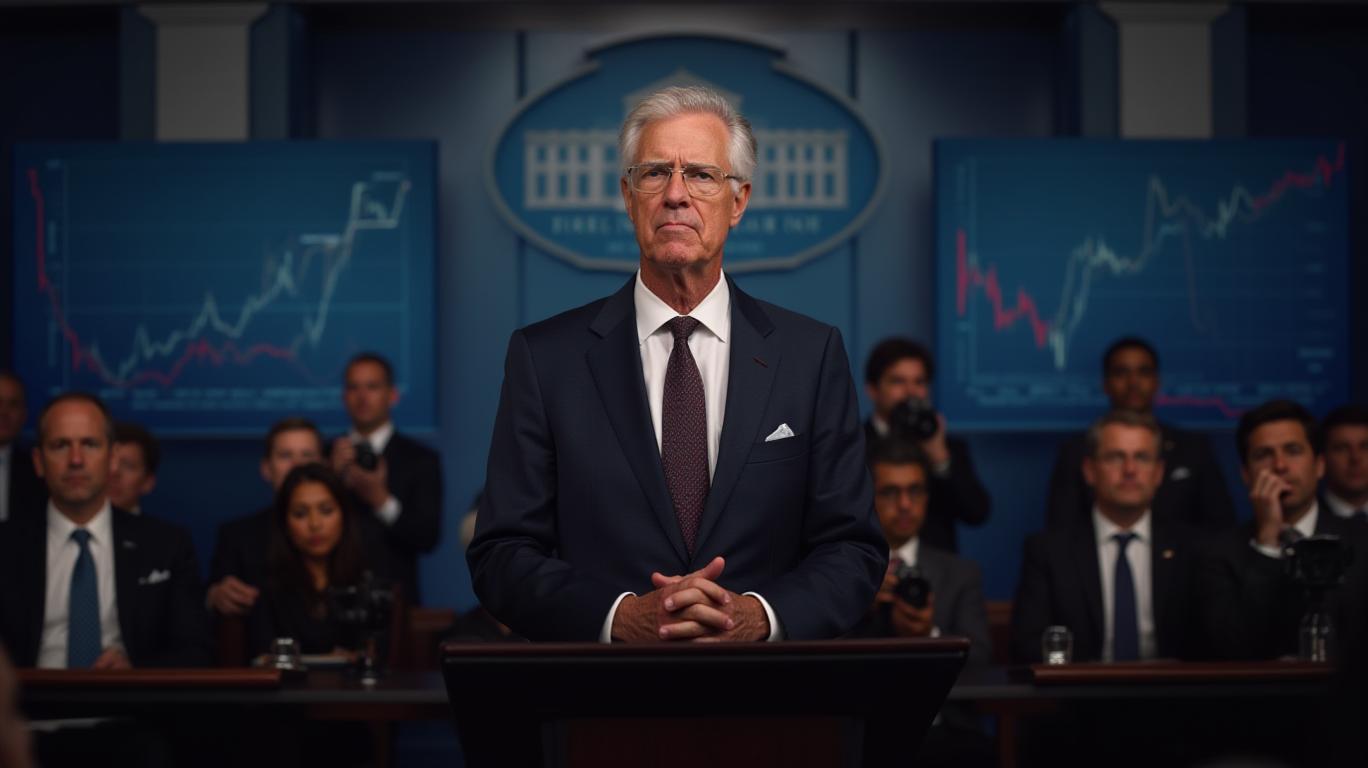
The Fed's Wait-and-See Approach
The Fed held interest rates steady at 4.25% to 4.50% at its March 2025 meeting, projecting two potential rate cuts later this year. But Powell is playing it safe, waiting for greater clarity on the economy. "We think that the right thing to do is wait here for greater clarity about what the economy is doing," Powell said. This cautious approach is like watching a high-stakes poker game—every move counts, and one wrong call could spell disaster.
Economic Uncertainty and Trump's Policies
The Fed's decision comes amid growing economic risks, with President Trump's tariffs and other policies adding to the uncertainty. Powell acknowledged that Trump's policies on trade, immigration, fiscal policy, and deregulation "will matter for the economy and the path of monetary policy." But the Fed isn't ready to act just yet. "We think that the right thing to do is wait here for greater clarity about what the economy is doing," Powell reiterated.
The Impact on Investors
Investors are on edge, waiting for the Fed's next move. Rob Haworth, senior investment strategy director with U.S. Bank Asset Management, summed it up perfectly: "The Fed is in a wait-and-see mode, waiting on the data... Until we get major data changes like that, they’ll remain extremely cautious about cutting interest rates further." This wait-and-see approach could provide stability, but it also carries risks. The Fed's decision to slow the decline in its securities holdings could limit its flexibility in responding to sudden economic changes.
Potential Scenarios for Rate Cuts
So, what could prompt the Fed to accelerate or delay these rate cuts? Let's break it down:
1. Economic Slowdown and Rising Unemployment:
- Scenario: If the economy experiences a significant slowdown, with GDP growth falling below the projected 1.7% for 2025, and unemployment rates rising above the current 4.1%, the Fed might accelerate interest rate cuts to stimulate economic activity.
- Impact on Investor Confidence and Market Volatility: Accelerated rate cuts could boost investor confidence by signaling the Fed's commitment to supporting economic growth. However, it could also increase market volatility as investors reassess the economic outlook and adjust their portfolios accordingly.
2. Inflation Decline:
- Scenario: If inflation continues to decline, falling below the projected 2.8% core PCE inflation, the Fed might accelerate rate cuts to prevent deflationary pressures.
- Impact on Investor Confidence and Market Volatility: Lower inflation expectations could lead to a more stable economic environment, boosting investor confidence. However, the sudden shift in monetary policy could cause short-term market volatility as investors react to the changing interest rate environment.
3. Increased Inflationary Pressures:
- Scenario: If inflation expectations rise significantly due to factors such as tariffs or supply chain disruptions, the Fed might delay rate cuts to control inflation.
- Impact on Investor Confidence and Market Volatility: Delayed rate cuts could increase market volatility as investors worry about the potential for higher inflation and its impact on consumer spending and business investment. Investor confidence could be shaken, leading to a sell-off in riskier assets.
4. Economic Stability and Strong Labor Market:
- Scenario: If the economy remains stable with GDP growth close to projections and the labor market continues to show strength, the Fed might delay rate cuts to avoid overstimulating the economy.
- Impact on Investor Confidence and Market Volatility: A stable economic environment could boost investor confidence, leading to a more stable market. However, the delay in rate cuts could cause short-term volatility as investors adjust their expectations for future monetary policy.
The Fed's Balance Sheet
The Fed's balance sheet is another tool in its monetary policy arsenal. During challenging economic periods, the Fed boosts economic activity by purchasing fixed income assets, such as U.S. government bonds and mortgage-backed securities. The balance sheet of assets grew to just under $9 trillion in 2022. Since then, the Fed has reduced its balance sheet, now down to less than $6.8 trillion. After its March meeting, the FOMC announced plans to slow the decline in its securities holdings, reducing Treasury securities holdings by just $5 billion per month starting in April. This move could limit the Fed's flexibility in responding to sudden economic changes.
Managing Inflation and Unemployment
The Fed's focus has shifted from tempering inflation to maintaining labor market health. While inflation is down considerably from a 9.1% 2022 peak, the rate of decline leveled off in 2024. The nation's unemployment rate stands at 4.1%, and the labor market appears to be stabilizing. But the Fed's radar is zeroed in on the potential that tariffs could push prices higher.
Conclusion
The Fed's future policy path is highly uncertain, and Powell is playing it cool. But with Trump's aggressive trade policies and other economic uncertainties looming large, the Fed is walking a tightrope. Investors need to stay vigilant and be prepared for sudden changes in the economic landscape. The Fed's decision to accelerate or delay interest rate cuts will depend on the evolving economic situation, particularly in relation to GDP growth, inflation, and unemployment. These decisions will have a profound impact on investor confidence and market volatility, with accelerated cuts potentially boosting confidence but increasing short-term volatility, and delayed cuts potentially increasing volatility and shaking investor confidence.
So, buckle up, folks! The Fed's future policy path is as uncertain as a roller coaster ride at Coney Island. Stay tuned for more updates as the economic landscape continues to evolve.



Divulgación editorial y transparencia de la IA: Ainvest News utiliza tecnología avanzada de Modelos de Lenguaje Largo (LLM) para sintetizar y analizar datos de mercado en tiempo real. Para garantizar los más altos estándares de integridad, cada artículo se somete a un riguroso proceso de verificación con participación humana.
Mientras la IA asiste en el procesamiento de datos y la redacción inicial, un miembro editorial profesional de Ainvest revisa, verifica y aprueba de forma independiente todo el contenido para garantizar su precisión y cumplimiento con los estándares editoriales de Ainvest Fintech Inc. Esta supervisión humana está diseñada para mitigar las alucinaciones de la IA y garantizar el contexto financiero.
Advertencia sobre inversiones: Este contenido se proporciona únicamente con fines informativos y no constituye asesoramiento profesional de inversión, legal o financiero. Los mercados conllevan riesgos inherentes. Se recomienda a los usuarios que realicen una investigación independiente o consulten a un asesor financiero certificado antes de tomar cualquier decisión. Ainvest Fintech Inc. se exime de toda responsabilidad por las acciones tomadas con base en esta información. ¿Encontró un error? Reportar un problema




Comentarios
Aún no hay comentarios