
The Fed's Fragile Independence: Structural Reforms and Market Stability in 2025
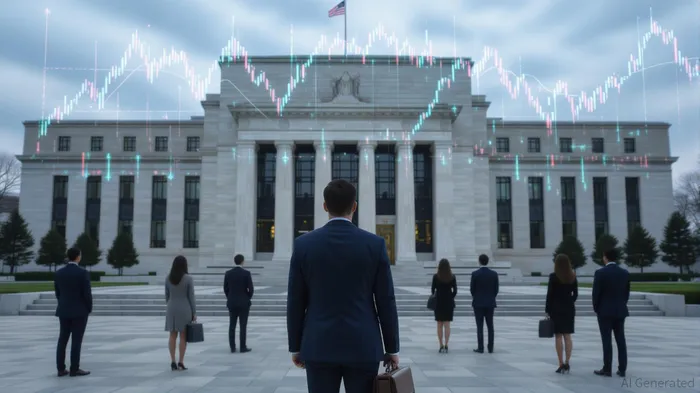
The Federal Reserve's independence has long been a cornerstone of U.S. economic policy, but recent structural reforms and political interventions are testing the limits of this autonomy. From 2023 to 2025, a series of executive actions, legal challenges, and internal governance shifts have reshaped the Fed's institutional framework. These changes raise critical questions about the effectiveness of monetary policy, the stability of financial markets, and the long-term implications for investors.
The Erosion of Regulatory Independence
President Trump's 2025 Executive Order on Ensuring Accountability for All Agencies has created a bifurcated system for the Federal Reserve. While monetary policy remains insulated from direct political control, the Fed's supervision and regulation of financial institutions now fall under the Office of Management and Budget (OMB). This shift has emboldened executive branch scrutiny of the Fed's regulatory decisions, particularly in contentious areas like climate risk and diversity initiatives.
The voluntary resignation of Vice Chair for Supervision Michael Barr in 2025—amid fears of forced removal—highlighted the growing politicization of the Fed's leadership. Barr's exit ceded influence to Lael Brainard, a Republican appointee, signaling a realignment of priorities toward deregulation. This dynamic has weakened the Fed's ability to enforce consistent supervisory standards, as seen in the aftermath of the 2023 bank failures of Silicon Valley Bank and others.
Monetary Policy in a Politically Charged Era
Despite these challenges, the Fed has maintained its independence in monetary policy. The 2025 FOMC meeting, which held interest rates steady as inflation eased to 2.4%, demonstrated a cautious approach. However, the central bank's acknowledgment that Trump-era tariffs could “materially alter” its trajectory underscores a troubling entanglement with political economic agendas.
Empirical studies from the New York Fed reveal that a 1 percentage point increase in the federal funds rate typically reduces GDP by 0.4% and employment by 0.3% over 18–24 months. Yet the 2023–2025 tightening cycle avoided a recession, partly due to strong productivity growth and fiscal stimulus. This resilience, however, may not hold if political interventions distort the Fed's ability to respond to future shocks.
Financial Health and Accountability Risks
The Fed's financial health has deteriorated significantly, with operating losses reaching $220 billion since mid-2022. A projected $1.5 trillion cost to taxpayers over the next two decades has sparked calls for a Government Accountability Office (GAO) audit and an independent inspector general. While transparency is essential, such measures risk politicizing an institution designed to operate outside short-term political cycles.
Legal challenges further complicate the Fed's independence. The Supreme Court's 2025 decision temporarily upheld Trump's removal of NLRB and MSPB members, reinforcing the Fed's quasi-private status. However, the Court's broader support for the unitary executive theory raises concerns about future challenges to regulatory independence.
Investment Implications
For investors, the Fed's evolving independence presents both risks and opportunities:
- Hedge Against Policy Uncertainty
- Gold and Treasury bonds: Safe-haven assets may outperform as geopolitical and policy-driven volatility rises.
Diversified equity portfolios: Focus on sectors less sensitive to interest rates, such as consumer staples and healthcare.
Monitor Inflation and Rate Cuts
- The Fed's projected 2025 rate cuts (0.5% total) could boost equity markets, particularly in high-growth tech and AI sectors.
Assess Regulatory Risks
- Banks and financial institutionsFISI-- face uneven regulatory oversight. Favor large, well-capitalized banks over regional players.
Engage in Long-Term Positioning
- Invest in companies that benefit from financial stability, such as fintech firms and infrastructure providers.
- Consider ESG funds that align with the Fed's historical focus on climate risk, despite recent policy reversals.
Conclusion: A Delicate Balance
The Federal Reserve's independence is not absolute but situational. While its monetary policy remains largely insulated, its regulatory and supervisory roles are increasingly subject to political influence. For investors, the key lies in anticipating how these structural shifts will shape economic outcomes and market dynamics. By hedging against uncertainty and aligning portfolios with the Fed's evolving priorities, investors can navigate the complexities of a post-2025 financial landscape with resilience and foresight.







Comentarios
Aún no hay comentarios