
The Fed's Fractured Consensus and Powell's Leadership: Implications for 2026 Rate Cuts
The Federal Reserve's December 2025 decision to cut interest rates by 25 basis points, while framed as a "hawkish cut," underscores a deepening divide within the Federal Open Market Committee (FOMC) as it navigates the delicate balance between inflation control and labor market support. With 2026 on the horizon, investors face a complex landscape shaped by internal policy debates, Powell's cautious leadership, and the looming transition of Fed leadership. This article dissects the implications of these dynamics for rate cut projections and sector-specific investment strategies.
A Divided FOMC: Hawkish Caution vs. Dovish Urgency
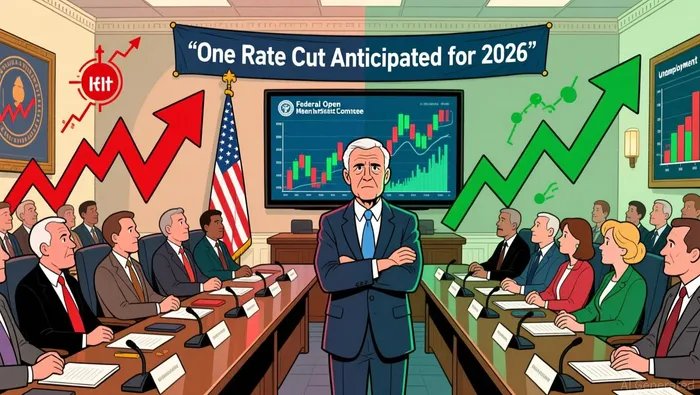
The December 2025 meeting revealed stark ideological splits. Three officials dissented: two favored maintaining rates, while one advocated for a 50-basis-point cut. This reflects a broader trend of increasing dissent, with analysts predicting rare unanimous decisions in 2026. The FOMC's updated Summary of Economic Projections (SEP) now anticipates only one rate cut in 2026, a significant retreat from earlier expectations. The policy statement emphasized the "extent and timing" of future adjustments, signaling reduced confidence in aggressive easing.
The division stems from conflicting economic signals. While the labor market shows signs of softening-evidenced by slower hiring and a declining quit rate-core inflation remains stubbornly above 2%. This tension between the Fed's dual mandate has created a policy stalemate. "Growth Protection" doves argue for clearer forward guidance to stabilize financial conditions, while "Caution First" hawks prioritize inflation vigilance, particularly in sectors like healthcare and transportation.
Powell's Data-Dependent Strategy and the Path to 2026
Chair Jerome Powell has reinforced a data-dependent approach, emphasizing the Fed's readiness to pause and reassess economic conditions before resuming rate cuts. At the December meeting, he downplayed near-term rate cut expectations, stating the Fed is "well-positioned" to monitor risks. This cautious stance aligns with the SEP's revised GDP growth projections, which now anticipate 2.3% expansion in 2026, partly driven by AI-related investments.
However, market expectations diverge from the Fed's restrained outlook. Investors have priced in more than two rate cuts in 2026, reflecting skepticism about the Fed's ability to maintain a prolonged pause. This disconnect could amplify volatility in asset classes sensitive to rate expectations, such as equities and Treasuries.
Sector-Specific Risks and Opportunities
The Fed's fractured consensus creates asymmetric risks and opportunities across sectors:
Technology and AI-Driven Industries:
The Fed's cautious rate cuts may temper borrowing costs, supporting capital expenditures in data centers and AI infrastructure. However, prolonged uncertainty could delay large-scale investments. Investors should monitor fiscal stimulus and corporate earnings for signs of resilience.Consumer and Housing Sectors:
Dovish leanings could benefit consumer spending and housing markets, where delayed borrowing due to inflationary pressures remains a headwind. A single 25-basis-point cut in 2026 may not be sufficient to reignite demand, but it could stabilize mortgage rates and retail activity.Financials and Banks:
Banks may face margin pressures from a prolonged pause in rate cuts, though a more accommodative environment could boost credit demand. Regional banks, particularly those with exposure to commercial real estate, remain vulnerable to inflationary shocks.Manufacturing and Commodity-Linked Sectors:
The hawkish emphasis on inflation vigilance could limit further monetary easing, exacerbating cost pressures for manufacturers. Sectors reliant on global supply chains, such as automotive and energy, may face additional headwinds if inflation persists.
Leadership Transition and Political Risks
Powell's term ends in May 2026, with President Donald Trump expected to nominate a successor. While a "loyalist" could introduce dovish pressures to reduce interest rates and support sectors like housing and AI, the Fed's institutional structure is likely to temper political influence. According to reports, investors should prepare for potential shifts in forward guidance and policy priorities during this transition.
Conclusion: Navigating Uncertainty
The Fed's fractured consensus and Powell's measured leadership create a high-uncertainty environment for 2026. While the FOMC projects one rate cut, market expectations and economic fundamentals suggest a more nuanced path. Investors should adopt a flexible strategy, overweighting sectors poised to benefit from cautious easing (e.g., technology) while hedging against inflationary risks in manufacturing and commodities. As Powell emphasized, the Fed's data-dependent approach will remain critical, but the political and economic headwinds of 2026 demand vigilance.







Comentarios
Aún no hay comentarios