
Fed Flies Blind as Data Blackout Clouds Rate-Cut Call
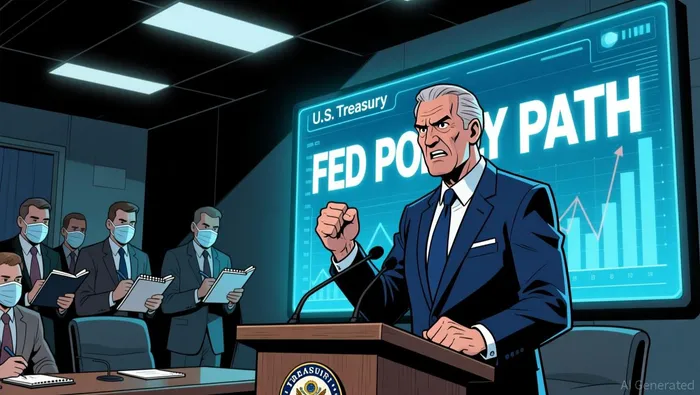
U.S. Treasury Secretary Scott Bessent has urged the Federal Reserve to maintain its rate-cutting trajectory, emphasizing that easing monetary policy remains critical to supporting economic growth and stabilizing markets amid volatile conditions. His comments come as investors grapple with a mix of conflicting signals about the labor market, inflation, and the sustainability of AI-driven spending, all of which are shaping expectations for the Fed's December meeting.
The Fed's policy path has been clouded by a lack of recent data, particularly the delayed release of September nonfarm payrolls, which will be published on November 20. This report is seen as pivotal for assessing the labor market's health and informing the central bank's decision on whether to cut rates further. Private data has already signaled weakness, with employers announcing 153,074 layoffs in October - a 183% increase from the prior month - the worst October for layoffs since 2003. Meanwhile, inflation remains a concern, with the Fed's October meeting minutes expected to shed light on internal debates over whether a December cut is warranted.
 Market expectations for rate cuts have waned sharply in recent weeks. According to the CME FedWatch tool, the probability of a 25-basis-point cut in December has fallen to 42.9% from 93.7% in October. This shift reflects a growing divide among Fed officials, with "hawks" advocating caution due to persistent inflation and "doves" pushing for relief amid a cooling labor market. Fed Vice Chair Philip Jefferson and Minneapolis President Neel Kashkari have both signaled that policy remains "restrictive," while others, like Dallas Fed President Lorie Logan, have hinted at the need for further cuts to avert a slowdown.
The AI sector's performance has further complicated the Fed's calculus. Nvidia's third-quarter earnings, released after markets closed on November 13, exceeded expectations, with revenue soaring to $57 billion - $2 billion above forecasts - driven by surging demand for data-center chips. The results briefly alleviated concerns about an "AI bubble," with CEO Jensen Huang dismissing such fears and highlighting "a virtuous cycle of AI." However, analysts caution that even strong earnings may not offset broader macroeconomic risks. According to Dennis Follmer of Montis Financial, "a great earnings report with higher guidance from Nvidia reinforces concerns over limited AI capital budgets."
Global markets have also reacted to the uncertainty. The U.S. dollar strengthened against major currencies as rate-cut expectations dimmed, with the AUD/USD pair dropping 0.4% on November 17. Gold, traditionally a haven during periods of monetary easing, stabilized near $2,100 but failed to break higher as Fed hawkishness curbed demand. Meanwhile, Treasury yields declined, reflecting falling growth expectations and a bullish steepening of the yield curve.
Bessent's advocacy for continued rate cuts aligns with broader fiscal policy goals, including supporting Trump's $100 billion "One Big Beautiful Bill," which aims to boost growth through tax cuts and infrastructure spending. According to research by former Fed economist John Roberts, he estimates the bill could add 0.4% to GDP growth in early 2026 but warns that elevated rates will dampen the overall effect.
As the Fed prepares for its December meeting, the September jobs report - expected to show 50,000 new jobs - will be the final major data point before policymakers decide their next move. A weaker reading could reignite rate-cut hopes, while a stronger report may cement the case for a pause. With the central bank "flying blind" due to the October data blackout, markets remain poised for volatility, underscoring the delicate balance the Fed must strike between inflation control and economic support.







Comentarios
Aún no hay comentarios