
The Fed's New Era: How Bessent's Shortlist Could Reshape Markets and Your Portfolio
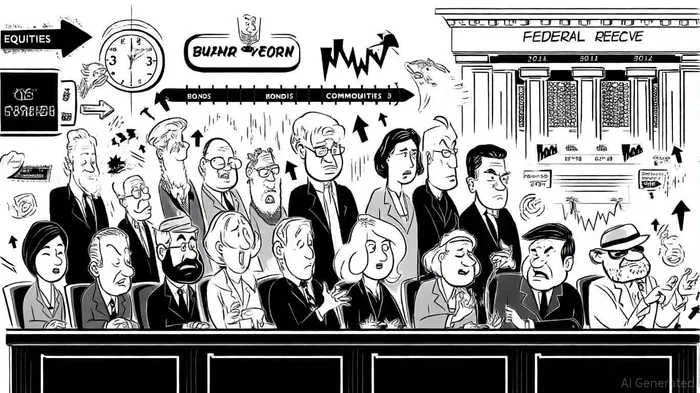
The Federal Reserve's next chair will shape not just monetary policy but the very fabric of global markets. Treasury Secretary 's recent narrowing of the Trump-era shortlist to five candidates-Michelle Bowman, , , , and -has sent ripples through Wall Street. This isn't just a bureaucratic shuffle; it's a seismic shift in the Fed's potential direction. With 's term set to expire in May 2026, the stakes are sky-high. Investors must grapple with the implications of a Fed chair who could prioritize a "" over continuity, as seen in the candidates' divergent stances on inflation, , and , as reported by Yahoo Finance.
The Bessent Blueprint: A Dovish Tilt?
Bessent's fingerprints are all over this process. A former hedge fund titan with a penchant for bold bets-like his $1 billion profit from shorting the British pound in 1992-he's unafraid to challenge the status quo, as detailed on Scott Bessent's Wikipedia page. His call for a "comprehensive institutional review" of the Fed's mission suggests a desire to dismantle the central bank's entrenched playbook, according to a CNBC report. The shortlisted candidates reflect this ambition. Kevin Warsh, a self-proclaimed advocate for "price stability," has criticized the Fed for clinging to 1970s-era models, as noted in a Forbes profile. Meanwhile, Waller's July dissent to support a rate cut signals a dovish leaning that aligns with Trump's demands for aggressive easing, per a Yahoo Finance report.
History offers cautionary tales. When , a Nixon loyalist, prioritized political expediency over inflation control in the 1970s, the result was stagflation and a decade of economic pain, according to a Bookmap post. Conversely, . The lesson? A Fed chair's can either stabilize markets or ignite chaos.
Geopolitical Crosswinds and Portfolio Positioning
The geopolitical landscape adds another layer of complexity. As tensions with China escalate and fragment, the Fed's role in mitigating economic shocks becomes critical. A might prioritize growth over inflation, potentially fueling a rally in . For instance, during the , the Fed's rate cuts and (QE) propped up the S&P 500, , according to a Central Trust analysis. Similarly, the 2020 pandemic response-zero interest rates and unlimited QE-catalyzed a in tech stocks and gold, per a Flagship.fyi analysis.
But history also warns of the risks. , , according to a CFA Institute blog post. The 2008 and 2020 crises exemplify this duality: accommodative policy averted collapse but created . Investors must balance optimism with caution.
Asset Class Implications: Where to Play and Where to Hide
- Equities: A dovish Fed would likely boost risk assets. Value stocks, which thrive in low-rate environments, could outperform . Sectors like -sensitive to economic expansion-deserve attention, according to a Northern Trust analysis.
- Bonds: Rate cuts typically drive bond prices higher, especially for . However, prolonged easing could erode future returns as new bonds are issued at lower yields, as Central Trust noted.
- Commodities: Gold and copper-hedges against inflation and geopolitical risk-could surge. , as Flagship.fyi noted.
Yet, the wildcard remains the Fed's independence. If the new chair is perceived as too politicized-like Kevin Hassett, whose ties to Trump raise concerns about policy weaponization-markets could react with volatility, as highlighted in the Forbes profile.
The Bottom Line: Prepare for a Pivot
The Fed's next chapter hinges on Bessent's shortlist. A dovish chair would likely prioritize growth, driving equities and commodities higher but risking inflationary pressures. Conversely, a hawkish pick could rein in the Fed's interventionist tendencies, favoring . Investors should diversify across asset classes, overweighting sectors poised to benefit from rate cuts while hedging against .
As the clock ticks toward May 2026, one thing is clear: the Fed's next chair will be a market-moving force. Stay agile, stay informed, and position your portfolio to thrive in a world where the Fed's playbook is about to be rewritten.







Comentarios
Aún no hay comentarios