
The Fed's December Rate Decision: Why Weaker Retail Sales and ADP Jobs Data Signal a Cut is Imminent
Weaker Retail Sales: A Harbinger of Consumer Fatigue
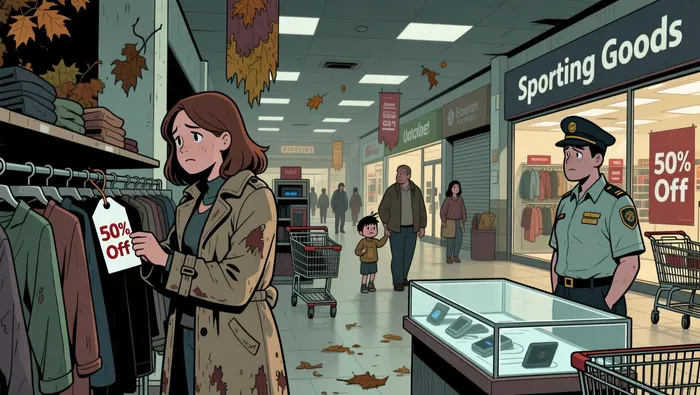
U.S. retail sales in September 2025 rose by a modest 0.2% month-over-month, falling short of the 0.4% forecast and highlighting a broader trend of consumer caution. Adjusted for inflation, total retail sales were effectively flat, with the core control group-a proxy for durable goods and broader consumption-declining by 0.1%. This contraction, particularly in categories like clothing, sporting goods, and electronics, underscores that lower- and middle-income households are losing steam amid persistent inflation and new tariffs.
The broader economic context remains mixed: while producer price inflation has eased slightly, it remains above 2.7% annually. This divergence between headline metrics and underlying consumer behavior suggests the Fed's dual mandate-price stability and maximum employment-is under strain. As RBC economists note, the "resilience in dining out and gasoline sales" contrasts sharply with the weakening in discretionary spending, creating a fragmented picture of consumer confidence.
ADP Jobs Data: A Tepid Recovery Masks Structural Weakness
The October 2025 ADP National Employment Report added 42,000 private-sector jobs, a modest rebound but far from robust. Gains were concentrated in education/healthcare and trade/transportation, while sectors like professional business services and leisure/hospitality continued to shed jobs. Notably, small and medium-sized firms contributed to the decline, with small businesses cutting 10,000 jobs and medium-sized firms shedding 21,000 over the same period.
This uneven labor market performance, compounded by a government shutdown delaying official BLS data, has heightened uncertainty. As Bloomberg analysts observe, the ADP report "fuels rate cut hopes" by revealing a labor market that is "tepid and not broad-based." The absence of broad-based hiring, coupled with flat pay growth (4.5% for job-stayers and 6.7% for job-changers), suggests that wage inflation-a key driver of core inflation-is not a pressing concern.
Market Preparedness: Shifting Investor Positioning
The evolving economic landscape has triggered a recalibration of investor positioning. Financial futures now price in an 84.9% probability of a December rate cut, up sharply from 50% the previous week. This shift is reflected in asset markets: U.S. equities, particularly large-cap growth stocks, have seen renewed inflows, while bonds have benefited from declining yields. Gold, a traditional safe-haven asset, has also gained traction as real interest rates fall.
Corporate strategies are aligning with these trends. Large firms (500+ employees) are driving employment growth, while smaller firms face challenges, prompting investors to favor companies with strong balance sheets and low debt burdens. J.P. Morgan Global Research anticipates two more rate cuts in 2025 and one in 2026, with the December move framed as a "risk management" decision rather than the start of a broader easing cycle.
The Fed's Dilemma: Dovish Leans vs. Inflationary Pressures
Despite the case for a rate cut, the Fed remains divided. Minutes from the October meeting revealed that some policymakers still advocate for holding rates steady, with a few opposing cuts outright. This internal discord reflects the Fed's balancing act: while weak retail sales and a modest rise in unemployment (to 4.4%) support a dovish pivot, recent nonfarm payroll surges complicate the narrative.
Consumer confidence, now at its lowest level since April 2025, further pressures the Fed to act. As Fed Chair Jerome Powell described the situation as a "curious balance," the central bank must navigate a labor market where both demand and supply are cooling. The delayed release of official labor data due to the government shutdown adds to the uncertainty, though the Fed has emphasized access to alternative metrics.
Conclusion: A Cut in December, But With Caution
The confluence of weaker retail sales, tepid job growth, and shifting investor sentiment strongly signals that the Fed will cut rates in December. However, this move is likely to be a tactical response to downside risks rather than the beginning of a sustained easing cycle. Markets are already pricing in this outcome, with allocations shifting toward equities, quality bonds, and gold. While the immediate focus is on stabilizing the consumer-driven economy, the Fed's internal divisions and lingering inflationary pressures mean that further cuts will depend on the trajectory of incoming data.
For investors, the key takeaway is to remain agile. A December cut may provide short-term relief, but the broader economic context-marked by structural labor market weaknesses and inflationary headwinds-demands a cautious approach to positioning.







Comentarios
Aún no hay comentarios