
Fed December Rate Cut Signals Caution Amid Liquidity Strains
The Federal Reserve cut interest rates by 25 basis points in December 2025, citing tighter money market conditions and a resilient economy according to FOMC minutes.
Rising unemployment and a weakening labor market are expected to force deeper rate cuts in 2026 as market analysis indicates.
Internal divisions at the Fed over monetary policy could persist into 2026 under new leadership according to financial reporting.
Market participants should brace for volatility as the Fed navigates liquidity risks and a potential economic slowdown as analysts suggest.
The Federal Reserve's December 2025 rate cut marked a pivotal shift in monetary policy amid growing economic crosscurrents. This 25-basis-point reduction, aimed at addressing liquidity strains, comes as the central bank confronts a weakening labor market and internal divisions. Investors are now pricing in further easing in 2026, with key policy risks on the horizon. The Fed's delicate balancing act will shape market trajectories in the coming months.
Why Did the Fed Cut Rates in December 2025?
The Federal Open Market Committee (FOMC) reduced the target federal funds rate by 25 basis points to 3.50%-3.75% at its December 9-10 meeting as FOMC minutes state. Officials pointed to higher repo rates, reduced liquidity, and substantial Treasury debt issuance as factors 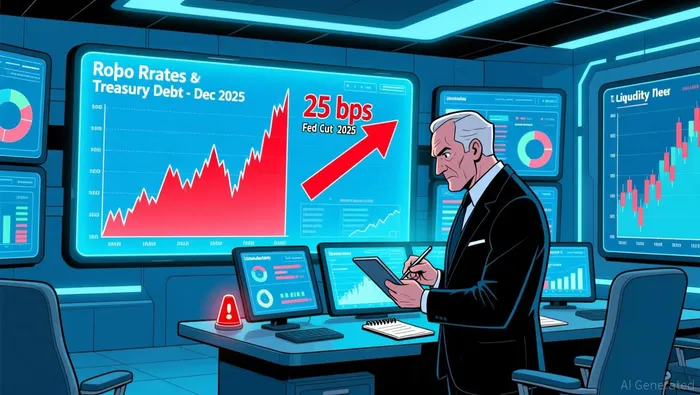 tightening money market conditions. The committee also discussed initiating reserve management purchases (RMPs) to maintain ample reserves and adjust standing repo operations. Staff emphasized the need for a flexible balance sheet to preserve interest rate control amid evolving financial dynamics.
Despite acknowledging the U.S. economy's resilience, the Fed's move reflected growing concerns about funding market fragility. Minutes released later in December highlighted the need for technical Treasury bill purchases nearing $220 billion to address liquidity risks. This preemptive strike aimed to bolster monetary policy implementation amid mounting headwinds. Participants preferred Treasury bills for RMPs to minimize market distortions while supporting reserve levels.
What Are the Implications for 2026 Monetary Policy?
Market participants anticipate deeper rate cuts in 2026 following the unemployment rate's rise to 4.6% in November 2025 according to market analysis. Weak wage growth and declining job quits signal a demand-driven slowdown, pressuring policymakers for additional easing. Analysts warn the next Fed chair will inherit a fractured committee and mounting economic challenges. The central bank's internal debates over the pace of rate reductions are likely to intensify as labor market conditions deteriorate.
Internal divisions within the Fed, which fueled three 2025 rate cuts, are expected to intensify in the new year according to financial reporting. Some officials advocate for aggressive easing while others urge caution against reigniting inflation. Wharton's Jeremy Siegel identifies January 2026 policy risks—including a government shutdown and Fed leadership transition—that could sway monetary policy expectations. Candidates like Kevin Hassett and Kevin Warsh could influence perceptions of policy direction, with a Hassett appointment potentially aligning more closely with White House objectives. That said, the Fed's data-dependent approach means incoming economic indicators will dictate the timing and magnitude of future moves.
How Are Markets Reacting to the Fed's Moves?
Interest rate futures indicate traders priced an 85.1% chance of unchanged rates through the January 27-28, 2026 meeting as of January 2 according to market data. This suggests markets are still digesting the Fed's December pivot as analysis shows. Meanwhile, Treasury yields have fluctuated as investors weigh the central bank's long-term policy path against economic indicators. Historical analysis of the 10-year yield's correlation with the fed funds rate provides context for potential yield movements in 2026.
Equity markets face a positive yet volatile backdrop in 2026, with analysts urging investors to brace for potential pullbacks. The S&P 500's resilience during 2025's turbulence may be tested by the Fed's delicate inflation-unemployment balancing act as market analysis indicates. Strategic patience and nimbleness remain critical as policy uncertainty persists. MarketWatch strategist Felix Vezina-Poirier suggests the dollar could weaken and gold strengthen if the Fed is forced into aggressive easing. Investors are advised to monitor inflation hedges and macroeconomic developments closely in this environment.







Comentarios
Aún no hay comentarios