
The Fed's December Rate Cut Imminence and Its Impact on Market Sentiment and Tech Stocks
The Federal Reserve's December 2025 policy meeting has become a focal point for investors, with markets increasingly pricing in a rate cut as a near-certainty. According to prediction markets, and FedWatch tools, an 80% to 85% probability of a 25-basis-point reduction is indicated, driven by dovish signals from officials like New York Fed President John Williams and growing concerns over a cooling labor market. This shift has ignited optimism in growth equities, particularly tech stocks, while also amplifying market volatility amid lingering uncertainties about inflation and economic data gaps.
The Fed's Dilemma: Data Gaps and Divergent Views
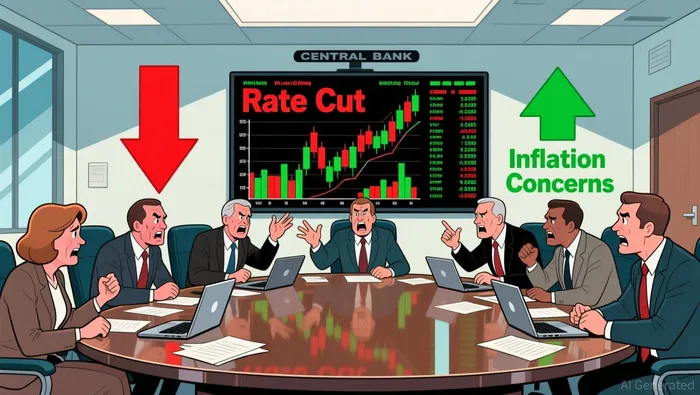
The Fed faces a complex balancing act. While elevated unemployment and softening labor market conditions have pushed some policymakers toward easing, others remain cautious about inflation, which remains above the 2% target. Compounding this tension is the recent government shutdown, which delayed critical economic data-such as October's CPI and employment figures-leaving the Fed with an incomplete picture of the economy. This uncertainty has led to a tug-of-war within the FOMC, with officials like Governor Christopher Waller advocating for cuts to support growth, while others urge patience.
Tech Stocks and Growth Equities: A Tailwind or a Bubble?
The anticipated rate cut has already spurred a rally in tech stocks, particularly those tied to AI innovation. According to a UBS report, AI-linked equities such as Alphabet and the Philadelphia Semiconductor SOXX index have surged on expectations of continued investment in AI infrastructure and hyperscaler growth. BlackRock analysts note that falling rates typically boost growth stocks by increasing the present value of future earnings, a dynamic that could further fuel gains in the sector.
However, this optimism is not without caveats. Bloomberg highlights growing concerns about overvaluation in AI-driven companies, with some analysts warning that volatility could persist as investors reassess fundamentals. For instance, tech stocks like Oracle and Palantir TechnologiesPLTR-- have experienced sharp corrections, reflecting a more selective market. Additionally, the competitive landscape of AI development remains fluid, with leadership shifts-such as Google's recent outperformance over Nvidia-highlighting the sector's inherent risks.
Market Volatility: Fear, Uncertainty, and the VIX
The anticipation of a rate cut has also kept market volatility elevated. Wall Street's fear gauge, the VIX, has remained above 20, signaling heightened anxiety among investors. This volatility is compounded by speculation about the next Fed chair and mixed economic signals, such as weak retail sales and steady PPI figures. While falling rates generally reduce borrowing costs and stimulate risk-taking, the current environment is marked by a fragile consensus, with even minor data surprises capable of triggering sharp swings.
Strategic Implications for Investors
For investors, the December rate cut presents both opportunities and challenges. On one hand, growth equities-especially those with strong cash flows and AI exposure-stand to benefit from lower discount rates and increased liquidity. On the other, the combination of delayed data, valuation concerns, and political uncertainty suggests that volatility will remain a defining feature of the market. Advisors like JPMorgan recommend reducing cash allocations and exploring equities and bonds, but with a focus on quality and diversification.
Conclusion
The Fed's December rate cut, while increasingly likely, operates within a landscape of competing forces. While it could provide a near-term boost to tech stocks and growth equities, the broader market remains vulnerable to shifts in inflation expectations, data releases, and policy debates. Investors must navigate this environment with a balanced approach, leveraging the tailwinds of easing policy while hedging against the risks of overvaluation and macroeconomic uncertainty.





Comentarios
Aún no hay comentarios