
The Fed's December Rate Cut and Its Global Implications
The Fed's Dilemma: Data-Dependent Caution
The Federal Reserve's October 2025 rate cut, its first in over a year, reflected a shift toward accommodative policy as inflation cooled and labor market growth moderated. However, the path forward remains uncertain. As of November 2025, the probability of a December rate cut has dropped sharply-from 97% in mid-October to 22%-due to stronger-than-expected job growth in September and the lingering effects of the U.S. government shutdown, which delayed key economic data releases. Fed Chair Jerome Powell has emphasized a data-dependent approach, warning that a December cut is "not a foregone conclusion." This caution contrasts with Goldman Sachs' forecast of a December cut, which assumes continued labor market softening and modestly restrictive monetary policy. The FOMC's internal debate, as revealed in October meeting minutes, highlights divergent views: while most participants see further cuts as warranted, several argue against a 25-basis-point reduction in December.
Global Policy Divergence: A New Normal
The Fed's cautious stance contrasts sharply with the aggressive rate-cutting cycles in Europe and Asia. European central banks, facing weaker growth and lower inflation, have slashed rates more aggressively than the Fed, with the ECB projected to bring its benchmark rate below 2% in 2025. 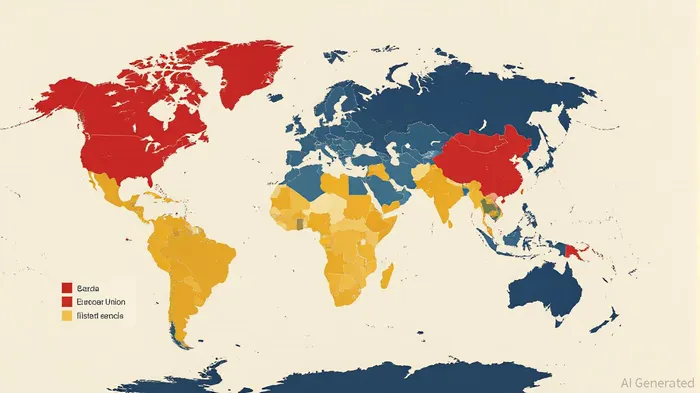 . Meanwhile, China, grappling with underwhelming growth, is expected to introduce additional fiscal and monetary stimulus in 2025 to stabilize its economy. This divergence has created a complex environment for investors. U.S. long-term Treasury yields, for instance, have defied expectations, rising despite rate cuts, sparking debates about the Fed's credibility in controlling longer-term yields. In contrast, European and emerging market bonds have benefited from accommodative policies, offering attractive yields in a low-inflation environment.
Strategic Positioning: Bonds, Equities, and Emerging Markets
Investors must adapt to this fragmented policy landscape by rebalancing portfolios to capitalize on divergent opportunities.
Bonds: In fixed income, the focus has shifted to short-duration instruments and income generation. The "belly" of the U.S. yield curve (3–7 years) remains attractive, as it balances yield with limited duration risk. European and emerging market bonds, meanwhile, offer higher yields amid aggressive central bank easing. However, investors must remain cautious about credit risks in emerging markets, where policy divergence and currency volatility persist.
Equities: U.S. equities continue to outperform, driven by strong earnings and a favorable monetary-fiscal backdrop. Growth stocks, particularly those tied to AI-driven productivity gains, are in favor. International equities, however, have surged due to a weaker dollar and valuation catch-up, prompting a reevaluation of their role in diversified portfolios. European equities, supported by structural reforms in energy transition and defense spending, present compelling opportunities as the ECB's easing cycle unfolds.
Emerging Markets: The Fed's rate-cutting cycle, combined with the ECB's and China's stimulus measures, has boosted emerging markets. A weaker dollar, favorable demographics, and early rate easing by local central banks have enhanced the appeal of local currency debt and equities. However, investors must carefully assess country-specific risks, such as political instability and trade tensions, to avoid overexposure to volatile markets.
Navigating the New Regime
The shift in monetary policy dynamics has disrupted traditional correlations, such as the historically negative relationship between stocks and bonds, increasing portfolio risk. To mitigate this, investors are increasingly turning to alternative assets like commodities, digital assets, and private credit to diversify risk. For example, the Fed's September 2025 rate cut has spurred demand for private equity and real estate, as investors seek yield in a lower-rate environment.
Conclusion
The Fed's December 2025 rate cut decision, framed by global policy divergence, presents both challenges and opportunities. Investors who strategically position portfolios to exploit divergent monetary trajectories-favoring short-duration bonds, growth equities, and selectively exposed emerging market assets-can enhance risk-adjusted returns. As central banks navigate stagflationary pressures and geopolitical uncertainties, adaptability and a nuanced understanding of regional policy dynamics will be critical to long-term success.







Comentarios
Aún no hay comentarios