
"Fed Chairman's Blunt 9-Word Response to Recession Talk"
Generado por agente de IATheodore Quinn
martes, 11 de marzo de 2025, 8:18 pm ET2 min de lectura
GTN.A--
The stock market has been on a wild ride this year, with the S&P 500 down about 7% since February 20, including a 3.1% slide last week—the worst weekly showing since September. The culprit? Recession fears, fueled by a slate of lackluster economic data on inflation and jobs, plus uncertainty about what happens next, now that the White House is putting tariffs in place. But Fed Chairman Jerome Powell has a blunt 9-word response to all the recession talk: "We're not there yet, and we're not going to be."
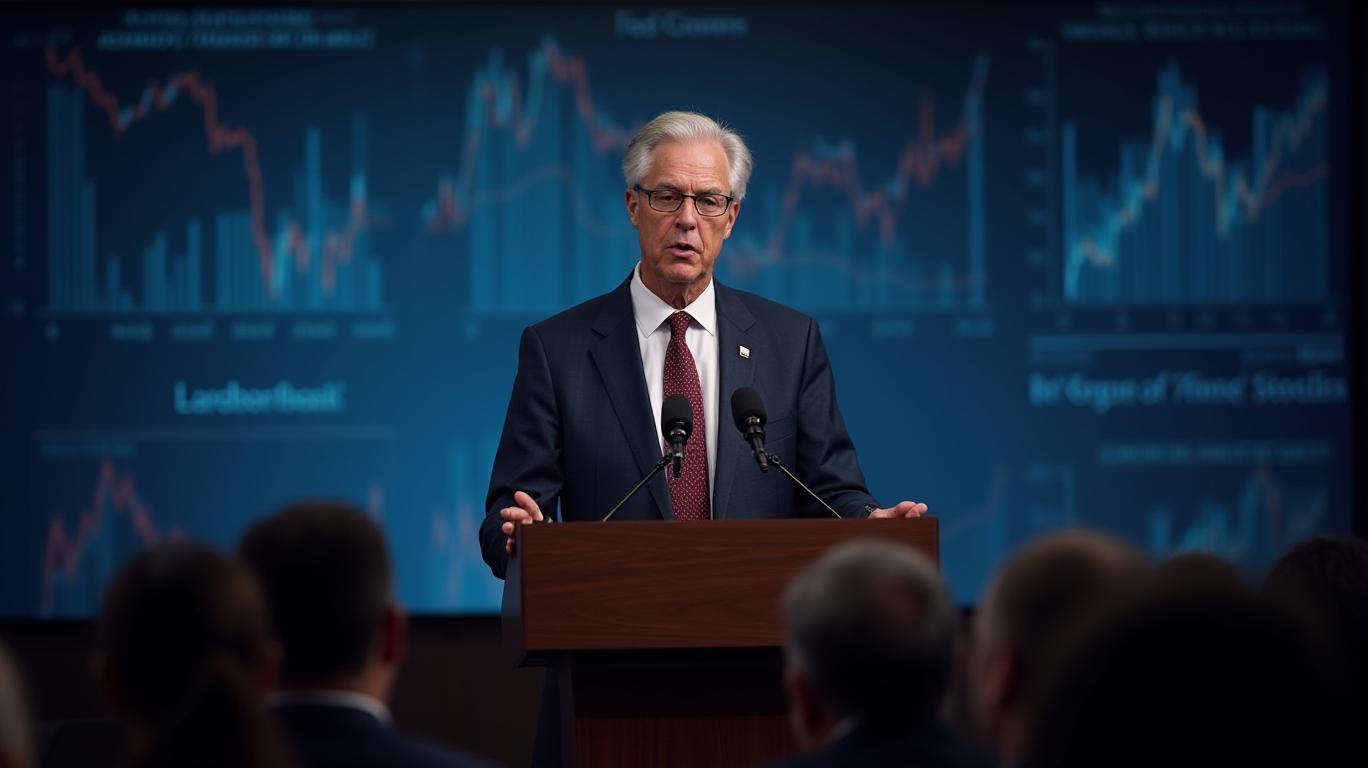
Powell's message is clear: the Federal Reserve is aware of the economic headwinds, including "sticky inflation," an "uncertain jobs market," and "slowing economic activity," and is taking steps to address them. The Fed's recent rate cuts in September, November, and December 2024 aimed to address the weakened jobs market but have so far failed to improve the unemployment picture. Instead, lower rates have led to a rebound in Consumer Price Index inflation to 3% in January from 2.4% in September. This underscores the complexity of monetary policy and the need for a nuanced approach that considers both short-term and long-term economic impacts.
The current economic environment shares similarities with past periods of economic uncertainty, particularly in terms of the challenges posed by inflation and job market instability. The lessons drawn from these experiences underscore the importance of a balanced monetary policy that addresses both inflation and employment concerns, as well as the need for careful consideration of the potential impacts of policy changes on the broader economy.
But Powell's message is not just about the Fed's actions. It's also a reminder that the economy is not a monolith, and that different sectors and industries are affected differently by economic conditions. For example, the technology sector has been hit hard by layoffs, with Challenger, GrayGTN.A--, & Christmas's latest research showing that 407,000 technology workers have been laid off since 2022. In February, 172,000 Americans lost their jobs, the most in the month since 2009. But other sectors, such as healthcare and utilities, have been more resilient.
So, what does this mean for investors? The first thing to remember is that the stock market is not the economy. The S&P 500's performance, down about 7% since February 20, including a 3.1% slide last week, reflects investor concerns about slowing economic activity and high stock market valuations. But the economy is not in a recession, and it may not be for some time. The Atlanta Fed's running forecast for quarterly GDP is currently negative 2.4%, but more data will likely increase that forecast over the coming weeks. Still, first-quarter GDP will likely be below the 3% growth last summer and fall. That's not great news for the S&P 500, given it came into the month trading at about 22 times forward earnings, much higher than the 10-year average price-to-earnings multiple, which is nearer 18.
The second thing to remember is that the Fed's actions are not a panacea. The Fed's recent rate cuts have not helped the unemployment picture, and lower rates have led to a rebound in Consumer Price Index inflation to 3% in January from 2.4% in September. This suggests that the Federal Reserve may need to continue to adjust interest rates in response to changing economic conditions, with a focus on balancing the need to control inflation with the need to support employment.
In conclusion, Powell's blunt 9-word response to recession talk is a reminder that the economy is not a monolith, and that different sectors and industries are affected differently by economic conditions. It's also a reminder that the Fed's actions are not a panacea, and that investors need to be prepared for a range of possible outcomes. The current economic environment shares similarities with past periods of economic uncertainty, particularly in terms of the challenges posed by inflation and job market instability. The lessons drawn from these experiences underscore the importance of a balanced monetary policy that addresses both inflation and employment concerns, as well as the need for careful consideration of the potential impacts of policy changes on the broader economy.
The stock market has been on a wild ride this year, with the S&P 500 down about 7% since February 20, including a 3.1% slide last week—the worst weekly showing since September. The culprit? Recession fears, fueled by a slate of lackluster economic data on inflation and jobs, plus uncertainty about what happens next, now that the White House is putting tariffs in place. But Fed Chairman Jerome Powell has a blunt 9-word response to all the recession talk: "We're not there yet, and we're not going to be."
Powell's message is clear: the Federal Reserve is aware of the economic headwinds, including "sticky inflation," an "uncertain jobs market," and "slowing economic activity," and is taking steps to address them. The Fed's recent rate cuts in September, November, and December 2024 aimed to address the weakened jobs market but have so far failed to improve the unemployment picture. Instead, lower rates have led to a rebound in Consumer Price Index inflation to 3% in January from 2.4% in September. This underscores the complexity of monetary policy and the need for a nuanced approach that considers both short-term and long-term economic impacts.
The current economic environment shares similarities with past periods of economic uncertainty, particularly in terms of the challenges posed by inflation and job market instability. The lessons drawn from these experiences underscore the importance of a balanced monetary policy that addresses both inflation and employment concerns, as well as the need for careful consideration of the potential impacts of policy changes on the broader economy.
But Powell's message is not just about the Fed's actions. It's also a reminder that the economy is not a monolith, and that different sectors and industries are affected differently by economic conditions. For example, the technology sector has been hit hard by layoffs, with Challenger, GrayGTN.A--, & Christmas's latest research showing that 407,000 technology workers have been laid off since 2022. In February, 172,000 Americans lost their jobs, the most in the month since 2009. But other sectors, such as healthcare and utilities, have been more resilient.
So, what does this mean for investors? The first thing to remember is that the stock market is not the economy. The S&P 500's performance, down about 7% since February 20, including a 3.1% slide last week, reflects investor concerns about slowing economic activity and high stock market valuations. But the economy is not in a recession, and it may not be for some time. The Atlanta Fed's running forecast for quarterly GDP is currently negative 2.4%, but more data will likely increase that forecast over the coming weeks. Still, first-quarter GDP will likely be below the 3% growth last summer and fall. That's not great news for the S&P 500, given it came into the month trading at about 22 times forward earnings, much higher than the 10-year average price-to-earnings multiple, which is nearer 18.
The second thing to remember is that the Fed's actions are not a panacea. The Fed's recent rate cuts have not helped the unemployment picture, and lower rates have led to a rebound in Consumer Price Index inflation to 3% in January from 2.4% in September. This suggests that the Federal Reserve may need to continue to adjust interest rates in response to changing economic conditions, with a focus on balancing the need to control inflation with the need to support employment.
In conclusion, Powell's blunt 9-word response to recession talk is a reminder that the economy is not a monolith, and that different sectors and industries are affected differently by economic conditions. It's also a reminder that the Fed's actions are not a panacea, and that investors need to be prepared for a range of possible outcomes. The current economic environment shares similarities with past periods of economic uncertainty, particularly in terms of the challenges posed by inflation and job market instability. The lessons drawn from these experiences underscore the importance of a balanced monetary policy that addresses both inflation and employment concerns, as well as the need for careful consideration of the potential impacts of policy changes on the broader economy.

Divulgación editorial y transparencia de la IA: Ainvest News utiliza tecnología avanzada de Modelos de Lenguaje Largo (LLM) para sintetizar y analizar datos de mercado en tiempo real. Para garantizar los más altos estándares de integridad, cada artículo se somete a un riguroso proceso de verificación con participación humana.
Mientras la IA asiste en el procesamiento de datos y la redacción inicial, un miembro editorial profesional de Ainvest revisa, verifica y aprueba de forma independiente todo el contenido para garantizar su precisión y cumplimiento con los estándares editoriales de Ainvest Fintech Inc. Esta supervisión humana está diseñada para mitigar las alucinaciones de la IA y garantizar el contexto financiero.
Advertencia sobre inversiones: Este contenido se proporciona únicamente con fines informativos y no constituye asesoramiento profesional de inversión, legal o financiero. Los mercados conllevan riesgos inherentes. Se recomienda a los usuarios que realicen una investigación independiente o consulten a un asesor financiero certificado antes de tomar cualquier decisión. Ainvest Fintech Inc. se exime de toda responsabilidad por las acciones tomadas con base en esta información. ¿Encontró un error? Reportar un problema


SOBRE NOSOTROS
Nuestra historiaAutores de noticiasBase de conocimientosPolítica de privacidadTérmino de usoDescargo de responsabilidad de corretaje de tercerosTérminos de uso de AIMEDivulgaciones de riesgos de AInvest AICarrerasCONTÁCTENOS
Email: support@ainvest.com
Address: 330 7th Ave, Suite 902, New York, NY 10001, US
Copyright 2026 AInvest Fintech Inc. All rights reserved.


Comentarios
Aún no hay comentarios