
Fed Chair Powell's Criminal Threat: A Test of Monetary Policy Independence
The latest salvo in the White House's campaign against the Federal Reserve has arrived in the form of a criminal subpoena. On Friday, the Department of Justice served the central bank with grand jury subpoenas, explicitly threatening a criminal indictment over Chair Jerome Powell's testimony before the Senate Banking Committee last June. This is the most aggressive move yet in a yearlong pressure campaign that has included public threats to fire Powell and investigations into other Fed officials.
Powell has framed the indictment as a direct political weapon, not a genuine legal pursuit. He called the threat a "pretext" aimed at pressuring the Fed on interest rates, not about the $2.5 billion headquarters renovation project that was the ostensible subject of his testimony. "This is about whether the Fed will be able to continue to set interest rates based on evidence and economic conditions-or whether instead monetary policy will be directed by political pressure or intimidation," he stated, underscoring the core structural question at stake.
The move represents an unprecedented escalation in the battle between the White House and an independent agency. President Trump has repeatedly attacked Powell, accusing him of not cutting rates quickly enough and even stating he has already selected a replacement for Powell's term, which ends in May. The Justice Department's action, coming on the heels of investigations into other Fed governors like Lisa Cook, appears designed to create a climate of fear and undermine the central bank's autonomy. As Senator Thom Tillis noted, the episode leaves "no doubt" that the administration is actively pushing to end the Fed's independence.
The Structural Risk: How Political Pressure Undermines Economic Stability
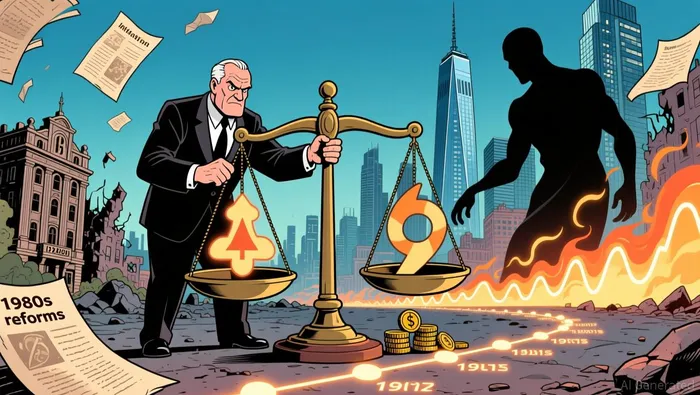
The threat to the Federal Reserve's independence is not merely a political squabble; it is a direct assault on the structural safeguards designed to protect economic stability. The Fed's independence is a deliberate bulwark against a well-documented political incentive: the desire to stimulate growth with lower interest rates before elections. This pressure has a clear historical precedent. Analysis shows that political pressure on the Fed during the 1960s and 1970s increased inflation over and above what macroeconomic factors alone would predict. Countries with more independent central banks consistently enjoy lower inflation, while those where politicians have greater power over monetary policy suffer from higher inflation and more economic instability.
The mechanism is straightforward. When a central bank is subservient, it can be pressured to finance government deficits by allowing inflation to rise or by purchasing bonds. This monetization of debt helps keep interest rates artificially low in the short term, boosting government finances, but it inevitably fuels inflation and economic instability over the longer horizon. The Fed's structure-its independent funding, its leadership appointed for long, non-partisan terms, and its separation from the executive branch-is meant to insulate it from this cycle. Yet the current campaign, culminating in a criminal subpoena, creates a chilling effect that undermines this design.
The threat of a criminal indictment over testimony about a building renovation is a weapon of intimidation, not justice. As Chair Powell stated, it is a "pretext" aimed at pressuring the Fed on interest rates. This sets a dangerous precedent. If future policy decisions are influenced by fear of reprisal rather than economic data, the central bank's credibility erodes. The chilling effect is already apparent, with one Republican senator indicating he will oppose any future nominee until the "legal matter is fully resolved." This politicization of the nomination process itself is a direct attack on the Fed's independence.
The bottom line is that the Fed's mandate to maintain price stability and maximum employment depends on its perceived and actual autonomy. When that autonomy is threatened with criminal charges for doing its job, it risks a return to the era of political manipulation that historically led to worse economic outcomes. The current standoff is a test of whether the central bank can withstand this pressure, or whether political interference will once again become the norm.
Catalysts and Scenarios: The Path Forward for Policy and Markets
The immediate watchpoint for investors is the Federal Reserve's next scheduled FOMC meeting. Any deviation from a data-driven policy path-such as a rate cut that appears politically motivated rather than economically justified-would be a clear signal of capitulation. The committee's last meeting in September, where it voted to lower rates despite internal dissent, already drew intense political scrutiny. The administration's actions, including threats to fire Chair Powell and the attempted removal of Governor Lisa Cook, have created a high-pressure environment. The next meeting will test whether the Fed can maintain its independence in the face of such sustained, unprecedented political intimidation.
A key scenario to monitor is the administration's willingness to escalate the investigation further. The Justice Department's criminal subpoena is a weapon of intimidation, not a routine legal proceeding. If the probe deepens, leading to a formal indictment or the removal of another Fed governor, it would severely damage the institution's credibility. The chilling effect is already evident, with one Republican senator indicating he will oppose any future nominee until the "legal matter is fully resolved." This politicization of the nomination process itself is a direct attack on the Fed's independence and could deter qualified candidates from serving.
The ultimate risk is a precedent-setting erosion of the Fed's independence. History provides a stark warning. Analysis shows that political pressure on the Fed during the 1960s and 1970s increased inflation over and above what macroeconomic factors alone would predict. The current threat of a criminal indictment over testimony about a building renovation is a modern parallel to the Nixon-era pressure that contributed to that era's economic instability. If the central bank's autonomy is permanently compromised, it risks a return to the cycle where monetary policy is used to finance government deficits and boost short-term growth at the expense of long-term price stability.
For markets, the path forward hinges on confidence. A successful defense of independence would reinforce the Fed's credibility and support lower long-term interest rates. A failure, however, would trigger a loss of confidence in U.S. monetary policy. The market's reaction would likely be a repricing of risk, with higher long-term yields reflecting the perceived increased political risk to the dollar and inflation control. The standoff is not just about one building renovation; it is a test of the structural safeguards that have underpinned U.S. economic stability for decades. The outcome will determine whether the Fed remains a bulwark against political manipulation or becomes a tool of it.







Comentarios
Aún no hay comentarios