
Fed Balance Sheet Normalization: Navigating Market Implications and Strategic Asset Allocation in 2025
The Federal Reserve's balance sheet normalization, a multi-year effort to transition from "abundant" to "ample" reserves, has entered a critical phase in 2025. As of Q3 2025, the Fed's balance sheet has shrunk to 22% of GDP, down from a pandemic-era peak of 35% in early 2022, according to a New York Fed speech. This reduction, achieved through gradual tightening of monthly redemption caps on Treasuries and mortgage-backed securities, reflects a deliberate strategy to recalibrate liquidity while maintaining policy flexibility, per the Fed policy normalization guidance. The September 2025 rate cut-marking the first easing since December 2024-has further amplified market uncertainty, prompting investors to reassess risk exposures and rebalance portfolios.
The Fed's Normalization Framework: From Abundance to Ample
The Fed's normalization process, as outlined in its 2025 policy framework, prioritizes a measured reduction in securities holdings to avoid destabilizing financial markets. By March 2025, the monthly redemption cap on Treasury securities was slashed from $25 billion to $5 billion, while agency debt and mortgage-backed securities caps remained at $35 billion, according to StreetStats data. This asymmetry ensures that excess principal payments are reinvested into Treasuries, preserving a maturity composition aligned with market needs, as explained in a St. Louis Fed analysis. The goal is to halt runoff once reserves are "slightly above ample," allowing them to decline organically as economic conditions evolve-a target noted in a Markets analysis.
This approach has already reshaped the Fed's balance sheet composition. As of October 2025, Treasuries account for $4.196 trillion, while mortgage-backed securities hold $2.086 trillion, totaling $6.6 trillion in assets, according to StreetStats. These figures underscore the Fed's dual focus on liquidity management and interest rate control, even as it scales back its pandemic-era interventions.
Market Implications: Asset Classes in a Post-Runoff Era
The normalization of the Fed's balance sheet has distinct implications for equities, bonds, and commodities.
Equities: The September 2025 rate cut, though modest, catalyzed a surge in growth-oriented sectors. The S&P 500 logged a 3.7% gain in September, its best performance since 2010, according to the Monthly Market Wrap, with technology and real estate leading the charge. Lower borrowing costs have bolstered valuations for rate-sensitive assets, particularly large-cap tech stocks, which benefit from extended discounting horizons, as discussed in an iShares insight. However, the labor market's cooling trajectory-highlighted in the Fed minutes-suggests that further cuts may be contingent on inflation moderation.
Bonds: Treasury yields have exhibited a nuanced response. Short-duration instruments saw declines post-rate cut, while longer-term yields, such as the 30-year Treasury, fell by 19 basis points to 4.73% in September, according to the Monthly Market Wrap. The "belly" of the yield curve (3–7 years) has emerged as a strategic sweet spot, offering a favorable risk-reward profile amid expectations of prolonged low-rate environments, a theme also emphasized in the iShares insight.
Commodities: Gold prices surged to record highs of $3,700 per ounce in mid-September, reflecting its role as a safe-haven asset amid policy uncertainty, as noted in the Markets analysis. BitcoinBTC--, too, has gained traction as a diversifier, with institutional demand rising as the Fed's balance sheet normalization reduces liquidity premiums in traditional markets, according to a ScienceDirect study.
Strategic Asset Allocation: Balancing Income, Diversification, and Exposure
Investors navigating this environment must prioritize strategies that align with the Fed's evolving policy stance.
- Equity Allocation: Emphasize large-cap growth stocks, particularly in technology and real estate, which benefit from lower borrowing costs. International equities also present opportunities, as a weaker U.S. dollar post-rate cut supports export-driven economies (see the iShares insight).
- Fixed Income: Focus on the belly of the Treasury yield curve (3–7 years) for duration risk management. High-quality corporate bonds and securitized assets may offer yield advantages over Treasuries in a low-inflation scenario (see the St. Louis Fed analysis).
- Commodities and Alternatives: Allocate to gold and Bitcoin as hedges against macroeconomic volatility. Agricultural commodities, however, remain sensitive to supply-side shocks and should be approached cautiously (see the ScienceDirect study).
Conclusion: Preparing for a Fed-Led Easing Cycle
The Fed's normalization process is far from complete, but its trajectory is clear: a gradual shift toward ample reserves, punctuated by targeted rate cuts to manage labor market risks. For investors, the key lies in aligning portfolios with the Fed's dual mandate of price stability and maximum employment. By prioritizing income, diversification, and strategic exposure to growth sectors, market participants can navigate the uncertainties of 2025 while capitalizing on the opportunities presented by a Fed-led easing cycle.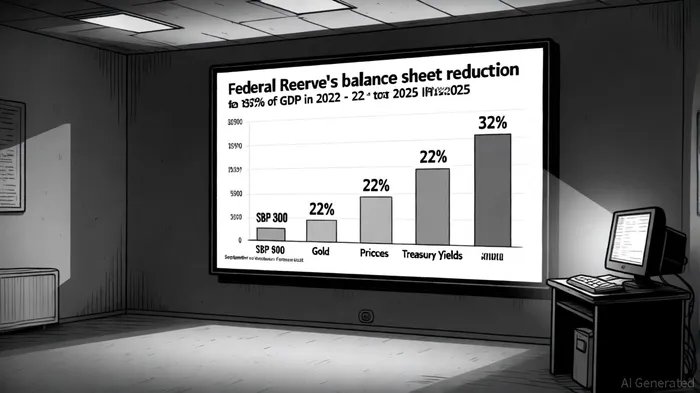






Comentarios
Aún no hay comentarios