
The Fed's 50 Bps Rate Cut: A Tactical Shift in Monetary Policy and Its Implications for Investors
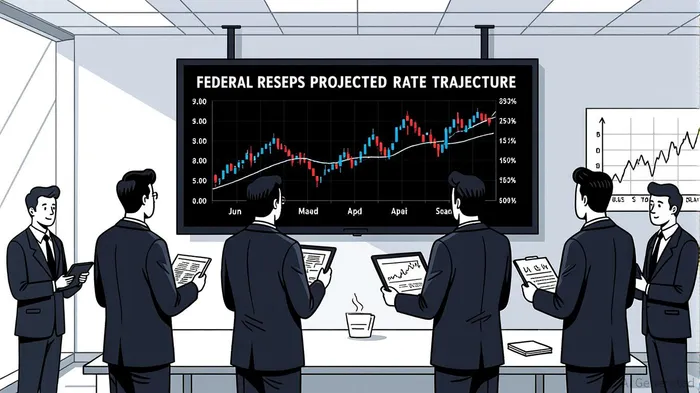
The Federal Reserve’s September 2025 decision to cut interest rates by 50 basis points marks a pivotal shift in monetary policy, driven by a fragile labor market and evolving inflation dynamics. This move, long anticipated by markets, has accelerated due to a confluence of economic signals and political pressures, reshaping investment strategies across equities, bonds, and currencies.
Equity Strategies: Sector Rotation and Market Sentiment
A rate cut typically lowers borrowing costs, boosting corporate profitability and equity valuations. However, the Fed’s decision is rooted in a labor market that is “in a curious kind of balance,” as Federal Reserve Chair Jerome Powell noted at the Jackson Hole symposium [1]. While nonfarm payrolls have softened and job vacancies have declined, the unemployment rate remains low at 4.1% [2]. This duality creates a mixed signal for equities: sectors sensitive to borrowing costs, such as financials and real estate, may benefit from lower rates, while a weak labor market could dampen consumer discretionary spending.
Investors should prioritize sectors poised to gain from rate easing, such as utilities and consumer staples, which historically outperform in low-rate environments. Conversely, cyclical sectors like industrials and technology may face headwinds if the rate cut signals underlying economic weakness. Market sentiment, already buoyed by the 87% probability of a 25 bps cut priced in by mid-August [3], could see a further rally if the 50 bps cut materializes, particularly in growth stocks that thrive on discounted future cash flows.
Bond Strategies: Yield Curve Flattening and Duration Rebalancing
The Fed’s rate cut will directly impact bond markets, where yields and prices move inversely. With the federal funds rate currently at 4.4%, a 50 bps reduction would bring it closer to the estimated neutral rate of 3% [1]. This shift is likely to compress long-term yields, particularly for Treasuries, as investors anticipate prolonged accommodative policy. The 10-year Treasury yield, which stood at 3.8% in early September, could fall to 3.2% or lower, narrowing the yield curve and reducing the spread between short- and long-term debt [4].
Investors should consider extending duration in bond portfolios to capitalize on higher price appreciation from rate cuts. However, the risk of a flattening yield curve—where long-term yields decline faster than short-term rates—could limit returns. High-quality corporate bonds and municipal securities may offer a better risk-reward profile, given their relative insulation from inflationary pressures compared to Treasuries.
Currency Strategies: Dollar Weakness and Emerging Market Opportunities
A 50 bps rate cut will likely weaken the U.S. dollar, as lower yields reduce its appeal to foreign investors. The dollar index, which had traded near 104 in early September, could dip below 100, benefiting emerging market currencies and commodities priced in USD [5]. Central banks in Asia and Latin America, which have already begun easing rates, may see their currencies stabilize against the dollar, enhancing export competitiveness and reducing debt servicing costs.
For currency investors, a short position on the dollar or long positions in the euro, yen, or emerging market currencies like the Brazilian real and Mexican peso could prove lucrative. However, geopolitical risks—such as Trump administration tariffs—remain a wildcard. As Powell warned, tariffs could trigger a self-sustaining inflationary cycle, complicating the Fed’s ability to engineer a clean rate cut [1].
Conclusion: Navigating a New Policy Regime
The Fed’s 50 bps rate cut reflects a tactical recalibration to balance labor market fragility with inflation risks. For investors, this signals a shift toward a more accommodative monetary environment, with distinct implications for asset allocation. Equities will see sector-specific gains, bonds will benefit from duration extension, and currencies will face dollar depreciation pressures. However, the path forward remains data-dependent, with incoming inflation and employment figures critical to sustaining the current trajectory.
Source:
[1] Powell Opens Door to Interest Rate Cut, Citing Labor Markets [https://www.bloomberg.com/news/articles/2025-08-22/powell-says-shifting-risks-may-warrant-adjusting-interest-rates]
[2] Fed likely to hold interest rates steady, keep September ... [https://www.usatoday.com/story/money/2025/07/28/fed-rates-unchanged-no-signal-september/85375138007/]
[3] Federal Reserve Calibrates Policy to Keep Inflation in Check [https://www.usbank.com/investing/financial-perspectives/market-news/federal-reserve-tapering-asset-purchases.html]
[4] Minutes of the Federal Open Market Committee [https://www.federalreserve.gov/monetarypolicy/fomcminutes20250730.htm]
[5] StanChart expects Fed to cut rates by 50 bps next week after weak jobs data [https://www.reuters.com/business/stanchart-expects-fed-cut-rates-by-50-bps-next-week-after-weak-jobs-data-2025-09-08/]







Comentarios
Aún no hay comentarios