
The Fed's 25-Basis-Point Rate Cut: A Strategic Opportunity in 2025 for Income-Seeking Investors
The Federal Reserve's 25-basis-point rate cut in September 2025, reducing the federal funds rate to a target range of 4.00% to 4.25%, marks a pivotal shift in monetary policy. This decision, driven by a softening labor market and elevated inflation, reflects the Fed's dual mandate to balance employment and price stability[1]. For income-seeking investors, the move signals a low-rate environment that demands strategic portfolio repositioning to capitalize on rising asset valuations and sector-specific opportunities.
Economic Context and Policy Implications
The Fed's rate cut follows five consecutive meetings of rate holds, underscoring its proactive stance to mitigate economic slowdown risks. With inflation still above 2% and unemployment at 4.3%, the central bank prioritized employment concerns, as emphasized by Chair Jerome Powell at Jackson Hole[2]. The decision, supported by all FOMC members except Stephen Miran, who advocated for a larger 50-basis-point cut, highlights the committee's cautious approach. Market expectations had largely priced in the 25-basis-point reduction, resulting in a measured response: Treasury yields eased at the front end while remaining firm at the long end[1].
The Fed's projection of two additional 2025 rate cuts and one in 2026 suggests a prolonged easing cycle. This environment will likely depress returns on traditional income assets like savings accounts and CDs, as annual percentage yields (APYs) decline[3]. However, it also creates fertile ground for asset classes that thrive in accommodative monetary conditions.
Repositioning Portfolios: Equity Strategies
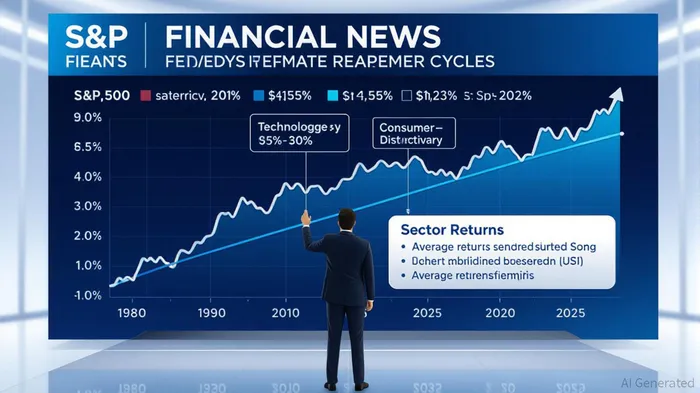
Historically, equities have outperformed during rate-cut cycles. Since 1980, the S&P 500 has averaged 14.1% returns in the year following the start of a Fed easing cycle, surging to 20.6% when recessions are avoided[4]. In 2025, investors should focus on sectors poised to benefit from lower borrowing costs and improved consumer spending.
Technology and Consumer Discretionary: These growth sectors typically outperform in non-recessionary rate-cut cycles. The tech sector has historically outperformed the broader market by 5.2 percentage points within 12 months of the first rate cut, while consumer discretionary gains 7.0 percentage points[5]. With the Fed signaling continued easing, these sectors may regain leadership as economic uncertainties recede.
Small-Cap Stocks: Smaller companies often benefit disproportionately from rate cuts due to their sensitivity to economic cycles and access to cheaper financing. However, their performance remains tied to the Fed's overall projections and market concentration in dominant stocks[5].
Defensive Sectors: While growth sectors dominate later in the cycle, defensive areas like utilities and healthcare may outperform initially amid lingering economic risks[5]. Investors should maintain a balanced approach, rotating into cyclical sectors as the Fed's easing gains traction.
Fixed Income and Alternative Assets
Corporate Bonds: Investment-grade corporate bonds have historically offered higher yields than government bonds in low-rate environments[6]. With credit spreads narrowing post-rate cuts, these bonds provide a compelling income-generating option. Municipal bonds also remain attractive for high-tax-bracket investors, offering tax-exempt income[6].
Real Estate: Lower interest rates have bolstered real estate valuations, particularly in multifamily properties. Reduced mortgage rates facilitate refinancing and expansion, improving cash flow coverage and deal activity[7]. While commercial real estate faces constraints due to the still-elevated federal funds rate, residential real estate remains a strong performer[7].
Alternatives: High-yield corporate bonds, REITs861104--, and structured finance products like asset-backed securities offer diversification and income beyond traditional fixed income. These alternatives, however, require careful risk assessment due to their higher volatility[6].
Navigating the New Normal
The Fed's rate cuts in 2025 are reshaping asset valuations across markets. Corporate bonds and real estate have seen rising valuations due to eased financial conditions, while cash and traditional savings instruments lag[8]. For income-seeking investors, the key lies in balancing risk and return by allocating to sectors and assets that align with the Fed's easing trajectory.
Conclusion
The Fed's 25-basis-point rate cut in 2025 is not merely a response to economic headwinds but a strategic pivot that opens new opportunities for income-seeking investors. By repositioning portfolios toward growth equities, corporate bonds, and real estate, investors can harness the tailwinds of a low-rate environment while managing risks through diversification. As the Fed signals further easing, proactive portfolio adjustments will be critical to capturing the full potential of this new monetary policy chapter.







Comentarios
Aún no hay comentarios