
Feathers to Fortune: Navigating Brazil’s Poultry Crisis for Investment Gains
The first confirmed outbreak of highly pathogenic avian influenza (H5N1) in Brazil’s commercial poultry sector has upended the global protein supply chain, creating both risks and opportunities for investors. With China imposing a 60-day ban on imports from Brazil—a nation that supplies 14% of the world’s poultry—markets are scrambling to reallocate demand. Meanwhile, Brazil’s poultry giants BRFBRFS-- and JBS face immediate headwinds, while competitors in alternative proteins and rival exporters emerge as potential beneficiaries.
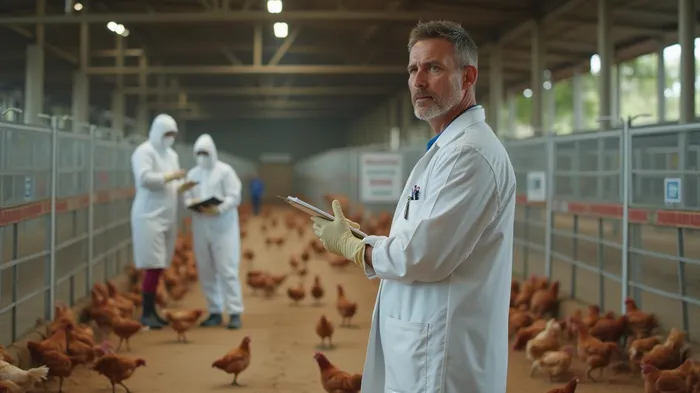
The Supply Chain Quake: Brazil’s Vulnerability
Brazil’s poultry sector, a $10 billion export powerhouse in 2024, is now reeling from the H5N1 outbreak in Rio Grande do Sul, a state responsible for 15% of national production. The disease’s containment in a 10-km radius around Montenegro—a hub for BRF and JBS’s processing facilities—has not stopped the fallout. China’s ban alone threatens a critical market, as the country accounted for 18% of Brazil’s poultry exports in 2024.
The ripple effects extend beyond trade restrictions. Global shortages of genetic resources (fertile eggs, chicks) are further squeezing Brazil’s ability to scale production. This creates a “double whammy” for firms like BRF and JBS: reduced output in a key region and constrained capacity to meet pre-outbreak demand.
Market Reallocation: Winners and Losers
While Brazil’s poultry industry grapples with the crisis, the global market is shifting. Three dynamics are key:
U.S. Egg Shortages and Protein Scarcity
Brazil had capitalized on U.S. poultry and egg shortages, exporting 2,357 tons of eggs in January 2025—a 33% annual surge. But the H5N1 outbreak now risks reversing this trend. Investors should monitor whether the U.S. can leverage its own recovery (e.g., easing egg shortages) to reclaim market share.Competitor Gains: Thailand and Ukraine
The EU’s partial lifting of Ukrainian poultry export quotas and Middle Eastern buyers seeking alternatives to Brazilian imports favor Thailand (a 10% global poultry exporter) and Ukrainian producers. Investors might consider exposure to Thai firms like Charoen Pokphand Foods or Ukrainian agribusiness stocks.Alternative Proteins Rise
The crisis underscores the fragility of meat supply chains. Companies like Beyond Meat (BYND) or Impossible Foods could benefit as consumers and institutions pivot to plant-based or lab-grown proteins.
Investment Plays: Hedging and Capitalizing
The path forward requires a dual strategy: protecting against downside risks and capitalizing on structural shifts.
Short BRF and JBS Stocks: Both companies derive significant revenue from exports to China and the Middle East. Their shares are likely to remain under pressure until the 60-day ban lifts and trade partners regain confidence. A short position or put options could hedge against portfolio exposure to these firms.
Long Alternative Proteins: Invest in companies positioned to capture demand for protein substitutes. Beyond Meat’s valuation, for instance, could rise if institutional buyers (e.g., foodservice operators) accelerate their shift to plant-based options.
Competitor Exposures: Explore stocks tied to regions less affected by H5N1. Thailand’s Charoen Pokphand Foods (CPF) or U.S. players like Tyson Foods (TSN) may see demand spikes if Brazil’s exports remain constrained.
The Bottom Line
Brazil’s poultry crisis is a microcosm of global supply chain fragility. For investors, the stakes are clear: act now to mitigate exposure to Brazil’s poultry giants and seize opportunities in alternatives or rival producers. The next 60 days will test the resilience of Brazil’s containment measures—and the agility of investors to navigate this volatile landscape.
The clock is ticking. The question is: Will you be part of the flock fleeing risk—or the vanguard capitalizing on the shift?





Comentarios
Aún no hay comentarios