
FDI Decline and the Rise of Domestic and Tech-Centric Investment Opportunities
The De-Globalization Dilemma
The decline in FDI reflects a broader de-globalization narrative. Multinational corporations are prioritizing short-term risk mitigation over long-term strategies, particularly in sectors tied to national security and supply chain reconfiguration, as UNCTAD reports. For instance, Europe's sharp FDI drop underscores the region's vulnerability to geopolitical volatility, while North America's 23% growth-led by the U.S.-highlights the appeal of stable, tech-driven markets. Meanwhile, India's construction industry is expanding by 7.1% in 2025, fueled by a 15% year-over-year surge in FDI and robust public-private infrastructure investments, according to the India Construction Industry Report 2025.
This divergence reveals a critical shift: as global capital retreats, domestic and technology-focused investments are stepping into the void.
Strategic Reallocation: From Global to Local
The reallocation of capital is most evident in sectors where technological innovation and policy support intersect. In Spain, Telefónica Tech has partnered with Anjana Data to develop a governance platform that enhances data management and AI-driven decision-making, addressing regulatory and competitive challenges in a fragmented global market, as detailed in the Telefónica Tech expansion. Similarly, the U.S. is leveraging SPACs like Archimedes Tech SPAC to channel capital into emerging tech firms, reflecting a broader trend of investors seeking targeted exposure to high-growth innovations.
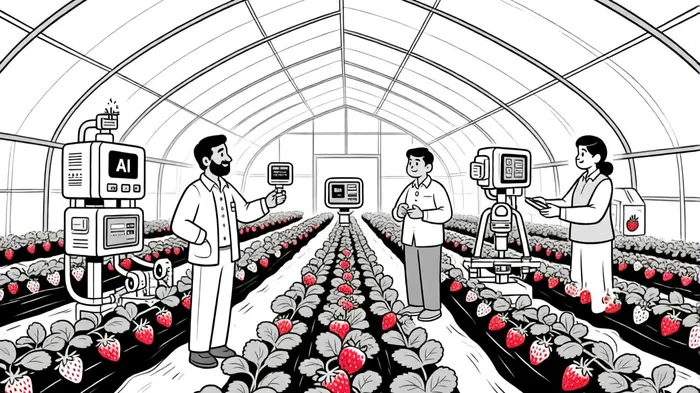
In agriculture, the Netherlands' €40 million investment in Indian high-tech greenhouses-part of its HortiRoad2India initiative-exemplifies how domestic partnerships and advanced technologies are addressing food security and sustainability, part of Van der Hoeven's €40 million bet. These greenhouses integrate controlled environment agriculture (CEA), AI analytics, and automation to optimize yields, showcasing how de-globalization is spurring localized, tech-enabled solutions.
Policy-Driven Tech Investment: A New Frontier
Governments are also playing a pivotal role in reshaping investment flows. Brazil, for example, has launched the Tropical Forest Financing Facility (TFFF) to mobilize $250 billion for tropical forest investments while implementing a Greenhouse Gas Emissions Trading System, a development covered ahead of Minister Haddad to discuss ecological transition in France. Conversely, it has banned major pension funds from investing in cryptocurrencies, reflecting a cautious approach to high-risk assets.
In Europe and Central Asia, digital agriculture is gaining traction. Poland, Estonia, and Lithuania are leveraging IoT sensors, AI advisory systems, and satellite monitoring to boost productivity, while Kazakhstan's digital agriculture index hit 6.3/10 in 2025, according to the Status of digital agriculture. These initiatives, supported by the EU's Common Agricultural Policy (CAP), highlight how policy frameworks are aligning with technological advancements to address climate resilience and sustainability.
The Investor Imperative
For investors, the FDI decline underscores the need to recalibrate portfolios toward domestic and tech-centric opportunities. While global capital flows remain volatile, sectors like AI, digital agriculture, and green technology are attracting targeted investments. The challenge lies in identifying markets where policy support, infrastructure development, and innovation converge-such as India's construction boom or Spain's data governance platforms.
As UNCTAD notes, aligning public and private investment with development goals is critical to creating inclusive, sustainable systems that direct capital where it is most needed. In a de-globalizing world, the winners will be those who adapt to the new reality: a landscape where domestic ingenuity and technological agility outpace traditional global capital flows.







Comentarios
Aún no hay comentarios