
FDA's Proposed Regulatory Shift and Its Impact on Healthcare-Related Investment Sectors
Regulatory Risk Mitigation: A New Paradigm
The FDA's 2025 proposed risk-based framework for evaluating artificial intelligence (AI) models in drug submissions marks a pivotal shift. This guidance emphasizes assessing AI tools for their "context of use," ensuring they align with scientific and regulatory expectations, as noted in a FDA press announcement. For biotech firms leveraging AI in drug discovery or clinical trial design, this framework reduces ambiguity, providing a clearer pathway for regulatory approval. Companies like Vera TherapeuticsVERA--, which submitted a Biologics License Application for atacicept under the Accelerated Approval Program, exemplify how such clarity can fast-track therapies for high-unmet-need conditions like IgA nephropathy, according to a Yahoo Finance report.
Similarly, the FDA's continued support for orphan drug designations-such as AstraZeneca's surovatamig for acute lymphocytic leukemia-highlights its commitment to incentivizing rare disease innovation, as reported in a GuruFocus article. These designations, which offer tax credits and market exclusivity, mitigate financial risks for developers, encouraging investment in niche therapeutic areas.
Investor Confidence and Market Catalysts
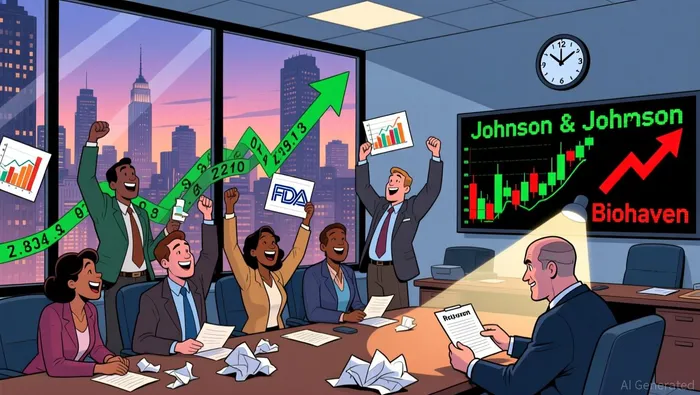
The FDA's decisions have direct implications for stock valuations and investor sentiment. Johnson & Johnson's recent approvals of CAPLYTA for major depressive disorder and DARZALEX Faspro for high-risk smoldering multiple myeloma illustrate this dynamic. CAPLYTA's fourth indication, backed by robust Phase 3 data showing a 4.9-point improvement on the MADRS scale, has positioned J&J to tap into a $15.8 billion global market by 2035, according to a Seeking Alpha analysis. Such milestones not only validate a drug's efficacy but also signal to investors that the FDA is willing to endorse therapies addressing underserved needs.
Conversely, rejections like Biohaven's Vyglxia (troriluzole) for spinocerebellar ataxia underscore the agency's rigorous standards. The FDA's critique of real-world evidence studies-citing potential bias and design flaws-served as a cautionary tale for companies relying on non-traditional trial designs, as noted in an Inkl article. This duality reinforces the importance of aligning with FDA expectations, as regulatory outcomes can drastically alter a company's valuation trajectory.
Innovation Incentives and Strategic Entry Points
The FDA's Remote Regulatory Assessments (RRAs) guidance, finalized in June 2025, further streamlines the approval process, as detailed in a FDA Q&A document. By allowing remote inspections and reducing bureaucratic delays, this policy lowers operational costs for developers, particularly small biotechs. For instance, Innate Pharma's clearance to proceed with its Phase 3 lacutamab trial for cutaneous T-cell lymphomas-following encouraging Phase 2 data-demonstrates how regulatory efficiency can accelerate pipelines, according to a MarketWatch report. However, the company's financial distress (negative operating margins, high debt-to-equity ratio) also highlights that regulatory progress alone is insufficient to sustain long-term investor confidence.
For investors, strategic entry points lie in companies that combine regulatory alignment with strong financial health. Cellectis' lasme-cel (UCART22) for B-cell acute lymphoblastic leukemia offers a compelling case. With a projected peak gross sales potential of $1.3 billion and a clear regulatory pathway, the drug's development aligns with the FDA's focus on innovative cell therapies, as reported in a BioSpace article. Similarly, firms leveraging the Accelerated Approval Program, like Vera Therapeutics, present opportunities for those willing to tolerate higher risk in exchange for potential high returns.
Conclusion: Navigating the New Risk Landscape
The FDA's 2025 regulatory shifts are recalibrating the biotech and pharma sectors by reducing ambiguity in AI-driven submissions, incentivizing rare disease innovation, and streamlining approval processes. While these changes mitigate some risks, they also demand that companies demonstrate robust clinical and financial fundamentals. For investors, the key lies in identifying firms that not only navigate the FDA's evolving frameworks but also possess the resilience to capitalize on long-term market opportunities.





Comentarios
Aún no hay comentarios