
How FDA Label Changes Are Reshaping Pharma's Risk Landscape and Boosting Investor Confidence
The 2025 MHT Label Overhaul: A Paradigm Shift
In November 2025, the FDA initiated a sweeping revision of MHT product labels, removing broad "black box" warnings related to cardiovascular disease, breast cancer, and probable dementia while retaining specific cautions for estrogen-alone therapies, according to a PharmExec report. This decision followed a reevaluation of the landmark Women's Health Initiative (WHI) studies, which had previously painted MHT with a broad brush of risk. The agency emphasized that the original WHI cohort (mean age 63) was not representative of the typical MHT user (ages 45–55), leading to an overstatement of risks for younger women, as noted in a Contemporary OB/GYN analysis.
The revised labeling now includes evidence-based guidance for initiating MHT in women under 60 or within 10 years of menopause onset, a change that could normalize the therapy's use for millions of patients, according to a NewBeauty announcement. For investors, this shift signals a recalibration of risk perception-not just for patients but for the entire value chain, from manufacturers to insurers.
Stock Market Reactions: Winners and Losers
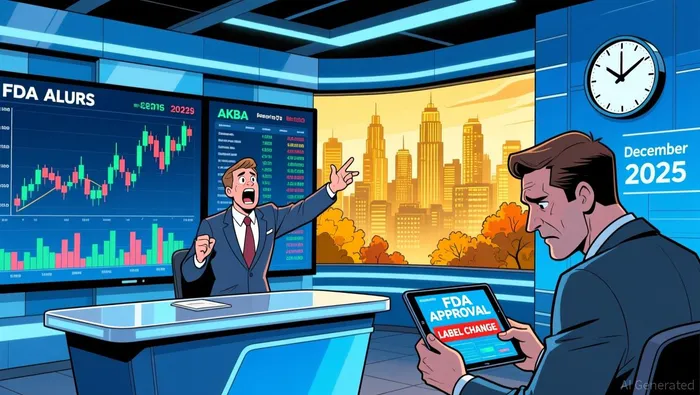
The market's response to these label changes has been mixed but telling. Companies like Allurion Technologies (ALUR) have seen their shares surge after passing critical FDA milestones, including zero findings in pre-approval inspections and a successful Day-100 meeting, as reported by an Investing.com article. ALUR's 10.9% premarket jump in October 2025 underscored investor optimism about its Smart Capsule, a non-hormonal alternative to MHT.
Conversely, Akebia Therapeutics (AKBA) faced a 25.71% stock plunge after the FDA pushed back on its plans to expand the label for Vafseo, citing impractical trial requirements, according to a SAHM Capital report. This stark contrast highlights a key takeaway: regulatory clarity is a double-edged sword. While positive label changes can validate a company's value proposition, negative surprises-especially for smaller firms-can trigger overreactions that create short-term buying opportunities.
The Bigger Picture: Evidence-Based Medicine as a Catalyst
The FDA's 2025 MHT revisions reflect a broader trend toward evidence-based medicine, where regulatory decisions are increasingly driven by granular data rather than broad generalizations. This shift is not just about risk mitigation-it's about unlocking market potential. For instance, the approval of a generic version of conjugated estrogens has already expanded access and affordability, creating a tailwind for generic manufacturers, as noted in the NewBeauty announcement.
Investors should also note the ripple effects of these changes. With clearer labeling, insurers may adjust coverage policies, and healthcare providers could see a surge in MHT prescriptions. This creates a virtuous cycle: increased prescriptions → higher revenue for manufacturers → improved financial metrics → stronger investor sentiment.
Strategic Implications for Investors
- Focus on Label Clarity: Companies with products undergoing FDA label revisions-especially those removing restrictive warnings-deserve close scrutiny. The MHT sector's post-2025 rebound demonstrates how regulatory clarity can reinvigorate stagnant markets.
- Size Matters: Smaller firms like AKBA are more vulnerable to overreactions, while larger players with diversified pipelines may see more measured responses.
- Diversify Exposure: While MHT manufacturers stand to benefit, investors should also consider companies developing non-hormonal alternatives (e.g., Allurion) or generic versions of MHT drugs.
Conclusion
The 2025 FDA label changes for MHT products are a masterclass in regulatory risk mitigation. By aligning warnings with real-world evidence, the agency has not only improved patient outcomes but also created a more predictable environment for investors. As the market digests these changes, the key takeaway is clear: regulatory clarity is the new frontier of value creation in pharma.







Comentarios
Aún no hay comentarios