
The FDA Approval of Novo Nordisk's Wegovy Pill: A Strategic Win in the Obesity Medication Market
The U.S. Food and Drug Administration's (FDA) approval of Novo Nordisk's oral Wegovy pill on December 22, 2025, marks a pivotal moment in the obesity medication market. As the first and only oral GLP-1 receptor agonist for chronic weight management, the pill offers a significant convenience advantage over injectable alternatives, addressing a critical unmet need for patients and healthcare providers. This strategic milestone not only expands Novo Nordisk's dominance in the GLP-1 space but also intensifies competition with Eli Lilly's Zepbound, the current market leader.
Competitive Landscape: Oral Convenience vs. Efficacy Edge
The oral Wegovy pill, priced at $149 per month for the starting dose of 1.5 mg, is designed to complement diet and exercise for adults with obesity or overweight and related conditions. Its approval follows the OASIS 4 trial, which demonstrated a 16.6% average weight loss at 64 weeks for the 25 mg dose, compared to 2.7% for placebo. While this efficacy is robust, Eli Lilly's Zepbound (tirzepatide) maintains a clinical edge, with 20.2% weight loss after 72 weeks-47% greater than Wegovy's results. Zepbound's recent FDA approval for sleep apnea further broadens its therapeutic appeal, solidifying its position as a preferred option for some patients.
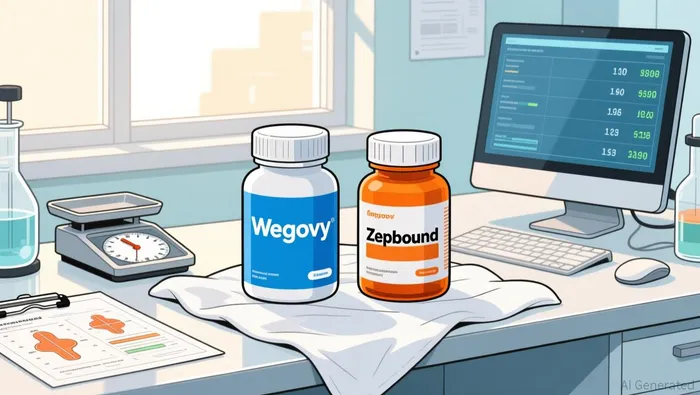 However, Novo Nordisk's oral formulation introduces a key differentiator: patient preference for non-injectable treatments. According to a report by PSG Consults, 30% of patients express reluctance to use injectables due to discomfort or lifestyle constraints. By addressing this barrier, the Wegovy pill could capture a segment of the market that has been underrepresented, particularly among older adults or those with needle phobia.
Eli Lilly is countering with its own oral innovation: orforglipron, a daily pill expected to receive FDA approval in early 2026. This development underscores the growing importance of delivery form in the GLP-1 space, where patient adherence and convenience are increasingly decisive factors.
Financial Implications: Revenue Projections and Market Share
Wegovy's financial potential is substantial. In 2024, the injectable version generated $5.7 billion in U.S. sales, and the oral pill is projected to contribute to a combined $37 billion revenue for Wegovy by 2030. However, Zepbound's dominance is evident: it is forecasted to become the third-highest-selling drug globally by 2030, with $25.5 billion in revenue, compared to Wegovy's $18.1 billion. This gap reflects Zepbound's superior efficacy and broader indications, which have driven rapid adoption since its launch.
Novo Nordisk's pipeline offers a counterstrategy. The company is advancing a higher-dose semaglutide (7.2 mg) and amycretin-based therapies, while its dual GLP-1/amylin agonist, CagriSema, demonstrated 22.7% weight loss in trials-nearly matching Zepbound's performance. However, CagriSema's complex manufacturing process and higher costs could limit its scalability in a cost-sensitive market.
The broader GLP-1 market is poised for explosive growth, projected to reach $73 billion by 2034, driven by rising obesity prevalence and evolving reimbursement policies. Novo Nordisk and Eli Lilly are expected to maintain their leadership roles, but emerging competitors like Pfizer, AstraZeneca, and Chinese firms such as Innovent Biologics may erode margins through price competition in the long term.
Strategic Considerations for Investors
The FDA approval of the Wegovy pill is a strategic win for Novo NordiskNVO--, offering a unique value proposition in a market where patient-centric solutions are increasingly prioritized. However, investors must weigh this against Eli Lilly's stronger near-term momentum and the looming threat of generic or biosimilar entrants.
For Novo Nordisk, the success of the oral pill hinges on its ability to differentiate through convenience and accessibility while addressing pricing pressures. The company's planned U.S. launch in early January 2026, including savings offers, signals a focus on affordability-a critical factor in a market where out-of-pocket costs often deter patients.
In contrast, Eli Lilly's dual-track strategy-leveraging Zepbound's efficacy and advancing orforglipron-positions it to maintain a first-mover advantage. Yet, the oral Wegovy pill's entry could disrupt market share dynamics, particularly if Novo Nordisk's pricing strategy proves more attractive to insurers and patients.
Conclusion
The approval of Novo Nordisk's oral Wegovy pill represents a transformative step in obesity care, combining the proven efficacy of GLP-1 agonists with the convenience of oral administration. While Eli Lilly's Zepbound retains a clinical edge, the competitive landscape is rapidly evolving, with delivery form and pricing emerging as decisive factors. For investors, the key takeaway is clear: the GLP-1 market remains a high-growth opportunity, but sustained success will require innovation, agility, and a deep understanding of patient needs.







Comentarios
Aún no hay comentarios