
FCPT's Strategic Expansion into the Veterinary Real Estate Sector: Assessing the Attractiveness of High-Yield Net-Lease Acquisitions in a Rising Rate Environment
Strategic Acquisitions: Location, Cap Rates, and Tenant Stability
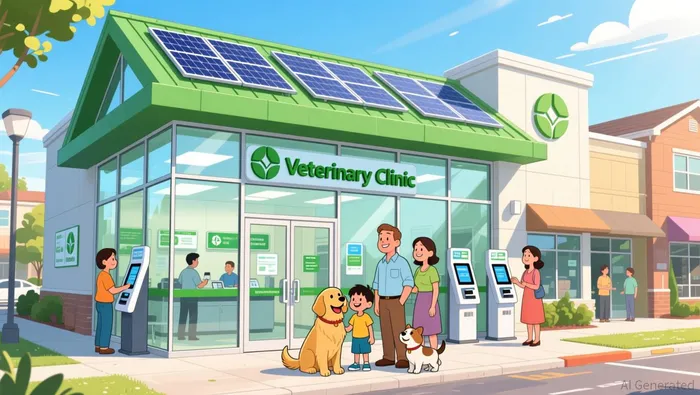
FCPT's 2025 expansion into veterinary real estate has been marked by a focus on high-quality, long-lease properties. , with tenants including National Veterinary Associates, Banfield Pet Hospital, and Mission Pet Health, as noted in the Morningstar report. These corporate-operated properties, leased under triple net (NNN) agreements, offer FCPTFCPT-- predictable cash flows and minimal operational risk. , according to the Morningstar report.
Complementing this, FCPT's $3.9 million purchase of an SCA Health property in Alabama-a triple net lease with four years remaining and an 8.3% cap rate-demonstrates its diversification strategy across healthcare subsectors, as reported in a Yahoo Finance article. While veterinary properties dominate its recent activity, the SCA Health acquisition signals a broader appetite for stable, high-yield assets in essential services.
Veterinary Real Estate: A Sector Built for Resilience
The veterinary real estate sector's appeal lies in its alignment with enduring consumer trends. Pet ownership in the U.S. has surged, , and veterinary services increasingly viewed as non-discretionary care, according to the Terramed analysis. This demand has driven a 8.24% rise in veterinary service prices over the past year, outpacing national inflation rates, per the Terramed analysis. Meanwhile, adaptive reuse of shuttered retail and industrial spaces-such as former banks and pharmacies-into modern veterinary clinics has created a supply of cost-effective, high-amenity properties, per the Terramed analysis.
Despite a slight decline in clinic visits and revenue since late 2023, the sector's long-term fundamentals remain robust. Practices with adaptable real estate are particularly attractive, as they enable cost-effective service expansions post-acquisition, according to the Terramed analysis. For investors, this translates to properties that can evolve with market needs, mitigating obsolescence risks.
High-Yield Net-Lease Acquisitions in a Rising Rate Environment
Rising interest rates have historically pressured net-lease REITs, as higher borrowing costs reduce the present value of future cash flows. However, FCPT's veterinary-focused strategy appears insulated from these risks. The sector's long-term leases and creditworthy tenants-such as Banfield Pet Hospital, a subsidiary of Mars Petcare-provide stability even as rates climb, as noted in the Morningstar report.
Sila Realty Trust, a healthcare-focused net-lease REIT, offers a parallel example. Despite the challenging rate environment in 2024, , as reported in a Business Wire report. This underscores the sector's ability to secure favorable terms when demand for essential services remains strong. For FCPT, the veterinary real estate market's unique dynamics-driven by pet humanization and demographic shifts-create a buffer against macroeconomic volatility.
Balancing Risks and Rewards
While FCPT's strategy is compelling, investors must weigh potential risks. The veterinary sector's growth is partly cyclical, with spending on elective procedures and pharmaceuticals vulnerable to economic downturns, according to the Terramed analysis. Additionally, the recent trend of clinic visits declining post-2023 raises questions about short-term occupancy pressures, per the Terramed analysis. However, FCPT's focus on corporate-operated properties-leased to national chains with standardized operations-mitigates tenant-specific risks. These tenants are better positioned to absorb cost increases and maintain occupancy, even in softer markets.
Conclusion: A Strategic Play for Yield and Stability
FCPT's foray into veterinary real estate reflects a nuanced understanding of sector-specific tailwinds. By targeting high-yield net-lease properties in a market driven by essential services and demographic trends, the REIT is positioning itself to outperform in a rising rate environment. While macroeconomic uncertainties persist, the veterinary sector's resilience-bolstered by long-term leases, adaptive reuse opportunities, and a growing client base-makes it an attractive haven for capital seeking both yield and stability. For investors, FCPT's strategy offers a blueprint for navigating a challenging rate landscape through sectoral specialization and disciplined capital allocation.





Comentarios
Aún no hay comentarios