
FCPT's Strategic Acquisition of a Net-Leased Olive Garden Property at a 6.7% Cap Rate: Assessing Long-Term Value in a Shifting Market
The commercial real estate landscape in 2025 is marked by a recalibration of risk and reward, particularly for triple net lease (NNN) REITs. Four Corners Property Trust's (FCPT) recent acquisition of an Olive Garden property in North Carolina at a 6.7% cap rate underscores a strategic pivot toward stability in an environment where investor preferences increasingly favor long-term, corporately backed leases. This move, contextualized against sector-specific cap rate trends and broader macroeconomic shifts, highlights the enduring appeal of NNNNNN-- REITs as a vehicle for income stability and capital preservation.
Cap Rate Context: Balancing Risk and Reward in the Restaurant Sector
The restaurant segment of the NNN market has seen pronounced differentiation in cap rates, driven by tenant credit quality and operational resilience. As of 2025, corporately backed brands like IHOP have commanded cap rates as low as 5%, according to market analysis. In contrast, riskier operators such as Red Lobster and Hooters face cap rates exceeding 7.26% and 10%, respectively, due to concerns over private ownership structures and lease terms according to data. FCPT's 6.7% cap rate for the Olive Garden acquisition-a brand owned by the financially robust Darden Restaurants-positions the deal within a narrow spread of the sector's safest assets. This aligns with a broader industry trend: investors are willing to accept lower yields for the assurance of stable, inflation-protected income streams.
Portfolio Diversification and Tenant Strength: FCPT's Strategic Edge
FCPT's portfolio, comprising 1,273 properties across 48 states, is a testament to disciplined diversification. As of September 30, 2025, the REIT reported 99.5% occupancy and a weighted average remaining lease term of 7.1 years, with 39% of assets allocated to medical retail and 36% to auto service-a mix that buffers against sector-specific downturns according to Q3 earnings data. 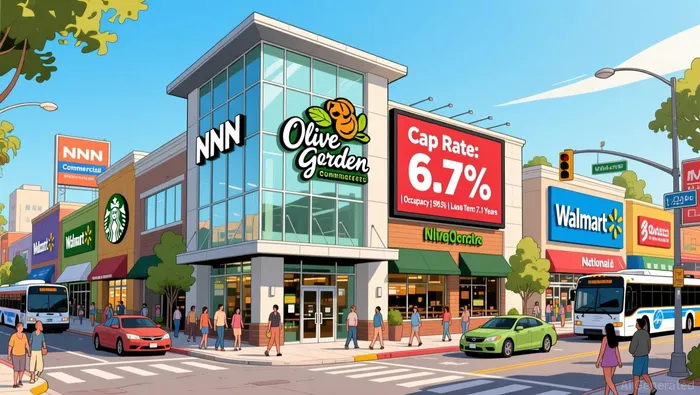 The recent $4.1 million Olive Garden acquisition in North Carolina, leased under a long-term triple net structure, further strengthens this diversification. Olive Garden's parent company reported near 6% sales growth for the quarter ending August 2025, reinforcing the tenant's financial health. The property's location in a high-traffic retail corridor also mitigates physical risk, a critical consideration in an era of shifting consumer behavior according to FCPT's official announcement.
Macro Tailwinds: Interest Rates and REIT Performance in 2025
The broader NNN REITNNN-- sector is benefiting from a favorable macroeconomic backdrop. J.P. Morgan Research projects 3% growth for REITs in 2025, with net lease REITs particularly well positioned due to stable fundamentals and dividend yields exceeding 5%. The Federal Reserve's rate cuts in Q3 2025 have reduced financing costs, enabling REITs to widen investment spreads and accelerate AFFO (adjusted funds from operations) per share growth. For instance, Realty Income achieved a 7.7% initial cash yield on $1.4 billion in new acquisitions during the period, while NetSTREIT reported a 7.4% yield on $203.9 million in deals according to sector analysis. This fits squarely within this environment, offering a balance of yield and security as debt markets remain accommodating.
Risks and Considerations: Navigating a Fragmented Market
While the current climate favors NNN REITs, challenges persist. The industrial sector faces headwinds from tariff-related uncertainties, and the office market remains in a fragile recovery phase. However, FCPT's focus on essential-use sectors like restaurant and medical retail insulates it from these headwinds. The Olive Garden lease, with its long-term, triple net structure, also minimizes operational risk by transferring property-related expenses to the tenant. This is critical in a market where rising input costs continue to pressure property owners.
Conclusion: A Model for Sustainable Income Generation
FCPT's acquisition of the Olive Garden property at a 6.7% cap rate exemplifies the strategic calculus driving NNN REITs in 2025. By targeting high-credit tenants in stable sectors and leveraging a low-rate environment, the REIT is positioning itself to deliver consistent income and capital appreciation. As cap rates stabilize and investor demand for defensive assets grows, FCPT's disciplined approach offers a compelling case for long-term value creation in a shifting commercial real estate landscape.





Comentarios
Aún no hay comentarios