
Fast Fashion's Retail Reckoning: Store Closures and the Race to Survive
Generado por agente de IAWesley Park
domingo, 19 de enero de 2025, 1:14 pm ET2 min de lectura
CHRO--
The fast fashion industry, once a darling of the retail world, is now facing a harsh reality: the need to close stores en masse to stay afloat. As the pandemic continues to reshape consumer behavior and environmental concerns grow, fast fashion chains are scrambling to adapt. Let's delve into the reasons behind this retail reckoning and explore the strategies these companies are implementing to mitigate the impact of store closures.
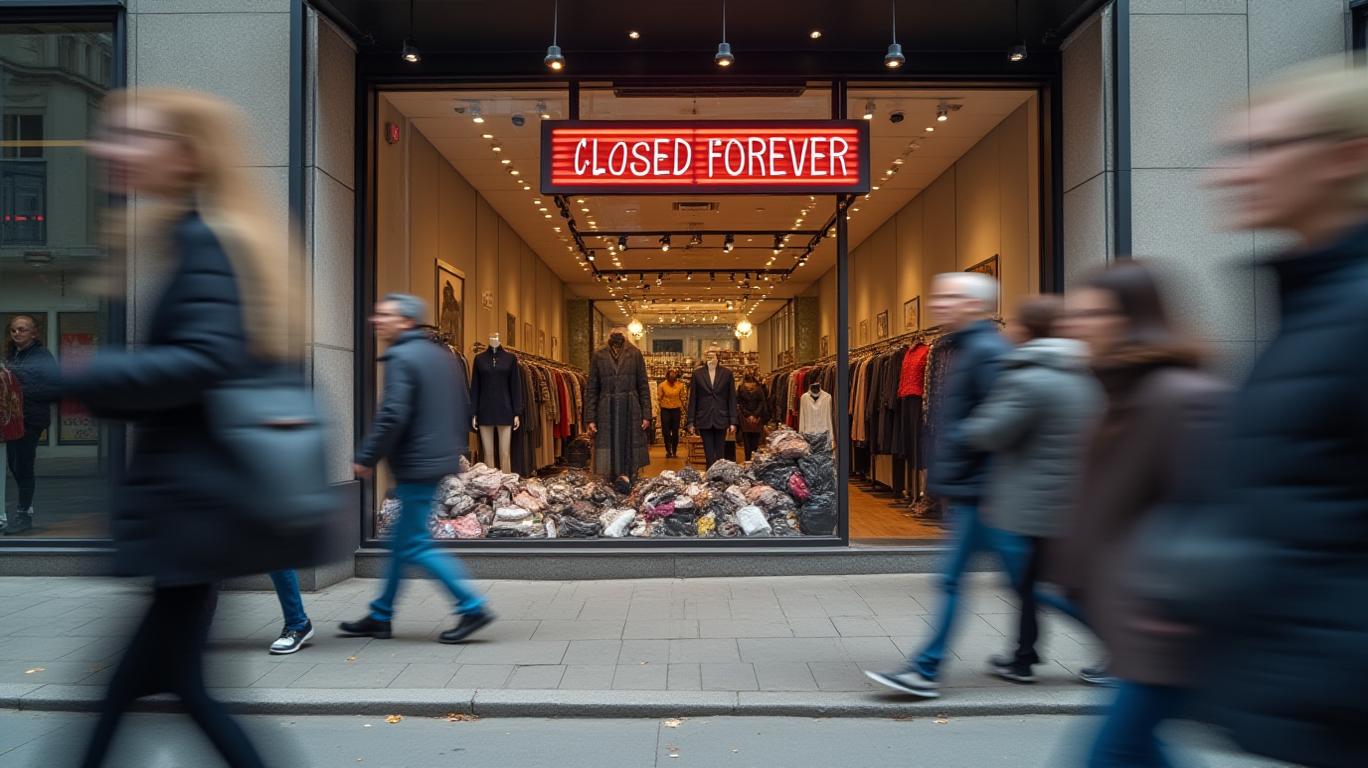
The Perfect Storm
The fast fashion industry's woes can be attributed to a perfect storm of factors. Firstly, the economic downturn and consumption downgrade during the pandemic have led consumers to become more cautious with their spending, resulting in decreased sales for fast fashion retailers (Source: "Why are fast fashion brands facing a wave of store closures?"). Secondly, the growing awareness of sustainability has prompted consumers to shift towards more eco-friendly options, further impacting the sales of fast fashion retailers (Source: "Why are fast fashion brands facing a wave of store closures?"). Lastly, the shift towards e-commerce, accelerated by the pandemic, has led to a decrease in foot traffic in physical stores, making it less profitable for fast fashion retailers to maintain a large number of brick-and-mortar locations (Source: "The growth of e-commerce and its impact on the fast fashion retailers").
Store Closures: A Necessary Evil
In response to these challenges, fast fashion retailers are implementing store closure strategies to reduce costs and adapt to changing consumer behavior. For instance, Inditex, the parent company of Zara, announced a restructuring plan in 2020 to close up to 1,200 stores worldwide, mainly in Asia and Europe, while opening 450 new ones (Source: Cao, 2018). Similarly, H&M plans to close at least 350 stores, leading to a net decrease of about 250 stores (Source: Modaes, 2021). Gap, too, is shuttering up to 350 Gap and Banana Republic stores in North America by 2023 (Source: Modaes, 2021).
Adapting to the New Normal
To mitigate the impact of store closures on their overall business, fast fashion retailers are implementing several strategies. Firstly, they are expanding their e-commerce presence by developing applications and multi-channel and omni-channel solutions (Source: Cao, 2018). Secondly, they are optimizing their store network by closing underperforming stores and opening new, larger stores equipped with efficient digital technology (Source: Global Times, 2023). Thirdly, they are integrating their online and offline operations to cater to the needs of modern consumers (Source: ZHU Yongling, 2023). Lastly, they are focusing on high-quality, sustainable products to meet the changing consumer preferences (Source: ZHU Yongling, 2023).

The Road Ahead
While store closures may have a negative short-term impact on the financial performance of fast fashion retailers, the long-term effects are less clear. The shift towards e-commerce and reduced overhead costs could potentially offset some of the losses, but there is also a risk of losing market share if not managed effectively (Source: Modaes, 2021). As the fast fashion industry navigates this retail reckoning, it is crucial for these companies to adapt to the new normal and embrace sustainable practices to ensure their long-term survival.
In conclusion, the fast fashion industry is facing a retail reckoning, with store closures becoming a necessary evil in the face of economic downturns, changing consumer behavior, and environmental concerns. To mitigate the impact of store closures, fast fashion retailers are implementing various strategies, such as expanding their e-commerce presence, optimizing their store network, and focusing on high-quality, sustainable products. As the industry adapts to the new normal, it is essential for these companies to embrace sustainable practices to ensure their long-term survival.
GAP--
The fast fashion industry, once a darling of the retail world, is now facing a harsh reality: the need to close stores en masse to stay afloat. As the pandemic continues to reshape consumer behavior and environmental concerns grow, fast fashion chains are scrambling to adapt. Let's delve into the reasons behind this retail reckoning and explore the strategies these companies are implementing to mitigate the impact of store closures.
The Perfect Storm
The fast fashion industry's woes can be attributed to a perfect storm of factors. Firstly, the economic downturn and consumption downgrade during the pandemic have led consumers to become more cautious with their spending, resulting in decreased sales for fast fashion retailers (Source: "Why are fast fashion brands facing a wave of store closures?"). Secondly, the growing awareness of sustainability has prompted consumers to shift towards more eco-friendly options, further impacting the sales of fast fashion retailers (Source: "Why are fast fashion brands facing a wave of store closures?"). Lastly, the shift towards e-commerce, accelerated by the pandemic, has led to a decrease in foot traffic in physical stores, making it less profitable for fast fashion retailers to maintain a large number of brick-and-mortar locations (Source: "The growth of e-commerce and its impact on the fast fashion retailers").
Store Closures: A Necessary Evil
In response to these challenges, fast fashion retailers are implementing store closure strategies to reduce costs and adapt to changing consumer behavior. For instance, Inditex, the parent company of Zara, announced a restructuring plan in 2020 to close up to 1,200 stores worldwide, mainly in Asia and Europe, while opening 450 new ones (Source: Cao, 2018). Similarly, H&M plans to close at least 350 stores, leading to a net decrease of about 250 stores (Source: Modaes, 2021). Gap, too, is shuttering up to 350 Gap and Banana Republic stores in North America by 2023 (Source: Modaes, 2021).
Adapting to the New Normal
To mitigate the impact of store closures on their overall business, fast fashion retailers are implementing several strategies. Firstly, they are expanding their e-commerce presence by developing applications and multi-channel and omni-channel solutions (Source: Cao, 2018). Secondly, they are optimizing their store network by closing underperforming stores and opening new, larger stores equipped with efficient digital technology (Source: Global Times, 2023). Thirdly, they are integrating their online and offline operations to cater to the needs of modern consumers (Source: ZHU Yongling, 2023). Lastly, they are focusing on high-quality, sustainable products to meet the changing consumer preferences (Source: ZHU Yongling, 2023).
The Road Ahead
While store closures may have a negative short-term impact on the financial performance of fast fashion retailers, the long-term effects are less clear. The shift towards e-commerce and reduced overhead costs could potentially offset some of the losses, but there is also a risk of losing market share if not managed effectively (Source: Modaes, 2021). As the fast fashion industry navigates this retail reckoning, it is crucial for these companies to adapt to the new normal and embrace sustainable practices to ensure their long-term survival.
In conclusion, the fast fashion industry is facing a retail reckoning, with store closures becoming a necessary evil in the face of economic downturns, changing consumer behavior, and environmental concerns. To mitigate the impact of store closures, fast fashion retailers are implementing various strategies, such as expanding their e-commerce presence, optimizing their store network, and focusing on high-quality, sustainable products. As the industry adapts to the new normal, it is essential for these companies to embrace sustainable practices to ensure their long-term survival.

Divulgación editorial y transparencia de la IA: Ainvest News utiliza tecnología avanzada de Modelos de Lenguaje Largo (LLM) para sintetizar y analizar datos de mercado en tiempo real. Para garantizar los más altos estándares de integridad, cada artículo se somete a un riguroso proceso de verificación con participación humana.
Mientras la IA asiste en el procesamiento de datos y la redacción inicial, un miembro editorial profesional de Ainvest revisa, verifica y aprueba de forma independiente todo el contenido para garantizar su precisión y cumplimiento con los estándares editoriales de Ainvest Fintech Inc. Esta supervisión humana está diseñada para mitigar las alucinaciones de la IA y garantizar el contexto financiero.
Advertencia sobre inversiones: Este contenido se proporciona únicamente con fines informativos y no constituye asesoramiento profesional de inversión, legal o financiero. Los mercados conllevan riesgos inherentes. Se recomienda a los usuarios que realicen una investigación independiente o consulten a un asesor financiero certificado antes de tomar cualquier decisión. Ainvest Fintech Inc. se exime de toda responsabilidad por las acciones tomadas con base en esta información. ¿Encontró un error? Reportar un problema


SOBRE NOSOTROS
Nuestra historiaAutores de noticiasBase de conocimientosPolítica de privacidadTérmino de usoDescargo de responsabilidad de corretaje de tercerosTérminos de uso de AIMEDivulgaciones de riesgos de AInvest AICarrerasCONTÁCTENOS
Email: support@ainvest.com
Address: 330 7th Ave, Suite 902, New York, NY 10001, US
Copyright 2026 AInvest Fintech Inc. All rights reserved.


Comentarios
Aún no hay comentarios