
Is Fartcoin's Recent 12% Surge a Sustainable Breakout or a Whales-Driven Flash Crash?
On-Chain Whale Activity: A Double-Edged Sword
Fartcoin's surge coincides with a spike in whale transactions. On November 23, 2025, the token ranked among the most active in whale movements, with eight large addresses collectively transacting over $15,000 worth of FARTCOIN. This aligns with historical patterns: in June 2025, a whale sold 7.44 million FARTCOIN for $6.47 million in SOL, transferring proceeds to Stake.com, while another offloaded 3 million FARTCOIN at $1.29 per coin in July. These movements highlight liquidity but also underscore the token's susceptibility to whale-driven volatility.
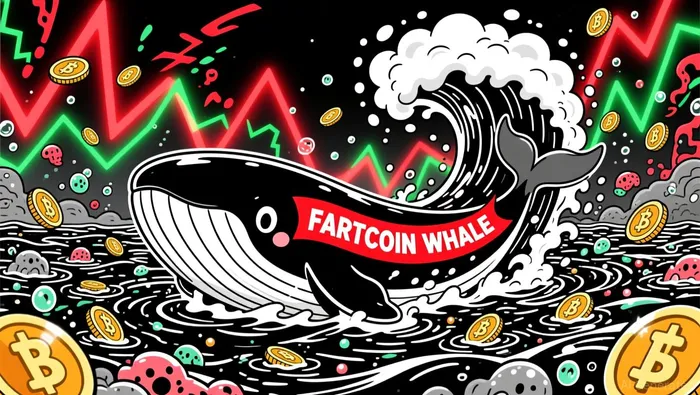
While whale activity can signal institutional or retail confidence, it often reflects short-term profit-taking or dumping. The fact that these whales retain significant holdings suggests they may still view Fartcoin as a high-risk, high-reward asset. However, the lack of sustained on-chain accumulation by large holders raises questions about the durability of the 12% surge.
Derivatives Market Dynamics: Speculation Over Substance
Derivatives data paints an even more precarious picture. By November 2025, Fartcoin's derivatives open interest exceeded $1 billion-65% of its $1.62 billion market cap. This level of speculative activity is alarming, as it indicates traders are betting heavily on price swings rather than fundamentals. For context, open interest surged 43% in the same period due to leveraged trading, while a single 24-hour window saw $1.56 million in liquidations.
The high liquidation rates reveal a derivatives market dominated by leveraged retail traders, many of whom are likely overexposed. For instance, a 24-hour period saw $772,000 in liquidations, with 914 accounts affected. This volatility suggests that the 12% surge may be driven by margin calls and forced selling rather than organic demand.
The Leverage Paradox: Fueling Hype, Risking Collapse
Though average leverage ratios for Fartcoin derivatives are not explicitly disclosed, the liquidation data implies extreme leverage. High leverage amplifies gains during rallies but magnifies losses during downturns. The derivatives market's current state-where open interest constitutes a majority of the token's market cap-reflects a speculative frenzy rather than a sustainable investment thesis.
Moreover, the open interest surge was short-lived. On November 21, it hit $220.69 million after a 30% spike, but by late September 2025, open interest had dropped 12% as liquidity dried up according to market analysis. This volatility underscores the fragility of derivatives-driven demand.
Conclusion: A Whales-Driven Flash Crash in the Making?
Fartcoin's 12% surge is undeniably fueled by whale activity and derivatives speculation. However, the absence of sustained on-chain accumulation and the derivatives market's reliance on leveraged bets suggest this rally is more akin to a flash crash than a breakout. Whales and speculators are the primary drivers, but their actions often lead to abrupt reversals when sentiment shifts.
For investors, the key takeaway is clear: Fartcoin's current trajectory is unsustainable without fundamental improvements in adoption, utility, or institutional buy-in. Until then, the token remains a high-risk bet for those willing to navigate the volatile whims of whale behavior and derivatives-driven hype.







Comentarios
Aún no hay comentarios