
Farmer Mac's Q2 2025 Earnings: A Strategic Case for Investing in Rural America's Financial Infrastructure
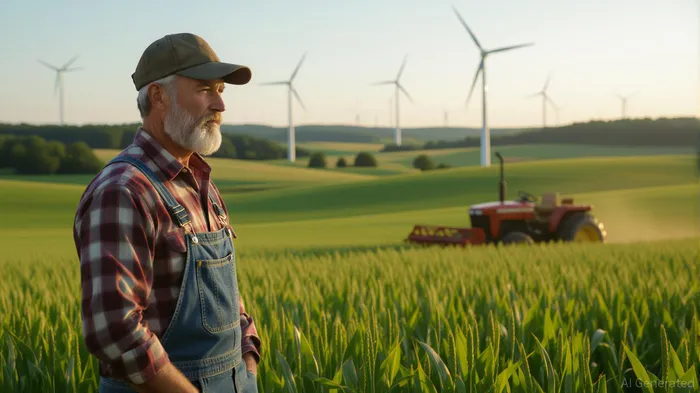
Farmer Mac's Q2 2025 earnings report has cemented its position as a cornerstone of the U.S. agricultural and rural infrastructure credit markets. With record core earnings of $47.4 million (up 19% year-over-year) and a 12% increase in net effective spread to $93.9 million, the Federal Agricultural Mortgage Corporation (AGM) has demonstrated a rare combination of operational efficiency, portfolio resilience, and scalable growth. For investors seeking long-term exposure to a sector insulated from macroeconomic volatility, Farmer Mac's financials and strategic initiatives present a compelling case.
Operational Efficiency: The Engine of Sustainable Growth
Farmer Mac's net effective spread—a non-GAAP metric that strips out fair-value adjustments—rose to $93.9 million in Q2 2025, reflecting its ability to maintain a healthy margin between interest-earning assets and funding costs. This 12% year-over-year growth outpaces its net interest income increase of 11% ($96.8 million), underscoring disciplined cost management. The company's operating expenses totaled $29.5 million, or 30% of total interest income, a ratio that has remained stable despite rising business volumes. This efficiency is critical in a low-margin sector, where even minor cost overruns can erode profitability.
The company's capital structure further amplifies its operational strength. With total core capital of $1.6 billion—63% above statutory requirements—and a Tier 1 Capital Ratio of 13.6%, Farmer Mac has built a fortress-like balance sheet. This positions it to absorb potential downturns in specific commodity sectors while continuing to fund rural infrastructure projects. The 310 days of liquidity reported in Q2 2025 also provide a buffer against short-term funding shocks, a critical advantage in a sector where credit cycles can be unpredictable.
Diversification: A Hedge Against Commodity Volatility
Farmer Mac's portfolio is a masterclass in diversification. By spreading risk across 10 commodity sectors—including livestock, crops, and renewable energy—and spanning 48 U.S. states, the company mitigates exposure to regional or sector-specific downturns. For instance, while dairy prices have faced headwinds in 2025, its renewable energy and broadband infrastructure segments have offset volatility in traditional agriculture. This geographic and commodity breadth ensures that no single market can derail its growth trajectory.
The company's expansion into non-traditional agricultural sectors, such as power and utilities, is particularly noteworthy. These segments now account for 18% of its total business volume, up from 12% in 2024. This shift aligns with broader trends in rural America, where demand for clean energy and digital infrastructure is surging. By adapting its product offerings to these needs, Farmer Mac is future-proofing its revenue streams.
Business Volume Growth: A $30 Billion Milestone and Beyond
The most striking metric in Farmer Mac's Q2 report is the $30.1 billion in total outstanding business volume—a first-time milestone that highlights its expanding role in rural finance. This growth was driven by a 11% year-over-year increase in net interest income and $2.1 billion in liquidity provided to lenders. The company's ability to scale without compromising margins is a testament to its operational discipline.
The strategic implications of this growth are profound. As rural infrastructure demand accelerates—driven by government incentives for broadband expansion and renewable energy projects—Farmer Mac is uniquely positioned to capture market share. Its recent $50 million share repurchase program extension through August 2027 also signals management's confidence in its capital allocation strategy, rewarding shareholders while retaining flexibility for future growth.
Investment Thesis: A High-Conviction Play on Rural Resilience
Farmer Mac's Q2 results validate its role as a critical enabler of rural America's economic resilience. For investors, the company's combination of operational efficiency, diversification, and scalable business volume creates a durable competitive moat. While the stock trades at a price-to-core earnings multiple of 14x (as of August 2025), its robust capital position and expanding addressable market justify a premium valuation.
Key Risks to Consider:
- Interest Rate Sensitivity: Rising rates could compress net effective spreads, though Farmer Mac's long-duration assets may offset this risk.
- Commodity Market Shocks: Diversification mitigates this, but prolonged downturns in key sectors like livestock could pressure earnings.
Investment Recommendation: Buy for long-term investors seeking exposure to a defensive, high-conviction sector. The company's strategic alignment with rural infrastructure trends and its strong balance sheet make it a compelling addition to portfolios focused on economic resilience.
In a world where macroeconomic uncertainty looms large, Farmer Mac's Q2 2025 results offer a rare blend of growth, stability, and strategic foresight. For those who recognize the enduring importance of rural America's financial infrastructure, this is a stock worth watching—and owning.







Comentarios
Aún no hay comentarios