
Famed Investor Michael Burry Says He's Not Short Tesla Shares
Tesla's 2025: Declining Deliveries and Supply Chain Challenges
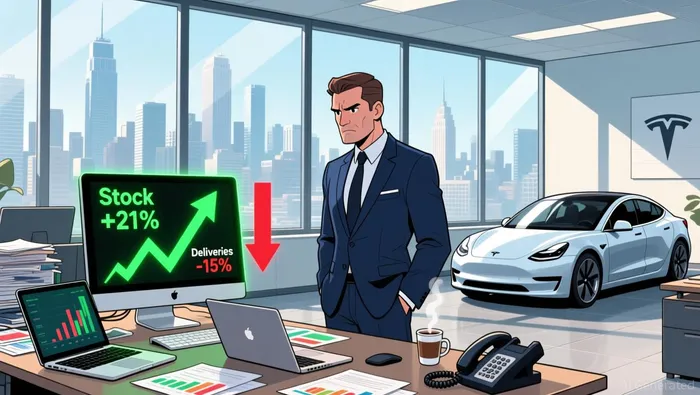
Tesla's 2025 has been marked by declining vehicle deliveries and supply chain challenges, signaling a difficult period for the electric vehicle (EV) leader. The company's fourth-quarter sales estimates show a 15% drop from 2024 levels, with the year's total expected to fall to 1.64 million units, down from 1.79 million in 2024. This trend follows a global slowdown in EV demand and production delays for models like the Cybertruck. Shares of TeslaTSLA--, however, have managed to rise 21% in 2025 despite these setbacks according to market analysis.
The decline in sales is compounded by the deterioration of key supplier relationships. South Korean battery materials producer L&F Co disclosed a drastic reduction in its Tesla supply contract, from $2.9 billion to just $7,386. This shift has significantly dented the company's market value and long-term diversification goals. The revised contract highlights the risks of over-reliance on a single client and underscores broader challenges in the EV supply chain.
Tesla's supply chain issues are not limited to L&F. The company has seen repeated production delays for the Cybertruck, contributing to sluggish demand for the model. Analysts have noted that the Cybertruck's performance has not met initial expectations, impacting overall sales momentum.
Why Did This Happen?
The decline in Tesla's sales and supplier contracts reflects broader industry trends. The EV market has cooled in several regions, with investors growing wary of companies heavily dependent on a few key clients. L&F's experience with Tesla underscores the risks of relying on a single supplier, particularly when that supplier's product timelines are unpredictable.
Tesla's decision to publish its own delivery estimates marks a new approach to investor transparency. The company compiled a consensus of 20 analyst forecasts, a move requested by investors to better understand its performance expectations. This transparency, however, has not been enough to offset concerns over declining sales and production delays.
How Did Markets React?
Despite the negative delivery estimates, Tesla's stock has shown resilience. As of the end of 2025, shares have risen more than 21%, outperforming the S&P 500. This performance has been driven by investor speculation about the company's long-term prospects, particularly in areas like robotaxi services and AI-driven technologies. Some analysts remain optimistic, with Wedbush predicting a potential $2 trillion market capitalization for Tesla in 2026 according to financial reports.
Investor sentiment has also been influenced by Tesla's strategic direction. The company is focusing on AI advancements, including its Full-Self Driving program and robotaxi initiatives. These efforts are seen as potential long-term growth drivers, even as current sales figures remain below expectations.
What Are Analysts Watching Next?
Analysts are closely monitoring several factors that could shape Tesla's performance in 2026. Baird analysts highlight the importance of robotaxi service announcements, updates on new markets, and potential production increases for the Tesla Semi. The firm also expects progress on Optimus, Tesla's humanoid robot, and continued growth in the Energy segment.
Production timelines and regulatory approvals in key markets like China and the European Union will also play a critical role. Analysts are watching for updates on these fronts, which could influence investor confidence and stock performance.
Financially, Tesla has maintained a strong balance sheet, with a current ratio of 2.07 and a manageable debt-to-equity ratio of 0.17 according to financial data. However, earnings growth has declined over the past year, raising questions about the company's ability to maintain profitability amid rising production and R&D costs.
The market is also observing the potential for new vehicle launches and pricing strategies. Analysts project Tesla delivering over 3 million vehicles by 2029, but achieving this goal will depend on resolving current production bottlenecks and gaining traction in emerging markets.
The supply chain disruptions, particularly with L&F, underscore the need for Tesla to diversify its supplier base. Investors are watching whether the company will take steps to reduce its dependence on single-source suppliers, which could help mitigate future risks.
As the year draws to a close, Tesla's path forward remains uncertain. While short-term challenges persist, the company's long-term vision, including AI advancements and autonomous driving, continues to attract investor attention according to market analysis.







Comentarios
Aún no hay comentarios