
Falcon Finance's Strategic Move into the Korean Web3 Market: A Catalyst for Ecosystem Growth and Liquidity Expansion
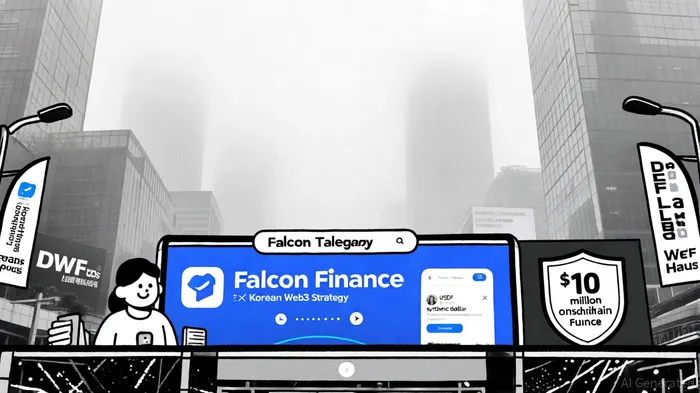
Falcon Finance's recent foray into the Korean Web3 market marks a pivotal moment in its mission to build institutional-grade decentralized finance (DeFi) infrastructure. By launching an official Korean Telegram community on September 9, 2025, Falcon has established a localized hub for engagement, education, and transparency—a critical step in a market where Web3 adoption is surging[1]. This move is complemented by strategic partnerships, including co-hosting DWF Labs Haus: Korea Blockchain Week in Seoul, which aims to connect builders, investors, and regulators in a rapidly evolving ecosystem[3].
Community-Driven Engagement: A Foundation for Trust
South Korea's Web3 market is one of the most active globally, driven by a tech-savvy population and a government actively shaping crypto regulations[4]. Falcon Finance's Telegram initiative reflects a community-first approach, offering two dedicated channels: one for official announcements and another for user-driven discussions. This dual-layer strategy not only fosters direct communication but also aligns with Falcon's broader vision of democratizing access to DeFi tools[1].
The platform's commitment to transparency is further underscored by onchain verification tools on its official website, ensuring users can distinguish verified channels from potential imitators[1]. Such measures are critical in a market where trust is paramount, particularly as South Korea advances its won-backed stablecoin framework to attract institutional capital[4].
Institutional-Grade Liquidity Solutions: USDf and Beyond
Falcon Finance's USDf synthetic dollar has emerged as a cornerstone of its institutional liquidity strategy. As of September 2025, USDf's circulating supply has surged to $1.5 billion, fueled by innovative yield mechanisms and strategic integrations like the frxUSD–USDf Curve pool[1]. This growth is supported by a $10 million onchain insurance fund, designed to stabilize USDf's peg during market volatility and protect institutional stakeholders[2].
The platform's recent $10 million strategic investment from World Liberty Financial (WLFI)—a DeFi entity linked to the Trump family—further amplifies its institutional appeal. This partnership aims to bridge USDf with WLFI's fiat-backed USD1 stablecoin, creating seamless liquidity between synthetic and fiat-backed assets[4]. Such cross-platform interoperability addresses a key pain point for institutions seeking scalable, compliant digital dollar solutions[1].
Strategic Alignment with South Korea's Regulatory Momentum
South Korea's regulatory environment is rapidly evolving to position itself as a global crypto hub. The government's plans for a won-backed stablecoin and stricter oversight of virtual asset service providers align closely with Falcon Finance's emphasis on transparency and compliance[4]. By entering this market at a pivotal moment, Falcon is not only capitalizing on regulatory clarity but also contributing to the development of a robust DeFi infrastructure that supports both retail and institutional participants[2].
The DWF Labs Haus: Korea Blockchain Week event, co-hosted with Falcon FinanceBYFC--, exemplifies this alignment. By bringing together industry leaders in Seoul, the event fosters collaboration and highlights Falcon's role in advancing multi-chain liquidity solutions and real-world asset integration[3].
A Catalyst for Ecosystem Growth
Falcon Finance's Korean strategy is a masterclass in combining community-driven engagement with institutional-grade infrastructure. The Telegram community serves as a grassroots foundation, while USDf's liquidity pools and insurance mechanisms cater to institutional demand for stability and yield. These efforts are amplified by strategic partnerships and regulatory alignment, positioning Falcon as a key player in South Korea's Web3 ecosystem.
For investors, Falcon Finance's Korean expansion represents a compelling opportunity. The platform's focus on liquidity innovation, risk mitigation, and regulatory adaptability aligns with global trends in institutional DeFi adoption. As South Korea solidifies its status as a crypto trendsetter, Falcon's ecosystem is poised to benefit from both organic growth and strategic partnerships[4].







Comentarios
Aún no hay comentarios