
Falcon 9 Rocket Launches X-37B Spaceplane to Demonstrate Laser Communications and Quantum Navigation
PorAinvest
sábado, 23 de agosto de 2025, 4:43 pm ET2 min de lectura
BA--
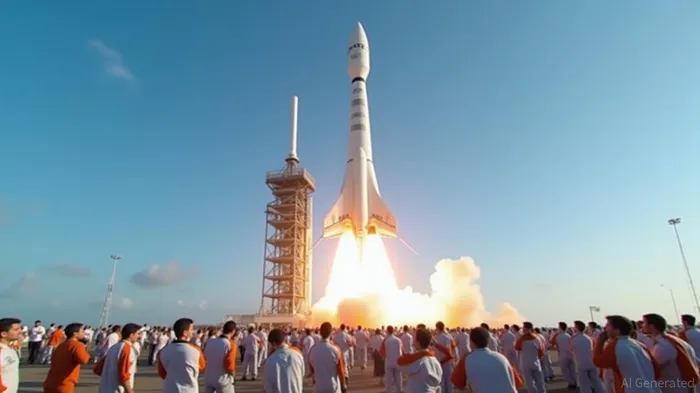
The launch occurred from Pad 39A at NASA's Kennedy Space Center (KSC) in Florida, with the Falcon 9 rocket carrying the Boeing-built X-37B spaceplane. The mission, designated as Orbital Test Vehicle 8 (OTV-8), is the eighth flight for the X-37B and the sixth flight for the Falcon 9 booster (B1092), which previously launched various missions such as NROL-69, CRS-32, GPS III-7, and Starlink groups 12-13 and 10-34. The booster is expected to return to the Space Coast for recovery at SpaceX's Landing Zone-2, located at Cape Canaveral Space Force Station.
The primary objectives of OTV-8 include testing a laser communications system and a quantum inertial sensor. The laser communications system is designed to support heavier data loads and tougher security safeguards compared to traditional radio communications. The quantum inertial sensor aims to measure the inertia of nearby atoms to help inform the space plane's navigational position on orbit, without reliance on existing satellite infrastructure.
This mission is part of the USSF's ongoing effort to modernize space-based defense systems and aligns with the broader U.S. strategy to reduce reliance on foreign supply chains. The USSF's Golden Dome initiative, which aims to modernize space-based defense systems, is a key focus area for the mission.
Rocket Lab, a key player in the U.S. space supply chain, has also been making significant strides in semiconductor innovation and national security technologies. Recently, Rocket Lab secured $23.9 million under the CHIPS Act to scale U.S. production of radiation-hardened semiconductors for national security missions. The company's acquisition of Geost, an electro-optical payload provider, further enhances its infrared sensor capabilities, aligning with Trump-era goals to reduce foreign supply chain reliance [2].
As the space industry continues to evolve, investments in advanced technologies like those demonstrated by the X-37B mission are critical for maintaining U.S. technological dominance and national security. The strategic alignment of companies like SpaceX and Rocket Lab with national security priorities, coupled with their financial and operational progress, positions them as high-growth opportunities in the aerospace and defense sectors.
References:
[1] https://www.space.com/space-exploration/launches-spacecraft/watch-spacex-launch-us-space-forces-classified-x-37b-space-plane-august-21
[2] https://www.ainvest.com/news/rocket-lab-strategic-expansion-semiconductor-manufacturing-national-security-tech-cornerstone-space-supply-chain-security-high-growth-potential-2508/
[3] https://spaceflightnow.com/2025/08/20/live-coverage-spacex-to-launch-x-37b-military-spaceplane-on-falcon-9-rocket-from-the-kennedy-space-center/
SpaceX launched a Falcon 9 rocket carrying the X-37B spaceplane on the USSF-36 mission, marking the eighth mission for the program. The launch was part of the National Security Space Launch Phase 2 contract, managed by the U.S. Space Force's Space Systems Command. The mission aims to demonstrate laser communications and quantum navigation capabilities for the Space Force.
In a significant milestone for the U.S. Space Force (USSF), SpaceX successfully launched the X-37B spaceplane on the USSF-36 mission, marking the eighth mission for the program. The launch, which took place on Thursday, Aug. 21, at 11:50 p.m. EDT (0350 GMT, Aug. 22), was part of the National Security Space Launch Phase 2 contract, managed by the USSF's Space Systems Command. The mission aims to demonstrate advanced technologies, including laser communications and quantum navigation capabilities, crucial for national security.The launch occurred from Pad 39A at NASA's Kennedy Space Center (KSC) in Florida, with the Falcon 9 rocket carrying the Boeing-built X-37B spaceplane. The mission, designated as Orbital Test Vehicle 8 (OTV-8), is the eighth flight for the X-37B and the sixth flight for the Falcon 9 booster (B1092), which previously launched various missions such as NROL-69, CRS-32, GPS III-7, and Starlink groups 12-13 and 10-34. The booster is expected to return to the Space Coast for recovery at SpaceX's Landing Zone-2, located at Cape Canaveral Space Force Station.
The primary objectives of OTV-8 include testing a laser communications system and a quantum inertial sensor. The laser communications system is designed to support heavier data loads and tougher security safeguards compared to traditional radio communications. The quantum inertial sensor aims to measure the inertia of nearby atoms to help inform the space plane's navigational position on orbit, without reliance on existing satellite infrastructure.
This mission is part of the USSF's ongoing effort to modernize space-based defense systems and aligns with the broader U.S. strategy to reduce reliance on foreign supply chains. The USSF's Golden Dome initiative, which aims to modernize space-based defense systems, is a key focus area for the mission.
Rocket Lab, a key player in the U.S. space supply chain, has also been making significant strides in semiconductor innovation and national security technologies. Recently, Rocket Lab secured $23.9 million under the CHIPS Act to scale U.S. production of radiation-hardened semiconductors for national security missions. The company's acquisition of Geost, an electro-optical payload provider, further enhances its infrared sensor capabilities, aligning with Trump-era goals to reduce foreign supply chain reliance [2].
As the space industry continues to evolve, investments in advanced technologies like those demonstrated by the X-37B mission are critical for maintaining U.S. technological dominance and national security. The strategic alignment of companies like SpaceX and Rocket Lab with national security priorities, coupled with their financial and operational progress, positions them as high-growth opportunities in the aerospace and defense sectors.
References:
[1] https://www.space.com/space-exploration/launches-spacecraft/watch-spacex-launch-us-space-forces-classified-x-37b-space-plane-august-21
[2] https://www.ainvest.com/news/rocket-lab-strategic-expansion-semiconductor-manufacturing-national-security-tech-cornerstone-space-supply-chain-security-high-growth-potential-2508/
[3] https://spaceflightnow.com/2025/08/20/live-coverage-spacex-to-launch-x-37b-military-spaceplane-on-falcon-9-rocket-from-the-kennedy-space-center/
Divulgación editorial y transparencia de la IA: Ainvest News utiliza tecnología avanzada de Modelos de Lenguaje Largo (LLM) para sintetizar y analizar datos de mercado en tiempo real. Para garantizar los más altos estándares de integridad, cada artículo se somete a un riguroso proceso de verificación con participación humana.
Mientras la IA asiste en el procesamiento de datos y la redacción inicial, un miembro editorial profesional de Ainvest revisa, verifica y aprueba de forma independiente todo el contenido para garantizar su precisión y cumplimiento con los estándares editoriales de Ainvest Fintech Inc. Esta supervisión humana está diseñada para mitigar las alucinaciones de la IA y garantizar el contexto financiero.
Advertencia sobre inversiones: Este contenido se proporciona únicamente con fines informativos y no constituye asesoramiento profesional de inversión, legal o financiero. Los mercados conllevan riesgos inherentes. Se recomienda a los usuarios que realicen una investigación independiente o consulten a un asesor financiero certificado antes de tomar cualquier decisión. Ainvest Fintech Inc. se exime de toda responsabilidad por las acciones tomadas con base en esta información. ¿Encontró un error? Reportar un problema




Comentarios
Aún no hay comentarios