
Faith and Finance: How the Philippines' Religious Identity Influences Investment Climate
The Philippines, the only predominantly Catholic nation in Southeast Asia, has long been shaped by its spiritual heritageCASK--. President Ferdinand Marcos Jr.’s recent tribute to Pope Francis as the “best pope in my lifetime” underscores the deep cultural and spiritual ties between the Vatican and the archipelago. But how does this religious sentiment intersect with the country’s economic prospects? For investors, the answer lies in understanding both the soft power of faith and the hard realities of structural challenges.
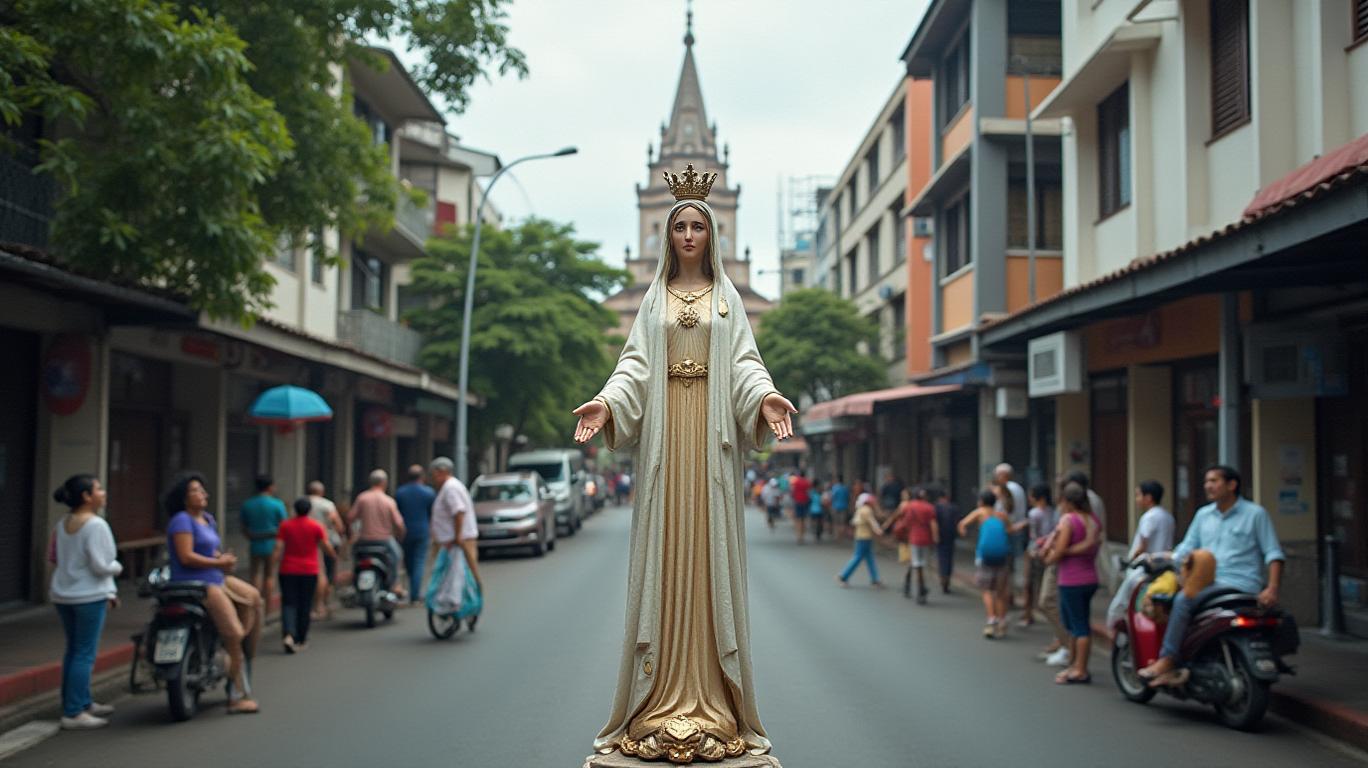
The Pope’s Legacy and Philippine Soft Power
Pope Francis’s advocacy for the poor, his humility, and his global moral authority resonated deeply in the Philippines, where 80% of the population identifies as Catholic. His 2015 visit—drawing record crowds of seven million—highlighted the nation’s spiritual unity. Marcos’s praise for the Pope aligns with a narrative of moral leadership that could bolster the Philippines’ soft power, appealing to ethical investors or those prioritizing ESG (Environmental, Social, Governance) criteria. The Pope’s emphasis on social justice may also pressure policymakers to address systemic issues like poverty, which remain critical to long-term stability.
However, the Vatican’s stance on issues like the death penalty complicates this narrative. Under Pope Francis, the Church formally opposed capital punishment in all cases—a direct challenge to former President Rodrigo Duterte’s “war on drugs,” which drew global condemnation for extrajudicial killings. While Marcos has distanced himself from Duterte’s policies, the legacy of human rights concerns lingers. For investors, this creates a tension: the Philippines’ Catholic identity may attract certain capital, but its alignment with ethical norms remains uneven.
Economic Realities: Missed Targets and Structural Barriers
The Philippines’ economic performance under Marcos has fallen short of ambitious goals. In 2023, GDP grew by 5.5%, below the 6-7% target, and 2024 growth of 5.6% missed the 6-6.5% range. This underperformance reflects deeper structural issues:
- Consumption Slump: High inflation (peaking at 7.3% in 2022) eroded household purchasing power, with food spending—a third of budgets—declining.
- Stagnant Investment: High interest rates and bureaucratic delays stymied construction and corporate investment, which contributed just 6% of GDP in 2024.
- Agricultural Decline: Output fell to P1.72 trillion in 2024, the lowest since 2016, exacerbated by typhoons and outdated farming practices.
Foreign Investment: Progress Amid Persistent Challenges
The administration has pushed reforms to attract foreign capital. The 2021 CREATE Act lowered corporate taxes to 20-25%, while the Philippine Economic Zone Authority (PEZA) streamlined regulations for special economic zones. These efforts have yielded modest gains:
- FDI equity inflows reached USD $9.2 billion in 2022, though this fell 23% from 2021 and lags behind Vietnam’s USD $23 billion in 2024.
- Sectors like manufacturing and ICT saw interest, but the Philippines trails competitors in infrastructure and regulatory efficiency.
Yet systemic barriers persist. The country ranks 116/180 in Transparency International’s Corruption Perceptions Index, and sectors like telecom remain shackled by restrictive ownership rules. While the 2022 Foreign Investment Act relaxed limits for tech startups and firms employing locals, red tape and slow judicial processes deter investors.
Comparisons to Rivals: Why Vietnam Outperforms
Vietnam’s 7.5% 2024 GDP growth highlights the Philippines’ missed potential. Unlike the Philippines, Vietnam has:- Lower Costs: Labor and energy expenses are 30-40% cheaper.- Agile Governance: Faster approvals for projects and a stronger focus on export-driven manufacturing.- Global Integration: Stronger ties to global supply chains and better use of regional trade deals like RCEP.
Conclusion: Soft Power Can’t Compensate for Structural Failures
While Marcos’s reverence for Pope Francis underscores the Philippines’ moral and cultural strengths, investors remain focused on tangible improvements. The country’s Catholic identity may attract ethical capital, but growth hinges on addressing systemic weaknesses: reducing inflation, modernizing agriculture, and streamlining bureaucracy. Without these fixes, the Philippines risks cementing its “permanently lower growth path” and falling further behind peers like Vietnam. As one analyst noted, returning to pre-pandemic GDP levels by 2028 would require an improbable 11.4% growth surge—proof that faith alone won’t transform the economy. For investors, the Philippines remains a place of potential but demands patience—and a clear-eyed view of its challenges.







Comentarios
Aún no hay comentarios