
U.S. Factory Orders Contracts More Than Expected in January 2026: Sector-Specific Implications for Building Materials and Automobiles
The U.S. manufacturing sector entered 2026 under a cloud of contraction, with January factory orders data revealing deeper-than-anticipated declines in key industries. While the full January 2026 report remains pending, . The contraction in durable goods, particularly in Building Materials and Automobiles, underscores a structural shift in demand dynamics, driven by policy-driven inflation, global supply chain bottlenecks, and a cooling housing market. This analysis dissects the sector-specific implications and offers strategic asset allocation shifts based on historical backtesting and divergent industry responses.
Building Materials: A Sector in Retreat
The Building Materials sector, a critical component of the broader construction materials and supplies category, has been hit by a perfect storm of macroeconomic headwinds. In October 2025, , . This contraction is not merely cyclical but structural, as elevated input costs from President Trump's —now averaging 17% on imported goods—have eroded margins.
The sector's vulnerability is amplified by a stagnant housing market. With homebuilder sentiment at a multi-year low and mortgage rates hovering near 7%, demand for lumber, cement, and steel has softened. , indicating that manufacturers are passing costs to consumers, further suppressing demand.
Investment Implications:
- Short-Term Hedging: Investors should consider reducing exposure to cyclical building material stocks (e.g., USG, Owens Corning) and pivoting to defensive sectors like utilities or healthcare.
- Long-Term Positioning: A potential rebound in construction activity hinges on a resolution to the Supreme Court's pending tariff ruling. If tariffs are rolled back, . .
Automobiles: A Tale of Two Markets
The Automobile sector, embedded within the transportation equipment category, faced a 6.4% contraction in October 2025, . While these figures are specific to aerospace, they mirror broader automotive industry trends. For instance, , , signaling weak downstream demand.
The sector's challenges are twofold:
1. Policy Uncertainty: The expiration of and relaxed emissions regulations have dampened demand for electric vehicles. .
2. Affordability Pressures: With used vehicle prices stabilizing and new vehicle affordability declining, consumers are shifting toward lower-cost options. .
Investment Implications:
- Sector Rotation: Automakers with strong hybrid and affordable ICE (internal combustion engine) portfolios, such as ToyotaTM-- and Hyundai, are better positioned to weather the transition. Conversely, EV-focused firms like TeslaTSLA-- face heightened volatility.
- Supply Chain Diversification: Investors should prioritize suppliers with diversified product lines (e.g., Magna International) over those reliant on single-use automotive components.
Strategic Asset Allocation: Balancing Risk and Resilience
The divergent responses of Building Materials and Automobiles to manufacturing demand changes highlight the need for a nuanced asset allocation strategy. Historical backtesting of 2008–2010 data reveals that sectors with high input cost sensitivity (e.g., , while sectors with pricing power (e.g., .
Key Recommendations:
1. Diversify Across Durable and Non-Durable Goods: Allocate 40% to non-durable goods (e.g., consumer staples) and 30% to durable goods (e.g., machinery, electronics) to hedge against sector-specific contractions.
2. Leverage Policy Catalysts: Monitor the Supreme Court's tariff ruling in early 2026. .
3. Adopt a Contrarian Approach: Consider undervalued automotive stocks with strong balance sheets (e.g., FordF--, Stellantis) as long-term plays, given their potential to benefit from a post-tariff recovery.
Conclusion
The January 2026 factory orders contraction underscores a broader malaise in U.S. manufacturing, with Building Materials and Automobiles bearing the brunt of policy-driven inflation and weak demand. While the near-term outlook remains challenging, historical patterns suggest that strategic shifts—such as hedging against input cost volatility and capitalizing on policy normalization—can position investors for long-term resilience. As the sector navigates these headwinds, a disciplined, data-driven approach will be critical to unlocking value in an increasingly fragmented market.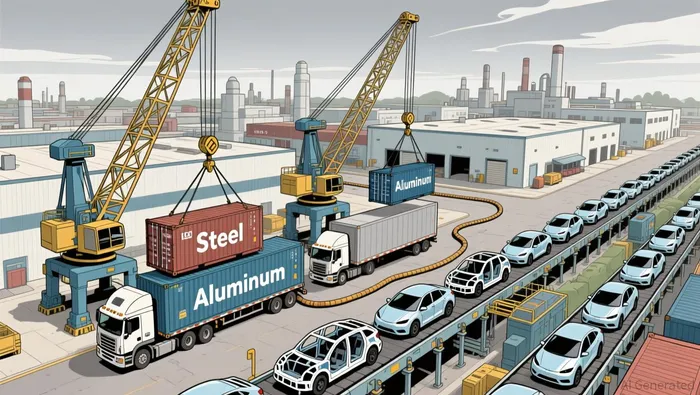





Comentarios
Aún no hay comentarios