
ExxonMobil's Strategic Bet on EU Gas Contracts: Navigating Geopolitical Shifts and the Energy Transition
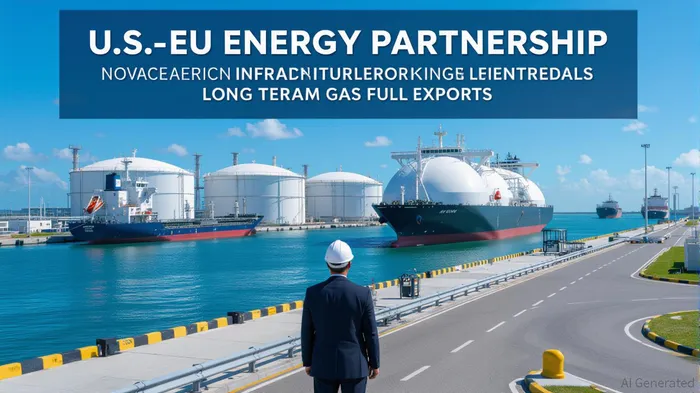
The energy landscape is undergoing a seismic shift, and ExxonMobilXOM-- is positioning itself at the intersection of geopolitical realignments and the global energy transition. The company's recent statements about anticipating long-term U.S. gas supply agreements with the European Union (EU) reveal a calculated bet on transatlantic energy security, but they also expose the fragility of a fossil fuel-centric strategyMSTR-- in an era of accelerating decarbonization. For investors, the question is whether ExxonMobil's LNG ambitions align with the EU's evolving priorities—or if the company is doubling down on a sunset industry.
The Geopolitical Play: U.S.-EU Energy as a Strategic Lifeline
ExxonMobil's senior vice president for LNG, Peter Clarke, has made it clear: the EU's expanding LNG infrastructure makes long-term U.S. gas contracts “logical.” This isn't just about economics—it's about geopolitics. The EU's pledge to purchase $750 billion in U.S. energy by 2028, including $250 billion annually in natural gas, is a direct response to its post-Russia-Ukraine war energy crisis. By 2024, the U.S. already supplied 50% of the EU's LNG imports, a figure ExxonMobil expects to grow.
This partnership is a win for U.S. energy firms in the short term. The U.S. is now the world's largest LNG exporter, and projects like Exxon's Golden Pass terminal in Texas—jointly developed with QatarEnergy—are set to boost export capacity. For the EU, the U.S. offers a reliable alternative to Russian gas, aligning with its REPowerEU Plan to phase out Russian energy imports by 2027.
The Energy Transition: A Double-Edged Sword
But here's the rub: the EU's energy transition is a ticking clock for LNG. The bloc aims to achieve a 42.5% share of renewables in its energy mix by 2030, with gas demand projected to fall by 7% by that year. The EU's Energy Efficiency Directive mandates an 11.7% reduction in final energy consumption by 2030, and its National Energy and Climate Plans (NECPs) prioritize wind, solar, and hydrogen over fossil fuels.
For ExxonMobil, this means long-term U.S. gas contracts with the EU could become stranded assets. The EU's push for electrification, grid modernization, and green hydrogen infrastructure is reducing the role of gas in its energy mix. Even if the U.S. expands LNG capacity, the EU's demand may plateau or decline by the late 2020s.
Strategic Moves and Financial Resilience
ExxonMobil isn't blind to these risks. The company's Q2 2025 earnings of $7.1 billion and $11.5 billion in operating cash flow provide a financial cushion to invest in low-carbon solutions, including carbon capture and hydrogen. Its 20-year LNG contract with ARC Resources for the Cedar LNG project in Canada, while not EU-specific, demonstrates its ability to secure stable supply chains.
However, the EU's supplier diversification goals could limit Exxon's dominance. The bloc is wary of over-reliance on any single energy source, and U.S. LNG's flexibility—often sold on destination-flexible contracts—means European buyers could redirect cargoes to Asia, where prices are higher. This undermines the economic rationale for long-term U.S. gas contracts.
Investment Implications: Balancing Short-Term Gains and Long-Term Risks
For investors, ExxonMobil's current trajectory offers both opportunity and caution. The company's strong financials and strategic LNG projects position it to benefit from the EU's short-term energy security needs. However, the EU's decarbonization agenda and the global shift toward renewables suggest that LNG's role in the energy mix is temporary.
Historical data from 2022 to the present reveals that ExxonMobil's stock has shown a positive trend following earnings releases. A 3-day win rate of 66.67% and a 10-day win rate of 53.33% indicate that short-term momentum is often sustained after reporting results. The 30-day win rate of 46.67% and a maximum observed return of 3.92% further underscore the potential for meaningful price appreciation in the aftermath of earnings reports. These patterns suggest that investors who adopt a buy-and-hold strategy post-earnings may capture near-term gains, though long-term exposure remains subject to macroeconomic and policy-driven risks.
Key Considerations for Investors:
1. Short-Term Momentum: ExxonMobil's Q2 2025 results and Golden Pass expansion justify optimism about near-term LNG growth. Historical performance shows a 66.67% win rate in the 3 days following earnings releases, reinforcing the potential for short-term gains.
2. Long-Term Exposure: The EU's 42.5% renewables target by 2030 could erode demand for U.S. gas. Investors should monitor EU policy shifts and renewable deployment rates.
3. Diversification: Exxon's investments in low-carbon technologies are a positive signal, but they remain a small portion of its overall portfolio.
4. Geopolitical Risks: U.S.-EU trade dynamics and global LNG market competition could impact contract stability.
Conclusion: A Calculated Gamble
ExxonMobil's bet on U.S.-EU gas contracts is a calculated gamble. In the short term, it's a win for energy security and corporate profits. But in the long term, the EU's energy transition could render these contracts obsolete. For investors, the key is to balance exposure to Exxon's current strengths with hedging against the inevitable shift to renewables. The company's ability to pivot from fossil fuels to low-carbon solutions will determine its relevance in a post-gas world.
As the EU charts its path toward a greener future, ExxonMobil—and its investors—must ask: Is this a bridge to the future, or a bridge to nowhere?





Comentarios
Aún no hay comentarios