
Exxon’s UAE Gambit: Navigating OPEC+ Constraints to Capture Post-2030 Demand
The oil market’s next chapter is being written offshore of Abu Dhabi, where ExxonMobil’s partnership with the UAE’s state-owned ADNOC to expand the Upper Zakum oil field has become a geopolitical and technological masterstroke. By leveraging AI-driven efficiency, ESG-compliant infrastructure, and the $440 billion UAE-U.S. investment nexus, ExxonXOM-- is positioning itself to outmaneuver OPEC+ output constraints and capitalize on a demand surge post-2030. For investors, this is a rare opportunity to buy into a company poised to dominate a resilient energy landscape—while its stock remains undervalued.
The OPEC+ Tightrope: Capacity Growth Without Overreach
The Upper Zakum project, targeting a 1.5 million barrels-per-day (b/d) capacity by 2025, is no ordinary expansion. ADNOC and Exxon are navigating OPEC+’s strict production quotas by adopting a phased approach that balances growth with compliance. The first phase, delayed from 2024, prioritizes infrastructure upgrades—such as AI-enabled remote operations and clean energy grid integration—that reduce per-barrel carbon intensity. This strategy allows the UAE to incrementally boost production without triggering OPEC+ pushback, as the alliance’s rules increasingly tolerate efficiency gains over brute-force output hikes.
The stakes are high: Upper Zakum, part of the world’s second-largest offshore oil field, currently produces over 1 million b/d. Its expansion is critical to meeting global demand, which the International Energy Agency projects will grow by 10 million b/d by 2030. For Exxon, this is a bet on its ability to thrive in a constrained market.
AI and ESG: The Secret Weapons for Survival
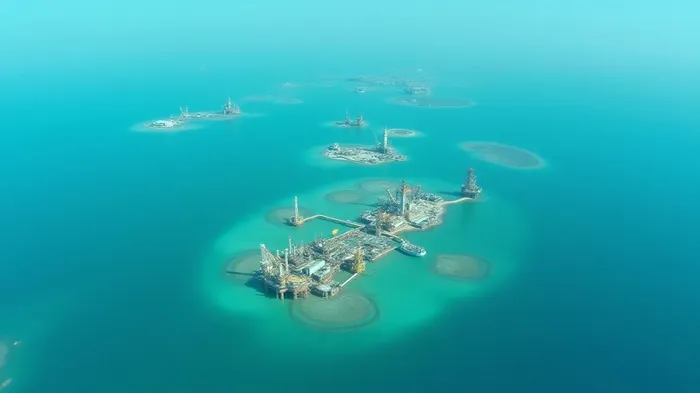
The partnership’s most compelling edge lies in its integration of advanced technology and sustainability. Upper Zakum’s artificial islands, designed to minimize environmental disruption, and its AI-driven drilling systems—like the world’s longest oil well at 53,500 feet—are hallmarks of a new era in “green” oil production. These innovations not only reduce operational emissions but also align Exxon with ESG mandates, shielding it from divestment pressures.
The UAE-U.S. framework amplifies this advantage. ADNOC’s $60 billion U.S. energy investment pipeline includes projects like a Texas-based blue ammonia plant with Exxon and a direct air capture facility—both of which generate carbon credits and appeal to climate-conscious buyers. This ESG halo positions Exxon’s partnership as a bridge to future markets, where oil demand remains robust but only for producers with the lowest carbon footprints.
The $440 Billion Geopolitical Playbook
The Exxon-ADNOC alliance is no accident. It is the crown jewel of the UAE’s $440 billion energy investment framework with the U.S., a partnership that blends strategic resource access with technological co-dependence. By anchoring itself in this alliance, Exxon gains not just capital but also geopolitical cover: the UAE’s OPEC+ clout ensures smoother regulatory navigation, while U.S. backing reduces risks of supply chain disruptions or sanctions.
Consider the data: ADNOC’s XRG subsidiary has committed to a $10 billion Texas ammonia plant and a $500 million direct air capture project—both ventures that lock in long-term U.S. demand for Exxon’s Middle Eastern output. Meanwhile, the UAE’s first-ever unconventional oil concession to U.S. firm EOG Resources signals a broader trend of Middle Eastern openness to Western capital, further insulating Exxon’s supply chain.
Why Exxon’s Stock is Undervalued—And Due to Soar
Exxon’s stock (XOM) currently trades at 6.5x forward earnings, a discount to Chevron’s 8.2x and the sector average of 7.9x. This undervaluation overlooks its structural advantages in the partnership:
1. Lower execution risk: ADNOC’s financial and political backing shields Exxon from the full cost of Upper Zakum’s $30 billion expansion.
2. OPEC+ resilience: Phased capacity growth aligns with quotas, avoiding market destabilization.
3. ESG differentiation: AI and clean energy integration make its oil “greener,” attracting ESG funds.
4. Geopolitical tailwinds: The UAE-U.S. alliance ensures access to capital, technology, and markets.
Conclusion: A Rare Bet on Energy’s Future
Exxon’s Upper Zakum play is more than a capacity expansion—it is a blueprint for thriving in a constrained, tech-driven oil market. With OPEC+’s rules favoring efficiency over output, and ESG pressures reshaping demand, Exxon’s partnership with ADNC is a strategic lever to outcompete rivals and lock in post-2030 demand. At current valuations, this is a rare chance to invest in a company that’s engineering its own future.
For investors seeking exposure to Middle Eastern production resilience and transatlantic energy alliances, Exxon’s stock is a buy now. The next decade’s energy winners will be those who adapt fastest to geopolitical and technological shifts—and Exxon is already leading the charge.





Comentarios
Aún no hay comentarios