
Exxon's Graphite Breakthrough: Redefining EV Energy Density and Range?
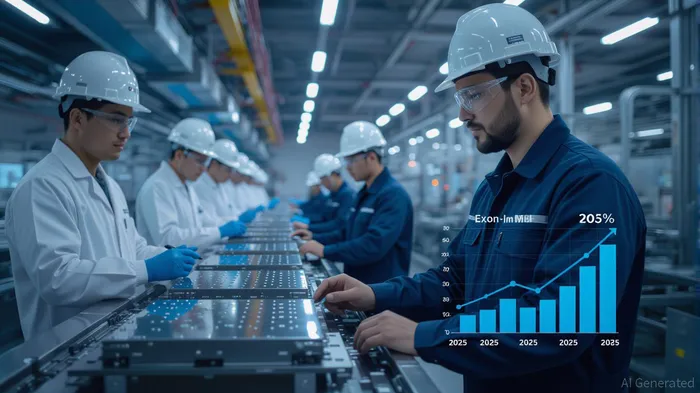
The electric vehicle (EV) revolution is accelerating, but its success hinges on overcoming a persistent challenge: battery energy density. Enter ExxonMobil, a name not typically associated with cutting-edge battery tech, yet now making waves in the synthetic graphite market. By acquiring Superior Graphite's assets and technology, ExxonXOM-- has positioned itself to disrupt the EV supply chain with a material that could extend battery life and range by up to 30%[3]. This move isn't just a pivot for the oil giant—it's a calculated bet on the future of energy storage.
Strategic Entry into a High-Growth Market
Exxon's acquisition of Superior Graphite's Kentucky production unit and international offices[1] marks a strategic entry into the synthetic graphite space. Synthetic graphite, a critical component for lithium-ion battery anodes, offers superior consistency and scalability compared to mined graphite[1]. By leveraging its existing refining infrastructure to produce carbon-rich feedstocks, Exxon aims to reduce costs and environmental footprints while meeting the surging demand for EV batteries[1].
The global graphite market is projected to grow at a compound annual rate of 8.5% through 2035[2], driven by EV adoption and energy storage needs. Exxon's move aligns with this trajectory, particularly as the U.S. seeks to localize supply chains for critical minerals[4]. The company's plan to commercialize synthetic graphite production by 2029[3] positions it to capitalize on this growth, even as it faces competition from established players like GrafTechEAF-- International and new entrants in the EV materials space.
Technical Advancements and Energy Density Gains
While technical specifications for Exxon's synthetic graphite remain under wraps, the company claims its material could enable faster charging, longer battery life, and improved energy efficiency[1]. Bloomberg reports that Exxon's “new form of synthetic graphite” is undergoing testing with EV manufacturers, with early results suggesting a 30% extension in battery life[3]. If validated, this would represent a significant leap in energy density—a metric that directly correlates with EV range.
Synthetic graphite's structural advantages over natural graphite—such as uniform particle size and purity—make it ideal for high-performance anodes[1]. Exxon's innovation likely hinges on optimizing these properties to enhance ion mobility and reduce energy loss during charge cycles. While no peer-reviewed studies or independent data have yet confirmed these claims, the company's deep R&D resources and partnerships with battery makers suggest a rigorous development process[5].
Challenges and Market Realities
Exxon's timeline for commercial production—2029—places it at a potential disadvantage compared to competitors already scaling synthetic graphite output. The company also faces scrutiny over its broader climate commitments, with critics questioning whether this venture aligns with its net-zero goals[2]. Additionally, the EV battery market is highly price-sensitive, and Exxon's synthetic graphite must demonstrate cost parity with alternatives to gain traction[4].
However, the company's vertical integration and access to low-cost carbon feedstocks could offset these challenges. By producing synthetic graphite from existing refining byproducts, Exxon reduces raw material costs and waste, a strategy that could appeal to environmentally conscious investors[1].
Investment Implications
For investors, Exxon's foray into synthetic graphite represents a high-risk, high-reward opportunity. The EV battery materials market is expected to reach $120 billion by 2030[2], and Exxon's potential to capture even a fraction of this market could bolster its long-term earnings. However, the lack of detailed technical data and the 2029 commercialization timeline mean investors must weigh near-term uncertainties against long-term potential.
A key metric to monitor is the energy density improvement of Exxon's synthetic graphite. If the 30% range extension proves viable, it could redefine EV performance benchmarks and accelerate adoption. Conversely, delays or underwhelming results could dampen investor enthusiasm.
Conclusion
ExxonMobil's synthetic graphite venture is a bold move into a sector where it has no legacy but immense potential. While the technical details remain opaque, the company's strategic acquisitions, R&D focus, and alignment with EV demand trends suggest a calculated approach. For investors, the question is whether Exxon can translate its industrial expertise into a material that redefines energy density and range—two metrics that will determine the next phase of the EV revolution.





Comentarios
Aún no hay comentarios