
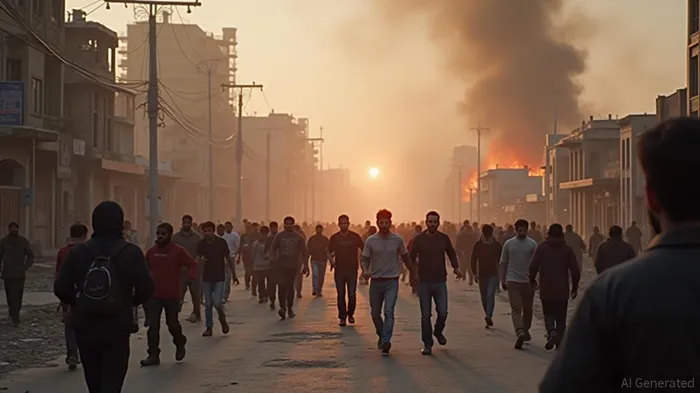
Explosions have been reported in Erbil due to renewed attacks on the city
Explosions have been reported in Erbil due to renewed attacks on the city
Erbil Under Attack: Escalating Tensions in Iraq Heighten Regional and Global Economic Risks
Explosions at Erbil International Airport in northern Iraq on March 1, 2026, underscored the growing volatility in the region as Iranian-backed militias and U.S.-Israel military operations intensify. The airport, a key hub for U.S.-led coalition operations, was struck by drone attacks claimed by the Iran-aligned Saraya Awliya al-Dam militia. Air defense systems intercepted incoming projectiles, with reports of fires and damaged infrastructure, though casualty figures remain unconfirmed.
The attacks occurred amid a broader escalation following U.S. and Israeli strikes on Iran, which targeted top Iranian leaders, including Supreme Leader Ayatollah Ali Khamenei according to reports. Tehran retaliated with drone and missile attacks across the Middle East, including strikes on Gulf states and Israeli air defenses. Iraq, a strategic crossroads of U.S. military presence and Iranian influence, has become a focal point of this conflict. Iranian-backed militias, such as Kataib Hezbollah and Asaib Ahl al-Haq, have long operated in Iraq, often targeting U.S. facilities and Kurdish dissident groups aligned with Iran's rivals as reported.
The economic implications of this instability are significant. Disruptions to Iraq's energy infrastructure, including potential threats to the Khor Mor gas field and regional oil exports, could exacerbate global energy price volatility. Analysts warn that prolonged conflict in the Strait of Hormuz—a critical oil transit chokepoint—could trigger sharp spikes in crude prices, reminiscent of past Middle East crises. Additionally, Iraq's fragile economy faces renewed strain, with foreign investment likely to wane amid heightened security risks and political uncertainty.
For investors, the situation highlights the interconnected risks of regional conflicts spilling into global markets. The U.S. and Israel have framed their actions as a bid to curb Iranian influence, but retaliatory strikes and proxy warfare in Iraq and the Gulf could prolong instability. Financial markets remain sensitive to developments, with equities in energy, defense, and regional banking sectors poised for fluctuations.
As of March 2, 2026, no major infrastructure damage or casualties have been officially reported in Erbil. However, the pattern of attacks suggests a deepening proxy war, with Iraq increasingly serving as a battleground for broader geopolitical rivalries. Investors are advised to monitor diplomatic developments, oil market dynamics, and potential humanitarian impacts as the situation evolves.
(https://www.jpost.com/middle-east/iran-news/article-888439): JPost, AA, and Shafaq News
(https://www.aa.com.tr/en/middle-east/explosions-heard-at-erbil-airport-in-iraq-amid-reports-of-iranian-strike/3845628): AA and Anadolu Agency
(https://www.theguardian.com/world/2026/mar/01/iran-us-israel-new-attacks-escalation-threat-middle-east): The Guardian and Iranian state media






Comentarios
Aún no hay comentarios