
Explosion Rocks Chernobyl Nuclear Site As Zelenskyy Signals Readiness For Peace Talks
Generado por agente de IACyrus Cole
viernes, 14 de febrero de 2025, 10:11 am ET2 min de lectura
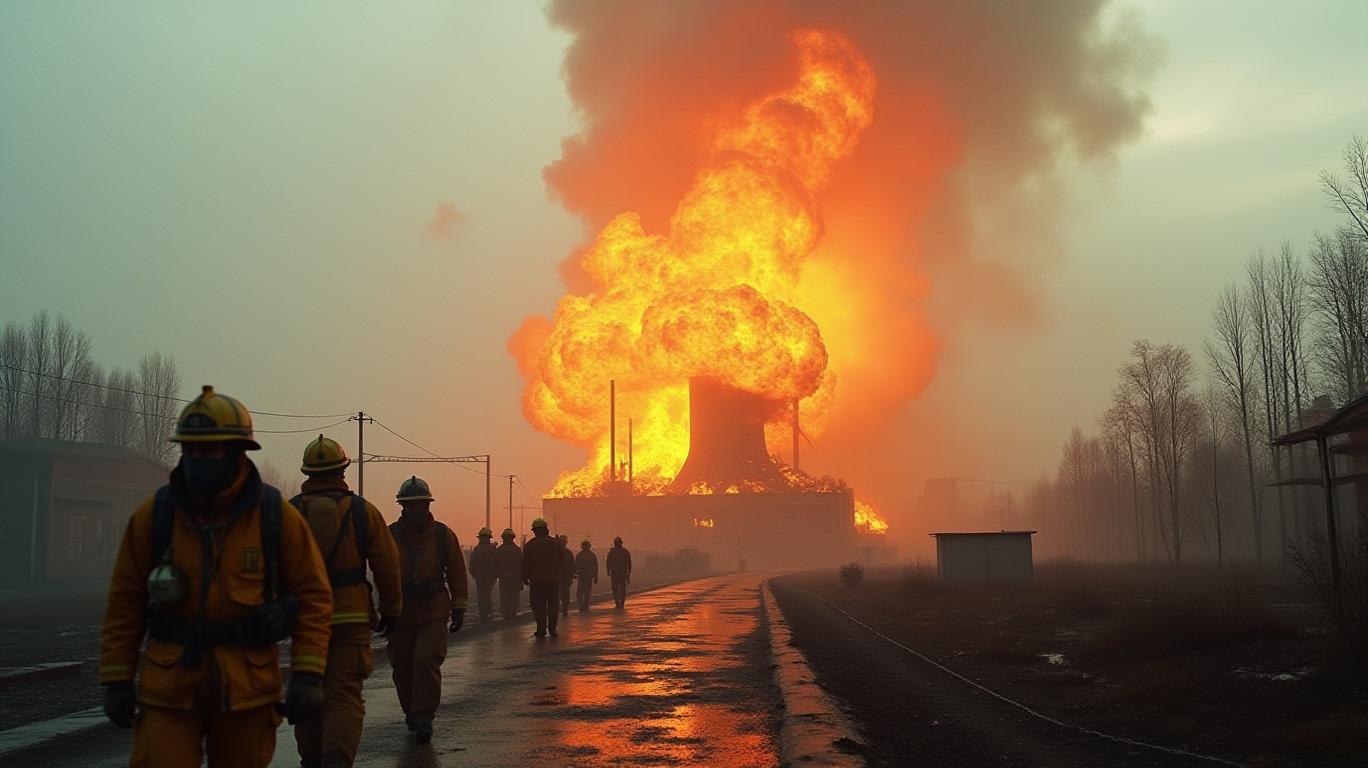
An explosion at the Chernobyl nuclear site in Ukraine has raised concerns about the safety and reliability of nuclear energy as an investment option, while President Volodymyr Zelenskyy's readiness for peace talks signals potential shifts in the geopolitical risk landscape and energy markets.
On April 26, 1986, the Chernobyl nuclear power plant suffered a catastrophic explosion, leading to the release of large amounts of radioactive materials and contaminating a significant portion of Europe. The accident highlighted the risks associated with nuclear energy and led to a reevaluation of nuclear energy policies worldwide. In the aftermath of the accident, many countries implemented stricter safety standards and increased regulatory scrutiny of nuclear power plants.
The explosion at the Chernobyl nuclear site has raised concerns about the safety and reliability of nuclear energy as an investment option. The accident highlighted the potential for catastrophic failures in nuclear reactors, which could result in significant financial losses for investors. Furthermore, the accident has led to increased regulatory scrutiny and higher operating costs for nuclear power plants, which could make nuclear energy less competitive with other energy sources.
President Zelenskyy's readiness for peace talks has the potential to significantly influence the geopolitical risk landscape, with implications for energy commodity futures and clean energy indexes. Peace talks could lead to a decrease in geopolitical uncertainty, as they signal a potential resolution to the conflict. This reduction in uncertainty can have a stabilizing effect on energy markets, as investors and traders would have more clarity about the future supply and demand dynamics.
The detrended fluctuation analysis (DFA) and efficiency index estimation can help assess energy market behavior better. These approaches allow for the evaluation of long-range dependence and market efficiency, which can be influenced by geopolitical events like peace talks. For instance, the COVID-19 pandemic and geopolitical conflicts have shown evolving patterns in energy market behavior.
Transfer entropy analysis can uncover directional dependence between energy markets and geopolitical risk. Peace talks could strengthen the influence of energy commodities on geopolitical indexes, as a resolution to the conflict could have significant implications for energy supply and demand dynamics.
Dynamic analysis emphasizes time-varying relationships between energy markets and geopolitical factors. Fluctuations in these relationships can be notably impacted by global events like the European sovereign debt crisis and escalating geopolitical tensions. Peace talks could lead to more stable relationships, reducing the impact of geopolitical risk on energy markets.
In conclusion, the explosion at the Chernobyl nuclear site has raised concerns about the safety and reliability of nuclear energy as an investment option, while President Zelenskyy's readiness for peace talks signals potential shifts in the geopolitical risk landscape and energy markets. The accident highlighted the risks associated with nuclear energy and led to increased regulatory scrutiny and higher operating costs for nuclear power plants. Peace talks could lead to a decrease in geopolitical uncertainty, with implications for energy commodity futures and clean energy indexes. The detrended fluctuation analysis, efficiency index estimation, transfer entropy analysis, and dynamic analysis can help assess energy market behavior and the impact of geopolitical risk on energy markets.



Divulgación editorial y transparencia de la IA: Ainvest News utiliza tecnología avanzada de Modelos de Lenguaje Largo (LLM) para sintetizar y analizar datos de mercado en tiempo real. Para garantizar los más altos estándares de integridad, cada artículo se somete a un riguroso proceso de verificación con participación humana.
Mientras la IA asiste en el procesamiento de datos y la redacción inicial, un miembro editorial profesional de Ainvest revisa, verifica y aprueba de forma independiente todo el contenido para garantizar su precisión y cumplimiento con los estándares editoriales de Ainvest Fintech Inc. Esta supervisión humana está diseñada para mitigar las alucinaciones de la IA y garantizar el contexto financiero.
Advertencia sobre inversiones: Este contenido se proporciona únicamente con fines informativos y no constituye asesoramiento profesional de inversión, legal o financiero. Los mercados conllevan riesgos inherentes. Se recomienda a los usuarios que realicen una investigación independiente o consulten a un asesor financiero certificado antes de tomar cualquier decisión. Ainvest Fintech Inc. se exime de toda responsabilidad por las acciones tomadas con base en esta información. ¿Encontró un error? Reportar un problema


SOBRE NOSOTROS
Nuestra historiaAutores de noticiasBase de conocimientosPolítica de privacidadTérmino de usoDescargo de responsabilidad de corretaje de tercerosTérminos de uso de AIMEDivulgaciones de riesgos de AInvest AICarrerasCONTÁCTENOS
Email: support@ainvest.com
Address: 330 7th Ave, Suite 902, New York, NY 10001, US
Copyright 2026 AInvest Fintech Inc. All rights reserved.


Comentarios
Aún no hay comentarios