
Experiential Innovation and Investor Value: How Samsung's Immersive Branding Strategy Is Rewriting the Rules of Tech Leadership
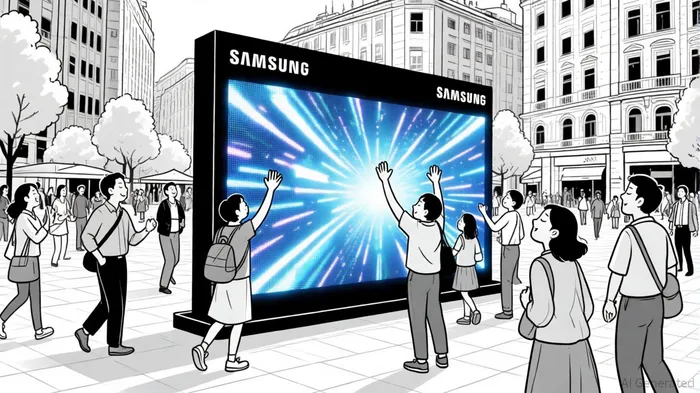
In an era where brand loyalty is increasingly tied to emotional and technological resonance, Samsung has emerged as a masterclass in leveraging immersive technology to redefine corporate identity. From 2023 to 2025, the South Korean tech giant has not only deployed cutting-edge displays and AI-driven solutions but has also woven them into a narrative that blurs the line between product, experience, and community. For investors, this strategy is not just about capturing market share—it's about building a durable moat around brand equity in a world where innovation cycles are accelerating.
The Immersive Edge: From Displays to Ecosystems
Samsung's use of immersive technology extends beyond flashy demos. Consider its partnership with Convoy of Hope, where LED displays transformed a humanitarian campaign into a visceral experience, creating “in-depth connections” that amplified both brand visibility and social impact [1]. Similarly, its collaboration with LogitechLOGI-- to develop interactive workplace solutions underscores how Samsung is redefining digital collaboration, turning huddle rooms into hubs of productivity and creativity [1]. These initiatives are not isolated experiments but part of a broader strategy to position Samsung as the architect of seamless, interconnected ecosystems.
The company's SmartThings platform, which integrates smartphones, IoT devices, and AI-driven personalization, exemplifies this approach. By embedding itself into the daily routines of consumers—from smart home automation to AI-powered health monitoring—Samsung has shifted from being a product seller to a lifestyle enabler. This transition is critical for long-term investor value: a 2025 YouGov ranking placed Samsung among the top global brands, a testament to its ability to convert technological prowess into emotional loyalty [4].
Digital Marketing: The Algorithm of Engagement
Samsung's digital strategy is a masterstroke of data-driven precision. Social media campaigns like #YouMake and user-generated content initiatives have turned customers into brand ambassadors, fostering a sense of ownership and community [2]. The “Growing Up” commercial, which juxtaposed Samsung's innovation against Apple's legacy, is a case in point. By framing its products as tools for self-expression and growth, Samsung taps into a generation that values identity over mere utility [2].
Localized campaigns further amplify this effect. During Ramadan in the MENA region, Samsung's culturally resonant messaging—pairing technology with tradition—demonstrated its ability to balance global consistency with regional relevance [2]. Such efforts are not just marketing; they are investments in brand stickiness, ensuring that Samsung remains top-of-mind across diverse markets.
Financial Commitment: R&D as a Strategic Lever
Samsung's financials tell a story of calculated risk-taking. In 2024, the company invested a record $24.09 billion in R&D—a 23.5% increase from the prior year—focusing on AI semiconductors, high-performance memory, and server technologies [3]. While these expenditures temporarily pressured operating profits, they signal a long-term bet on high-value-added products. The construction of the New Research & Development-K (NRD-K) complex, set to receive 20 trillion won in investments by 2030, is a physical manifestation of this vision [3].
Investors should also note Samsung's capital expenditures of 53.6 trillion won in 2024, including 46.3 trillion won in its Device Solutions division [4]. These investments are not just about scaling production but about securing leadership in advanced semiconductor nodes, a sector expected to drive global tech demand for decades.
Navigating Short-Term Volatility for Long-Term Gains
Samsung's fourth-quarter 2024 results highlight the challenges of this strategy. Revenue dipped to KRW 75.8 trillion, and operating profit fell to KRW 6.5 trillion, attributed to weak IT demand and rising R&D costs [4]. However, annual revenue hit a second-highest record, underscoring the company's resilience. The MX division's plans to leverage the Galaxy S25 series and AI-driven features in 2025 suggest a recalibration toward premium markets, where margins and brand loyalty are highest [4].
Conclusion: The Investor's Imperative
Samsung's immersive branding strategy is a blueprint for the future of tech leadership. By merging hardware, software, and human-centric design, the company is not just selling products—it's selling experiences that foster loyalty and drive recurring value. For investors, the key takeaway is clear: Samsung's willingness to invest in experiential innovation, even at the expense of short-term margins, positions it to dominate markets where brand equity and technological agility are paramount.
As the line between physical and digital continues to blur, Samsung's ability to create immersive, emotionally resonant ecosystems will likely outperform competitors clinging to traditional models. In this context, the company's recent financial volatility is not a red flag but a sign of a firm betting on its future.







Comentarios
Aún no hay comentarios