
Why Expensify (EXFY) Is a High-Conviction Buy for Long-Term Investors Amid Strategic Reinvention and Strong Cash Flow Generation
In the ever-shifting landscape of enterprise software, few stories blend the tension of reinvention with the promise of value creation as compellingly as ExpensifyEXFY-- (EXFY). The company, long known for its expense management platform, is undergoing a strategic transformation that could redefine its role in the financial technology ecosystem. For long-term investors, the interplay of a disciplined pivot toward transaction-based revenue, robust free cash flow generation, and a low-debt balance sheet presents a compelling case for a high-conviction buy.
Strategic Reinvention: From Subscription to Superapp
Expensify's strategic pivot is not merely a tweak but a fundamental reimagining of its business model. The company is shifting from a subscription-centric approach to a "superapp" model, leveraging embedded payments and AI-driven services to capture higher-margin revenue streams. This transition is evident in the 18% year-over-year growth in interchange revenue from the Expensify Card, which reached $5.4 million in Q3 2025. CEO David Barrett has emphasized the urgency of migrating users from the legacy "Classic" platform to the AI-powered New Expensify, a move that is already yielding results: all Collect customers have been transitioned, and the company is now focused on the larger Control segment.
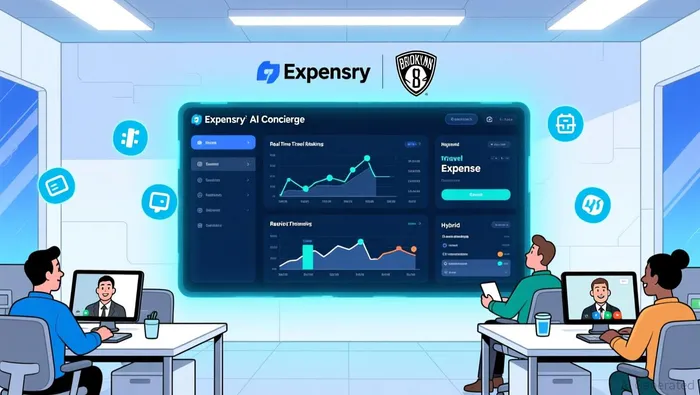
The launch of an upgraded AI-powered Concierge system and the acquisition of a marquee client like the Brooklyn Nets-now the official Travel and Expense partner of the company-underscore Expensify's ambition to expand beyond traditional expense tracking. Travel bookings have surged 95% since Q1 2025, reflecting the platform's growing utility in a hybrid work world. These initiatives align with a broader industry trend toward embedded finance, where software platforms monetize transactional activity rather than relying solely on recurring fees.
Financial Resilience: Free Cash Flow as a Moat
While revenue dipped 1% year-over-year to $35.1 million in Q3 2025, the company reaffirmed its full-year free cash flow guidance of $19.0 million to $23.0 million-a critical metric for value investors. This resilience is partly attributable to disciplined cost management and the company's focus on high-margin services. For example, despite a GAAP net loss of $2.3 million in Q3, non-GAAP net income reached $4.3 million and Adjusted EBITDA stood at $6.5 million.
 The company's balance sheet further strengthens its case for value. With a debt-to-equity ratio of just 4.37%, Expensify is positioned to fund its transformation without overleveraging. Share repurchases-$3.0 million spent in Q3 to buy back 1.6 million shares-signal management's confidence in the stock's intrinsic value. For investors, this combination of low leverage, positive cash flow, and strategic reinvestment mirrors the principles of Benjamin Graham and Warren Buffett: buying businesses with durable economic moats at a discount to their intrinsic value.
Valuation: A Contrarian Opportunity
Expensify's current market cap of approximately $145.6 million appears disconnected from its underlying financials. A P/E ratio of 400.00 may seem exorbitant, but this metric is skewed by GAAP net losses. When viewed through a non-GAAP lens, the company's profitability and cash flow generation tell a different story. The key lies in its pivot to transaction-based revenue, which historically commands higher valuations due to its scalability and recurring nature.
Consider the broader context: Expensify is competing in a $12 billion expense management market, where it faces entrenched rivals like Concur and newer AI-driven challengers. Yet its unique value proposition-combining expense tracking, embedded payments, and AI automation-positions it to capture a larger share of the transactional pie. For patient investors, the current valuation offers a margin of safety, particularly given the company's $19–23 million free cash flow guidance for 2025.
Risks and Realities
No investment is without risk. Expensify's revenue decline and GAAP losses highlight the costs of transformation. The migration to New Expensify, while necessary, has temporarily disrupted user growth, with paid members falling 6% year-over-year to 642,000. Additionally, the company's reliance on interchange revenue exposes it to macroeconomic headwinds, such as rising interest rates or reduced corporate spending.
However, these challenges are not insurmountable. The 36% quarterly growth in travel bookings and the Brooklyn Nets partnership demonstrate Expensify's ability to innovate and secure high-profile clients. Moreover, the company's cash flow discipline-evidenced by its tightened 2025 guidance-suggests a management team focused on long-term value creation over short-term optics.
Conclusion: A Bet on the Future of Financial Infrastructure
Expensify's journey is a textbook example of strategic reinvention in the digital age. By pivoting to a transaction-driven model, investing in AI, and maintaining financial discipline, the company is laying the groundwork for a durable competitive advantage. For value investors, the current valuation offers an opportunity to buy into a business that is not only surviving but redefining its category.
As the financial technology landscape evolves, Expensify's ability to blend enterprise software with embedded payments could position it as a critical infrastructure player. In a market that often overvalues short-term growth at the expense of long-term fundamentals, Expensify's focus on cash flow, innovation, and shareholder returns makes it a high-conviction buy for those with a multi-year horizon.







Comentarios
Aún no hay comentarios