
Expectation Arbitrage on Visionary Holdings: The Priced-In Struggle vs. The Distant Pivot
The market has already priced in a dire reality for Visionary HoldingsGV--. The baseline expectation is not for a turnaround, but for a company in severe financial distress, its legacy operations in freefall. This is the narrative the stock has been trading on, making any future pivot a distant catalyst not yet reflected in the price.
The numbers tell the story of contraction. For the fiscal year ended March 31, 2025, total revenue plummeted 46.2% year-over-year to $5.04 million. This collapse was driven by the shrinking real estate leasing business and policy shifts in education, leaving the company with a core that is rapidly evaporating. The financial strain is even more stark. The company's balance sheet shows a debt-to-equity ratio of 478.7%, a level that signals extreme leverage and vulnerability. With total debt of $64.3 million against shareholder equity of just $13.4 million, the company is drowning in obligations.
This operational weakness is reinforced by a history of compliance issues that have plagued the stock. The company has faced multiple delayed 20-F filings and has been issued Nasdaq notifications regarding minimum bid price deficiencies. These are not minor administrative hiccups; they are red flags that have driven investor sentiment and contributed to the stock's volatility. The market has consistently punished the stock for these failures, as seen in sharp declines of 32% and 46% in recent months.
In essence, the expectation gap is wide. The market consensus has fully priced in a struggling legacy business, with no near-term hope for a recovery. The company's own financials show a net loss of $15.75 million and negative working capital, validating the distress narrative. Any positive news on the strategic pivot toward health management and anti-aging is therefore not a surprise-it is a long-term hope that has not yet begun to move the needle. For now, the stock reflects the reality of the past, not the potential of a future that remains unproven.
The Strategic Pivot: Early Progress vs. The Whisper Number
The market's whisper number for Visionary Holdings' pivot is a distant catalyst, not a near-term earnings engine. The company's own report frames the new health businesses as providing initial revenue contributions and representing early progress in a strategic repositioning. Management sees these initiatives as offering potential new growth avenues over the medium to long term. This is the narrative the stock is supposed to eventually reflect. The reality, however, is that this new revenue is still microscopic.
For the fiscal year ended March 31, 2025, revenue from the emerging health-related businesses-including health management, anti-aging, and medical aesthetics-was $1.06 million. That amount accounted for only about 21.1% of total revenue, which itself collapsed to just $5.04 million. In other words, the entire new business platform contributed less than a quarter of the company's total sales. This is the definition of early-stage experimentation, not a financial lifeline.
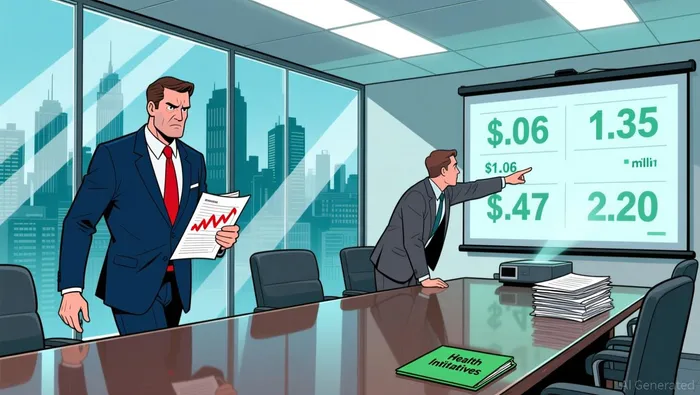
Viewed through the lens of expectation arbitrage, the gap is clear. The market has fully priced in the collapse of the legacy real estate and education businesses. It has not priced in the new health ventures because they are not yet material. The whisper number for the pivot is a future hope, not a current reality. The company's financial distress-evidenced by its massive debt load and negative working capital-means any capital spent on this pivot is a high-risk bet on a distant payoff. For now, the stock's trajectory is dictated by the operational freefall, not the strategic promise. The pivot is a story for a different set of expectations, one that remains entirely unpriced.
Governance and Execution: Catalysts for an Expectation Reset
The stock's current price reflects a narrative of operational distress and governance uncertainty. For the expectation gap to close, specific forward-looking events must signal a credible shift in execution or financial health. The catalysts are clear: a successful governance vote, a validating financial disclosure, and tangible progress on the company's most pressing vulnerabilities.
First, the October 2025 Annual General Meeting was a strong positive signal. With 97.79% of voting rights represented, the meeting achieved a near-unanimous mandate. The overwhelming approval of board renewal and other proposals, including the election of a new board with cross-sector expertise, provides a solid institutional foundation. This level of shareholder support for the current leadership and strategy is a necessary precondition for any pivot to gain traction. It reduces the near-term risk of internal governance battles and signals that the market's primary concern-leadership stability-has been addressed.
The next major catalyst is the official disclosure of the 20-F Annual Report in January 2026. This document provides the detailed, audited financial picture that validates or challenges the narrative. While the preliminary highlights show a net loss of USD 15.75 million and a debt-to-equity ratio of 478.7%, the full report will contain the granular details on asset impairments, cash flow from operations, and loan covenants. The market will scrutinize this for any signs of liquidity stress or hidden liabilities. A clean, transparent report could begin to reset expectations, while any new red flags would likely deepen the current pessimism.
Beyond the numbers, the key watchpoints are the company's ability to manage its crippling debt load and integrate its new strategic acquisitions. The 478.7% debt-to-equity ratio is the single biggest overhang. Any plan to refinance, restructure, or generate cash flow to reduce this burden is critical. Similarly, the integration of recent acquisitions in the health technology space-like the appointment of a new CEO for the subsidiary in December-must show early signs of synergy and cost control. The market will be looking for evidence that capital is being deployed effectively, not just written off.
The bottom line is that the stock's path out of its priced-in distress depends on these catalysts. The strong AGM vote sets the stage. The 20-F report provides the first hard data. But the real expectation reset will come only if management demonstrates tangible progress on debt reduction and operational integration. Until then, the stock will remain a bet on a distant, unproven future.
The Takeaway: What to Watch for the Next Arbitrage
The expectation gap for Visionary Holdings is now defined by two stark realities: a severely distressed legacy business and a distant, unproven pivot. For the next phase of expectation arbitrage, investors must monitor specific catalysts and metrics to determine if the gap is closing or widening. The stock's path will be dictated by progress on three fronts.
First, watch for any guidance on the timeline for the new health and AI businesses to move from initial revenue contributions to meaningful, scalable contributions. The market has priced in the early-stage nature of these ventures. Any forward-looking statement from management about when these segments could become material revenue drivers would be a critical signal. Without such guidance, the pivot remains a long-term hope, not a near-term catalyst. The whisper number for the health business is a future growth story; the market needs a roadmap to that future.
Second, the critical overhang is the 478.7% debt-to-equity ratio. This is the single biggest vulnerability on the balance sheet. Investors must monitor for concrete steps to reduce this crippling leverage. This could include announcements of debt refinancing, successful asset sales, or, most importantly, a clear plan to generate positive cash flow from operations that can service or pay down debt. Any progress on this front would directly address the primary financial risk and could begin to reset the stock's valuation. The absence of such steps would confirm the market's worst fears.
Finally, the next major catalyst is the company's ability to demonstrate a clear path to stabilizing revenue and improving cash flow from operations. The recent operating cash outflows decreased to USD 2.97 million, a positive sign, but the company still needs to reverse the steep revenue decline. Watch for the next quarterly report to see if the trend of decreasing outflows continues and if there are any signs of stabilization in the core education services segment, which showed relative efficiency with a gross margin of 64.4%. The bottom line is that the stock will remain in a distressed trading range until management provides evidence of a credible turnaround plan that addresses both the debt overhang and the revenue collapse.





Comentarios
Aún no hay comentarios