
H&M's Expansion into Latin America and Growth Potential in Brazil: A Strategic Bet on Emerging Markets
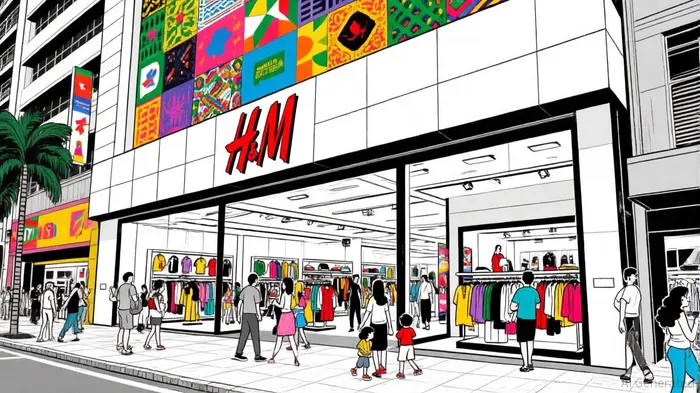
The global fashion industry is undergoing a seismic shift as traditional markets in Europe and North America face saturation and regulatory headwinds. For brands like H&M, the path to sustained growth lies in emerging markets, where rising disposable incomes, youthful demographics, and evolving consumer preferences create fertile ground for expansion. Brazil, the largest economy in Latin America, has emerged as a strategic focal point for H&M's 2023–2025 growth strategy, with the company aiming to transform it into its most significant business in the region and a global growth engine [1]. This move underscores a broader thesis: diversifying into high-growth emerging markets can unlock long-term shareholder value by tapping into untapped demand and mitigating risks from overreliance on mature markets.
Brazil's Fashion Market: A High-Growth Opportunity
Brazil's fashion market is poised for robust expansion, driven by a growing middle class, urbanization, and a culture of style. According to a report by Statista, the market is projected to reach US$10.29 billion in 2025, with a compound annual growth rate (CAGR) of 5.56% from 2025 to 2030, culminating in a US$13.49 billion market volume by 2030 [1]. The fast fashion segment, in particular, is thriving, with womenswear dominating at over 40% market share, fueled by the rising urban female workforce and trend-conscious Gen Z consumers [2].
The e-commerce segment further amplifies Brazil's potential. Online fashion retail generated US$10,388 million in 2024, with projections of a 10-15% growth in 2025, pushing the online share to 20-25% of total sales [3]. This digital acceleration aligns with H&M's omnichannel strategy, which emphasizes seamless integration between physical stores and online platforms to capture tech-savvy consumers.
H&M's Strategic Adaptation: Localization as a Competitive Edge
H&M's approach to Brazil is not a one-size-fits-all replication of its European model but a nuanced strategy of localization. The company is integrating global trends with locally inspired designs, such as beachwear and footwear tailored to Brazil's climate and cultural preferences [1]. This strategy is complemented by onshore production in Brazil, which reduces supply chain costs and enhances responsiveness to consumer demand.
To support this, H&M has leased a 25,000-square-meter distribution center in Extrema, Minas Gerais, with plans to expand to 40,000 square meters [1]. This infrastructure investment not only ensures efficient logistics but also signals a long-term commitment to the market. By creating jobs and stimulating local economies, H&M is building goodwill and regulatory support—critical factors in navigating the complexities of emerging markets.
Long-Term Shareholder Value: Beyond Short-Term Gains
Emerging markets like Brazil offer a dual advantage for investors: high-growth potential and diversification benefits. H&M's focus on Brazil aligns with its goal of opening 80 new stores globally by 2025, with a significant portion in Latin America [1]. This geographic diversification reduces exposure to economic downturns in developed markets and positions H&M to capitalize on Brazil's demographic dividend—a population of over 215 million, with 30% aged 15–29 [3].
Moreover, H&M's emphasis on sustainability and ethical sourcing resonates with Brazil's increasingly eco-conscious consumers. By aligning with local environmental regulations and leveraging Brazil's renewable energy infrastructure, the company can enhance its brand equity while meeting global ESG (Environmental, Social, and Governance) standards—a key driver of long-term shareholder value.
Risks and Mitigation
While Brazil's potential is undeniable, challenges such as political instability, currency volatility, and regulatory complexity persist. However, H&M's phased expansion—prioritizing high-traffic urban centers and investing in local partnerships—mitigates these risks. The company's experience in navigating emerging markets (e.g., India, Southeast Asia) further strengthens its playbook.
Conclusion: A Strategic Imperative for Global Fashion
H&M's Brazil strategy exemplifies how emerging market diversification can drive sustainable growth in the fashion sector. By leveraging Brazil's demographic and economic tailwinds, adapting to local preferences, and investing in infrastructure, H&M is positioning itself to capture a significant share of a US$13.49 billion market by 2030 [1]. For investors, this represents a compelling opportunity to capitalize on a company that is not only riding the fast-fashion wave but also redefining it in the context of a dynamic emerging economy.







Comentarios
Aún no hay comentarios